

Time Tracking and Workforce Management for Remote Teams
Automatic time tracking, activity monitoring with screenshots, employee scheduling, and timesheets. Built for contact centers, agencies, BPOs, and remote teams.
Teams stay an average of 3+ years · $5/user/month · All features included
Trusted by teams who demand results
Since 2011, businesses worldwide have relied on HiveDesk to manage their remote workforce
“We have used every time tracking software under the sun, and they all fall short in some area that we need, but overall HiveDesk has met our needs. Their PDF screen shot reports are clean, easy to use and understand. Our clients prefer them over the complicated reports of other systems.”
“We have been using HiveDesk for more than two years, they have improved the features and interface to make it more user friendly. It is a great tool to tracking time, it is affordable and easy to implement.”
“HiveDesk is a great tracking platform. We're able to track the time and activity of employees. This is a very useful productivity tracker.”
From Guesswork to Visibility
See how HiveDesk replaces manual processes with automated workforce management.
Without HiveDesk
- No visibility into how remote employees spend their time
- Inaccurate timesheets and billing disputes
- Manual scheduling and attendance tracking
- Overtime violations and compliance risks
- No real-time insight into team productivity
With HiveDesk
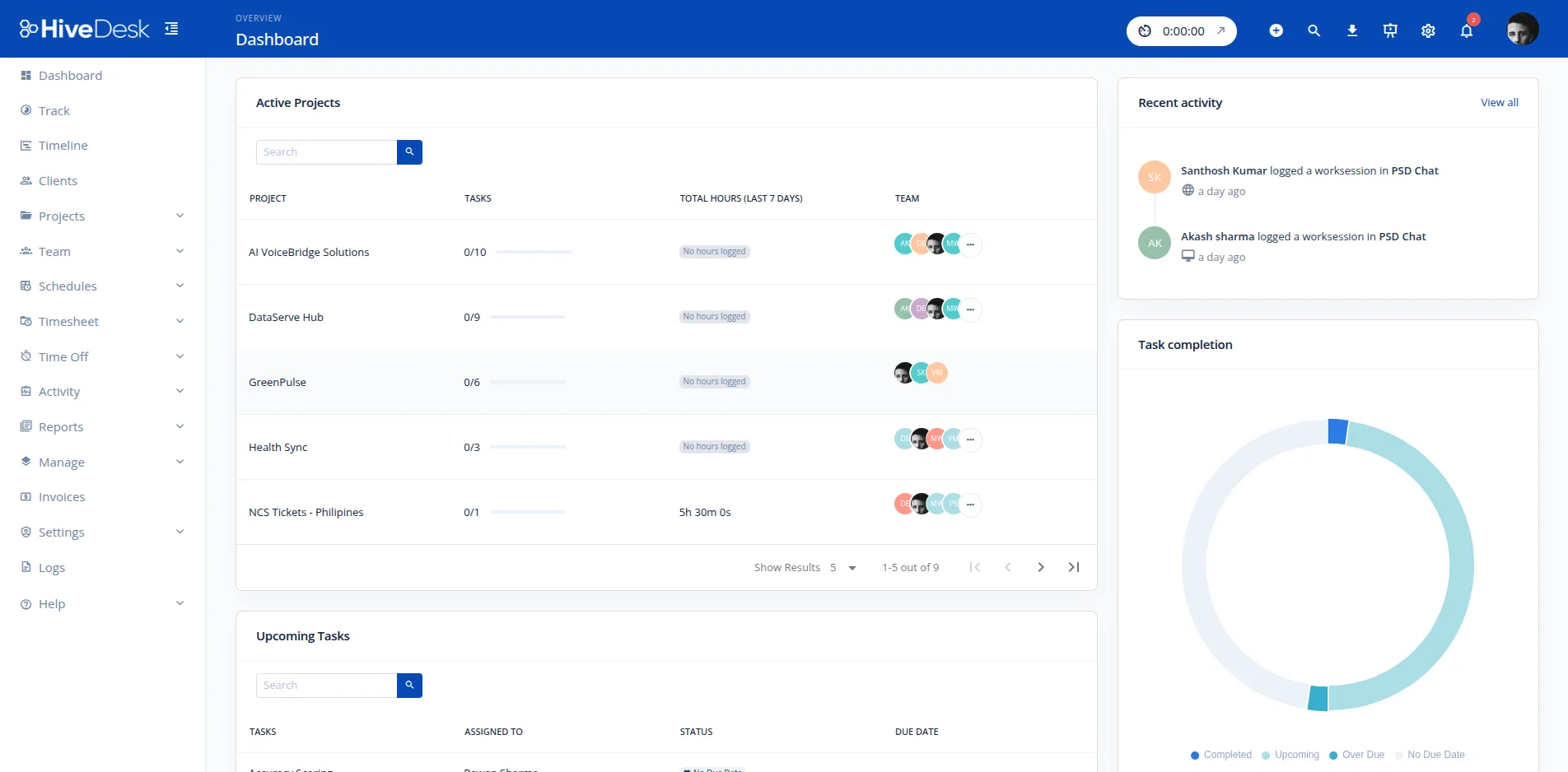
- Real-time dashboards showing who is working and on what
- Automatic time tracking with screenshot verification
- Employee scheduling and automated attendance tracking
- Built-in overtime management and compliance safeguards
- Performance analytics and productivity reports
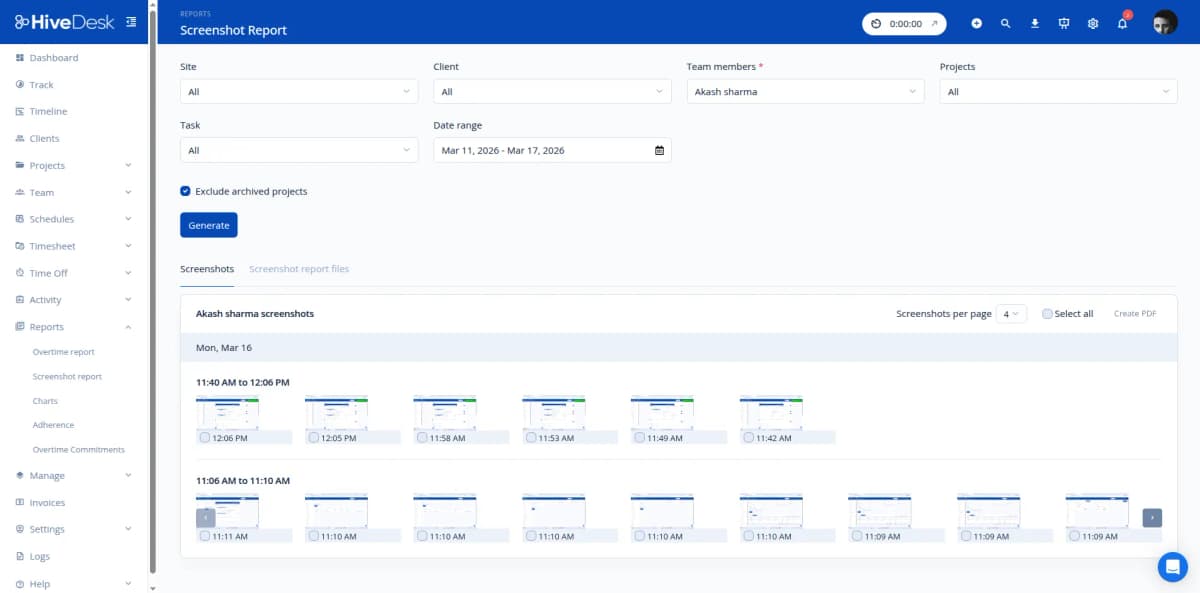
Activity monitoring with periodic screenshots
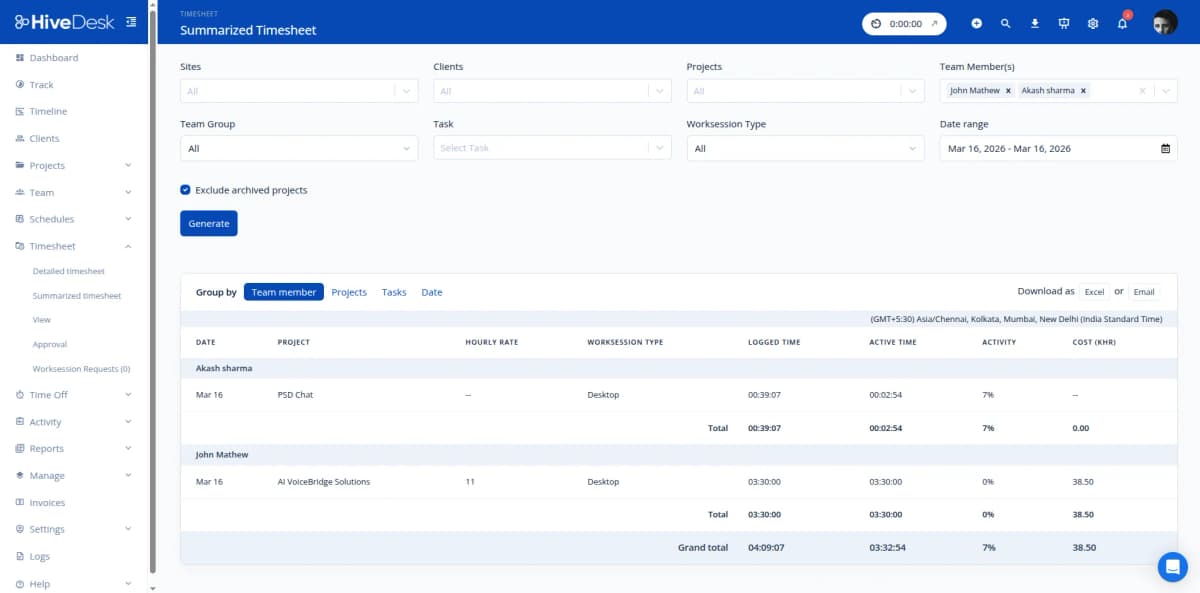
Automated timesheets replace manual tracking
Calculate Your ROI
See how much HiveDesk can save your operations.
Everything you need to manage your workforce
From automatic time tracking to performance analytics, HiveDesk provides all the tools to streamline operations and boost productivity.
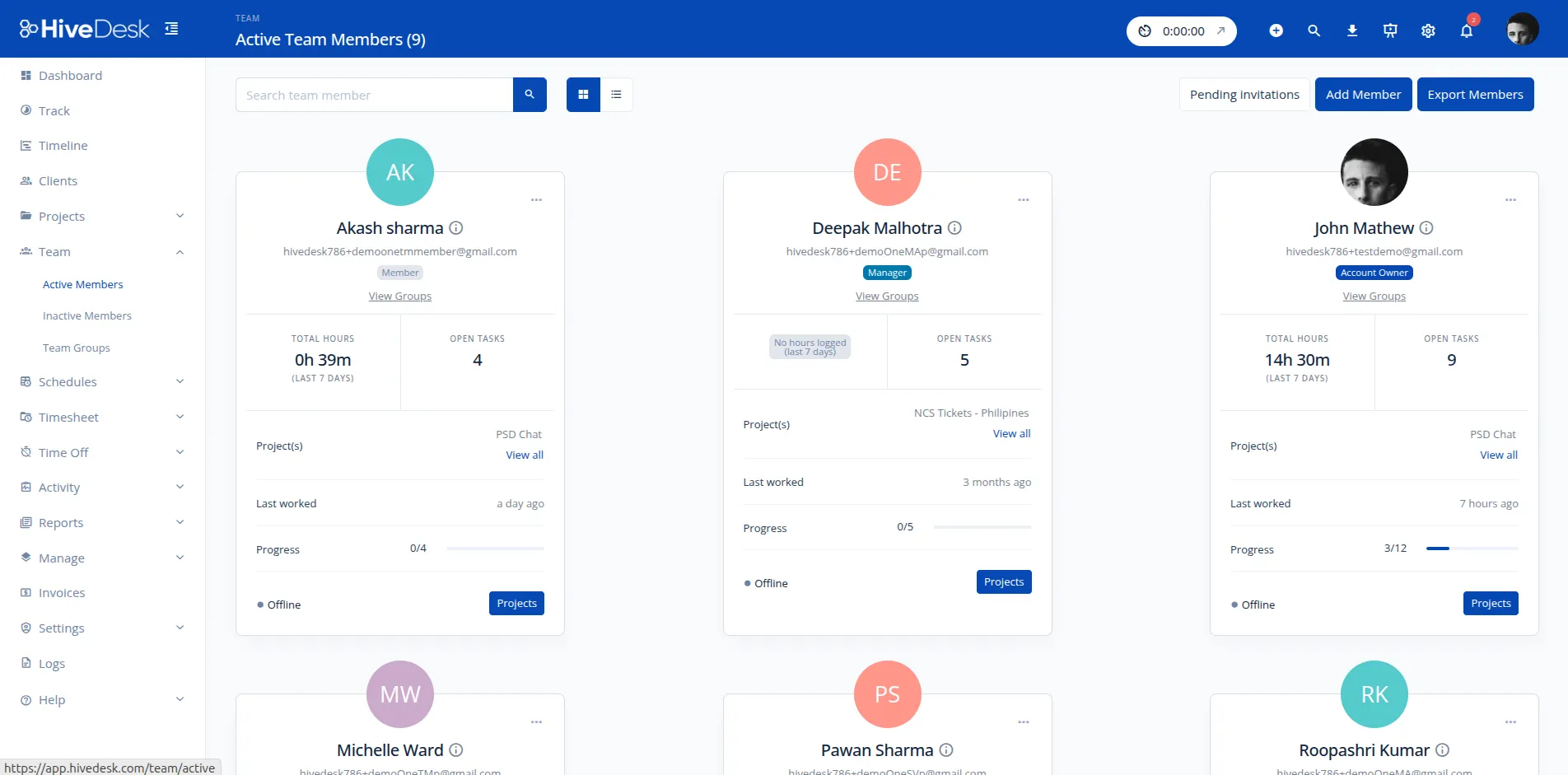
Work from anywhere, stay connected everywhere
Whether your team works remotely, in-office, or hybrid, HiveDesk adapts to your workflow.
Mobile Apps
Native iOS app for time tracking and task management on the go. Work from anywhere with full functionality.
Asana Integration
Connect with Asana for project management. Sync tasks and streamline your existing workflows.
Security & Privacy
Enterprise-grade security with data protection, GDPR compliance, and advanced privacy controls.
Built for teams across industries
HiveDesk adapts to your industry with flexible workforce management tools.
Call Centers & BPO
Track agent utilization, manage shifts, monitor activity with screenshots, and generate compliance reports for your contact center.
Learn more →IT Services & Support
Recover lost billable time, build client trust with accurate invoicing, and improve workforce utilization across projects.
Learn more →Remote Teams
Give distributed teams the tools to track time, stay accountable, and collaborate across time zones with full visibility.
Learn more →Why teams choose HiveDesk
Simple, affordable workforce management that teams stick with for years.
Accurate Timesheets
Automatic time tracking eliminates manual timesheets. Know exactly how your team spends their work hours with screenshot-verified activity data.
$5/User/Month
One simple plan with all features included. No hidden fees, no feature gating. Every team gets access to everything HiveDesk offers.
Less Admin Work
Automated reporting, scheduled PDF and Excel exports, and streamlined attendance tracking replace tedious manual processes.
Simple, transparent pricing
One plan with all features included. No hidden fees, no feature gating.
For teams of any size
- Automatic time tracking with screenshots
- Project and task management
- Activity level monitoring
- Reports and timesheets
- Employee scheduling & attendance
- Leave management
- Unlimited projects
14-day free trial · No credit card required
Frequently Asked Questions
HiveDesk is workforce management and time tracking software for remote teams. It includes automatic time tracking, activity monitoring with periodic screenshots, employee scheduling, attendance and leave management, task and project tracking, timesheet generation, and real-time dashboards. Available on Windows, macOS, Linux, iOS, and Chrome.
HiveDesk is $5 per user per month with all features included. There are no tiers, no add-ons, and no hidden fees. You can start with a 14-day free trial — no credit card required.
HiveDesk works on Windows, macOS, and Linux desktops with a full-featured app that includes automatic screenshots and activity tracking. A mobile app for iOS supports GPS time tracking for field teams. You can also track time via our Chrome browser extension or the web portal.
HiveDesk integrates with Asana for project and task management. You can sync tasks between the two platforms to streamline your existing workflows.
Yes. HiveDesk follows GDPR-compliant practices for data handling and privacy. Employees can see exactly what is being tracked — there is no stealth mode or hidden monitoring. We track activity levels (keystrokes per minute, mouse clicks) but never log what is typed.
HiveDesk is used by contact centers, BPO operations, IT support teams, marketing agencies, consulting firms, staffing agencies, and other businesses managing remote or distributed teams. We serve customers on 6 continents.
Ready to transform your workforce management?
Join teams worldwide that have streamlined their operations with HiveDesk. Start your free trial today.