Managing Remote Call Center Agents: Your Blueprint for Success
A comprehensive guide to managing remote call center agents covering technology foundations, team culture, performance management, and best practices for customer support excellence.
5 min read

Vik Chadha
Vik is a co-founder and investor in a number of high-tech companies.

On this page
The world of work is constantly evolving, and perhaps no sector has felt this shift more profoundly than the call center industry. Once a bastion of bustling offices and close-knit cubicle farms, the call center landscape has undergone a seismic transformation. If you’re leading a remote call center team of agents who are now spread across various locations, you’re not alone. This isn’t just a temporary trend; it’s the new normal for customer support operations everywhere.
This guide is your roadmap, your blueprint, for navigating the exciting yet often challenging terrain of managing remote call center agents. We’ll delve into the strategies, tools, and mindsets you need to not just survive, but thrive, in this distributed environment.
The Remote Revolution: Why Managing Call Center Agents Has Changed
Remember the days when a call center meant rows upon rows of agents, headsets firmly in place, supervisors pacing the aisles? While that image still holds true for some, for many, it’s a relic of the past. The pandemic accelerated a shift that was already underway, proving that customer service doesn’t need to be tethered to a physical location.
The Shift to Remote Work in Call Centers
The move to remote work wasn’t just about necessity; it uncovered a wealth of benefits. For businesses, it meant access to a wider talent pool, reduced overhead and significant cost savings, and increased operational flexibility. For remote employees, it offered improved work-life balance, eliminated commutes, and often, a more comfortable work environment. This wasn’t just a band-aid solution; it revealed a powerful new model for delivering exceptional customer support and an outstanding customer experience.
Unique Challenges of Remote Call Center Management
However, with great opportunity comes unique challenges. Managing a remote workforce isn’t simply a matter of transplanting in-office practices to a virtual space. The subtle cues of body language are gone, impromptu water cooler chats are replaced by scheduled video calls, and the natural camaraderie of a shared workspace needs conscious cultivation. Contact center management leaders must now grapple with maintaining team cohesion, ensuring consistent agent performance, and fostering a sense of belonging when remote agents are geographically dispersed. It demands a different kind of leadership—one built on trust, transparency, and deliberate connection.
Establishing Your Remote Call Center Foundation
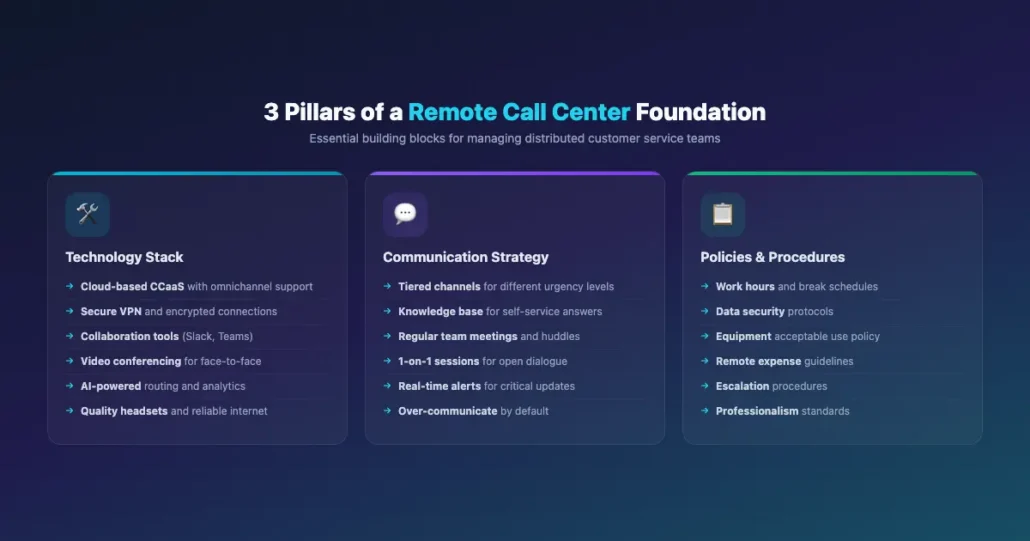
Before you can build a towering skyscraper, you need a rock-solid foundation. The same principle applies to your remote call center. Without the right underlying structures, even the best intentions will crumble.
1. Technology: The Backbone of Your Remote Operation
Think of technology as the central nervous system of your remote call center. It’s not just about giving remote agents a laptop; it’s about providing a seamless, secure, and intuitive digital environment. This means investing in robust, cloud-based contact center solutions from established providers—platforms (CCaaS) that offer features like intelligent call routing, CRM integration, and omnichannel customer support. Secure VPNs, reliable internet connections, and high-quality headsets are non-negotiable.
But it goes beyond the core tools. Consider collaboration tools like Slack or Microsoft Teams for instant messaging and team huddles, and video conferencing platforms for face-to-face connection even across distances. Project management tools can help track tasks and ensure everyone is aligned. AI-powered features like real-time transcription, sentiment analysis, and smart call routing can further streamline operations and help remote workers serve customers more effectively. The goal is to replicate, and ideally improve upon, the in-person experience through technology, ensuring agents have everything they need at their fingertips to serve customers effectively.
2. Clear Communication Channels: Your Lifeline to Success
In a remote setting, ambiguity is the enemy. You can’t rely on overhearing conversations or quick desk-side chats. Every piece of information, every expectation, needs to be communicated clearly, concisely, and through established channels. This means having a defined communication strategy.
What communication tools will you use for urgent alerts versus general announcements? How will agents ask questions and get timely answers? Implement a tiered communication system: perhaps a dedicated chat channel for immediate support, a knowledge base for self-service answers, and regular team meetings for broader updates and discussions. Encourage managers to schedule dedicated one-on-one time with each agent, not just for performance reviews, but for open dialogue and support. Remember, over-communicating is often better than under-communicating in a remote setup.
3. Robust Policies and Procedures: Setting the Ground Rules
Imagine trying to play a game without rules—chaos would ensue. Your remote call center is no different. Clear, comprehensive policies and procedures are essential for maintaining order, consistency, and fairness. This includes detailed guidelines on everything from work hours and break schedules to data security protocols, acceptable use of company equipment, and remote work expense policies.
These aren’t just documents to be filed away; they should be living, breathing guides that are easily accessible, regularly reviewed, and clearly communicated to every agent. Ensure agents understand the expectations regarding professionalism, customer interaction standards, and how to escalate issues. When agents know the rules of the game, they can play it effectively and confidently, reducing confusion and fostering a sense of accountability.
Building a Thriving Remote Team Culture
The biggest fear for many in call center management is losing that intangible sense of team. The good news? You can absolutely cultivate a vibrant, supportive culture even when everyone is working from different zip codes. It just requires intentional effort.
1. Trust and Empowerment: Your Most Valuable Assets
This is perhaps the most critical ingredient for remote success. If you’re constantly looking over an agent’s shoulder, they’ll feel it, even through a screen. Instead, foster an environment of trust. Hire the right people, provide them with the necessary tools and training programs, and then trust them to do their jobs.
Empowerment means giving agents autonomy. Allow them the flexibility within established guidelines to solve customer problems. When remote workers feel trusted and empowered, they take ownership, are more engaged, and are far more likely to go the extra mile for a customer. This trust isn’t blind; it’s earned through clear expectations and accountability, but it starts with your belief in your team.
2. Fostering Connection: Bridging the Distance
The lack of spontaneous interaction is one of the biggest challenges in remote teams. You need to create deliberate opportunities for connection and team collaboration. This goes beyond formal meetings. Schedule virtual coffee breaks, host online team-building games, or create dedicated “water cooler” chat channels for non-work discussions.
Consider virtual “lunch and learns” where team members can share skills or interests. Encourage managers to kick off team meetings with a personal check-in or a fun question. Celebrate successes—both big and small—collectively. These small, consistent efforts add up, helping agents feel like they are part of something bigger than just their individual workstation, which directly improves retention rates across the organization.
3. Regular Feedback and Recognition: Fueling Performance
In a remote setting, feedback becomes even more crucial. Agents need to know how they’re performing, what they’re doing well, and where they can improve. This shouldn’t be a once-a-year event. Implement a culture of continuous feedback—both formal and informal.
Schedule regular one-on-one sessions where managers can provide constructive criticism and celebrate wins. Utilize communication tools for instant positive reinforcement. Publicly recognize top performers who go above and beyond, perhaps through a virtual “employee of the month” program or by highlighting great customer feedback during team meetings. When agents feel seen, heard, and appreciated, their motivation and performance soar.
Performance Management in a Remote Setting

Managing performance remotely isn’t about micromanagement; it’s about clear expectations, objective performance metrics, and supportive coaching.
1. Defining Success: KPIs and Metrics that Matter
Before you can manage performance, you need to define what success looks like. This means establishing clear Key Performance Indicators (KPIs) that are relevant to your business goals and easily measurable in a remote environment. Focus on metrics like average handle time (AHT), customer satisfaction (CSAT) scores, first call resolution (FCR) rates, and adherence to schedules.
Ensure these metrics are transparent, understood by all agents, and regularly reviewed. Provide agents with access to their own performance dashboards so they can track their progress and take ownership of their results. The goal is to provide a clear scoreboard, not a report card for punishment. By integrating workforce management practices into your scheduling, you can optimize agent availability and ensure the right coverage at peak times.
2. Effective Monitoring Without Micromanagement
The line between monitoring and micromanaging can feel particularly thin in a remote context. The key is to monitor for insights, not for control. Leverage your contact center software to gain real-time visibility into call volumes, agent availability, and customer interactions. Call recordings can be invaluable for quality assurance and quality management, but should be used strategically and with transparency.
Instead of constantly checking in, focus on outcomes. If an agent’s KPIs are consistently strong, trust them to manage their workflow. If performance dips, then monitoring tools can help identify specific areas for coaching and support. Frame monitoring as a tool to help agents succeed, rather than a method for catching them out.
3. Coaching and Development: Nurturing Growth Remotely
Coaching is the engine of agent development, and it can be incredibly effective remotely. Schedule regular virtual coaching sessions. Use screen-sharing tools to review call recordings together, offering specific, actionable feedback. Role-playing customer scenarios over video conferencing calls can also be a powerful training method.
Provide access to online learning modules and virtual workshops for skill development through structured onboarding and ongoing training programs. Encourage peer coaching, where experienced agents can mentor newer team members through video calls. The goal is to create a continuous learning environment where agents feel supported in their professional growth, regardless of their physical location.
Overcoming Common Remote Management Hurdles
Even with the best planning, you’ll encounter bumps in the road. Being proactive about these common hurdles will save you a lot of headaches.
Addressing Isolation and Burnout
The blurred lines between work and home can lead to isolation and burnout for remote employees. Combat this by actively promoting work-life balance. Encourage agents to take regular breaks, sign off at the end of their workday, and utilize their vacation time. Organize virtual social events to maintain camaraderie.
Managers should be trained to recognize the signs of burnout and isolation and to reach out proactively. Implementing mental health resources, like employee assistance programs (EAPs), can also provide crucial support to agents struggling with the demands of remote work. Automation of routine administrative tasks can also help reduce agent workload and prevent fatigue.
Ensuring Data Security and Compliance
When agents work from home, the attack surface for cybersecurity threats expands. This is a non-negotiable area. Implement strict security protocols: mandatory use of VPNs, strong password policies, multi-factor authentication, and regular security awareness training. Ensure all company devices are secure and up-to-date with antivirus software.
Furthermore, ensure your remote operations comply with all relevant industry regulations (e.g., HIPAA, PCI DSS, GDPR). Conduct regular audits to verify compliance. This isn’t just about protecting your business; it’s about protecting your customers’ sensitive data and maintaining their trust.
Maintaining Customer Service Excellence from Afar
The ultimate goal of any contact center is exceptional customer service. In a remote environment, consistency is key. Standardize your customer interaction guidelines and ensure agents have easy access to up-to-date knowledge bases and scripts. Leverage real-time analytics to identify trends in customer satisfaction and address issues before they escalate.
Regularly monitor customer feedback channels—surveys, social media, online reviews—to identify any dips in service quality. Use this feedback for targeted coaching and process improvements. Foster a culture where every agent understands their vital role in upholding the brand’s reputation, regardless of where they are working. When you streamline processes and empower agents with the right tools, maintaining excellence becomes second nature.
Your Blueprint for a Successful Remote Call Center
Managing a remote call center is undoubtedly a complex undertaking, but it’s also an incredibly rewarding one. It’s about leading with empathy, trusting your team, and leveraging technology to create a connected, high-performing environment. By laying a strong foundation of technology and clear communication, fostering a culture of trust and connection, and implementing robust performance management strategies, you can build a remote call center that not only meets but exceeds expectations. This isn’t just about adapting to change; it’s about embracing the future of customer service and empowering your agents to thrive from anywhere. You have the blueprint; now go build your success
Start your outsourcing company’s transformation today!
Say hello to productivity, accuracy, and profitable growth. Streamline your operations and project management with HiveDesk.