Employee Shift Scheduling: Fundamentals, Challenges, and Benefits
Employee shift scheduling is a critical component of workforce management that directly impacts productivity, employee satisfaction, and overall business performance
5 min read

Vik Chadha
Vik is a co-founder and investor in a number of high-tech companies.

On this page
Employee shift scheduling is a critical component of workforce management that directly impacts productivity, employee satisfaction, and overall business performance. This comprehensive guide explores the fundamentals, challenges, and benefits of effective shift scheduling for contact centers and BPO companies.

Fundamentals of Employee Shift Scheduling
Shift scheduling involves organizing work times to balance business requirements, employee availability, and legal regulations. The process requires understanding peak operational hours and analyzing historical data to optimize staffing levels.
Key Components:
- Business Requirements: Matching staffing levels to demand patterns
- Employee Availability: Considering worker preferences and constraints
- Legal Compliance: Adhering to labor laws and regulations
- Historical Analysis: Using data to predict staffing needs
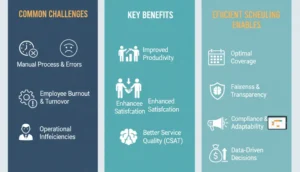
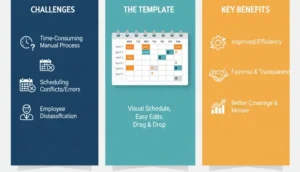
Challenges in Shift Scheduling
1. Last-Minute Schedule Changes
Unexpected absences and urgent business needs can disrupt carefully planned schedules, requiring quick adjustments that may impact team morale and efficiency.
2. Balancing Employee Preferences
Managing diverse employee preferences for shifts, days off, and work-life balance while maintaining operational coverage presents ongoing challenges.
3. Maintaining Fairness in Shift Distribution
Ensuring equitable distribution of desirable and less desirable shifts among team members while maintaining performance standards.
Benefits of Effective Shift Scheduling
1. Enhanced Productivity
Well-planned schedules ensure optimal staffing during peak hours, leading to improved service delivery and operational efficiency.
2. Reduced Labor Costs
Strategic scheduling helps minimize overtime costs and reduces the need for temporary staffing solutions.
3. Improved Employee Satisfaction
Fair and predictable scheduling practices contribute to better work-life balance and increased job satisfaction.
4. Better Customer Service
Proper staffing levels during peak periods ensure customers receive timely and quality service.
Pro Tips for Optimal Shift Scheduling
Use Data Analytics
Leverage historical data and analytics to identify patterns and optimize scheduling decisions for better outcomes.
Implement Real-Time Scheduling Platforms
Use technology solutions that enable real-time adjustments and improve communication with team members.
Regularly Review and Adjust
Continuously evaluate scheduling practices and make adjustments based on changing business needs and employee feedback.
Maintain Open Communication
Foster transparent communication with employees about scheduling decisions and provide channels for feedback and requests.
Conclusion
Effective shift scheduling is crucial for operational efficiency, employee well-being, and overall business performance. By understanding the fundamentals, addressing common challenges, and implementing best practices, organizations can create scheduling systems that benefit both the business and its workforce.
The key to successful shift scheduling lies in balancing business requirements with employee needs while leveraging technology and data analytics to make informed decisions. Regular review and adjustment of scheduling practices ensure continued effectiveness and adaptability to changing circumstances.
Start your outsourcing company’s transformation today!
Say hello to productivity, accuracy, and profitable growth. Streamline your operations and project management with HiveDesk.