Workforce Management in Call Centers: The Ultimate Guide
A comprehensive guide to call center and contact center workforce management covering forecasting, scheduling, adherence, intraday management, performance optimization, WFM software, and best practices for improving customer experience and operational efficiency.
5 min read

Vik Chadha
Vik is a co-founder and investor in a number of high-tech companies.

On this page
Ever felt like you’re playing a high-stakes game of Tetris with your call center staff? Trying to fit the right people into the right slots at the right time, all while the incoming calls just keep piling up? That, my friend, is the essence of workforce management (WFM) in a call center. It’s the strategic art and science of ensuring you have the optimal number of agents with the right skills available to handle customer interactions at any given moment.
It’s more than just creating a schedule; it’s about orchestrating an entire contact center operation to meet customer demand efficiently and effectively. Think of it as the air traffic control for your customer service hub—making sure every “plane” (call or customer interaction) lands safely and on time, without delays or collisions, all while optimizing fuel (agent time) and ensuring the pilots (agents) are well-rested and skilled.
What is Workforce Management in Call Centers?
At its heart, call center workforce management is the process of optimizing the productivity of your call center agents. It encompasses everything from predicting how many calls you’ll receive, to scheduling agents, managing their breaks, and analyzing their performance to make real-time adjustments. Contact center workforce management follows the same principles whether you operate a traditional phone-based call center or a modern omnichannel contact center handling voice, chat, email, and social media. It’s a continuous cycle designed to strike a delicate balance: delivering exceptional customer support without overspending on staffing, and simultaneously ensuring agents aren’t burnt out or twiddling their thumbs.
Imagine a busy restaurant. WFM isn’t just about making sure you have enough waiters for dinner rush. It’s about predicting how many diners will show up, when they’ll show up, what kind of orders they’ll place, making sure the right number of waiters, chefs, and busboys are on duty at precisely the right moments, and then adjusting on the fly if a sudden party of 20 walks in. That’s the dynamic challenge workforce management tackles daily in a call center environment.
Why is WFM More Critical Than Ever in Call Centers?
The world of customer service is evolving rapidly. Customers expect instant gratification, personalized experiences, and access across multiple channels—phone, chat, email, social media. This rising tide of customer expectations, coupled with economic pressures and the shift to remote or hybrid work models, has made workforce management not just a good idea, but an absolute necessity for every contact center.
Without robust WFM, call centers risk agent burnout due to unpredictable workloads, long customer wait times leading to frustration and churn, and significant operational inefficiencies that eat into the bottom line. It’s the engine that powers both customer satisfaction and business profitability. In today’s competitive landscape, ignoring workforce management is akin to navigating a stormy sea without a compass—you might get somewhere, but it won’t be pretty, and it certainly won’t be efficient.
The Core Pillars of Effective Call Center WFM
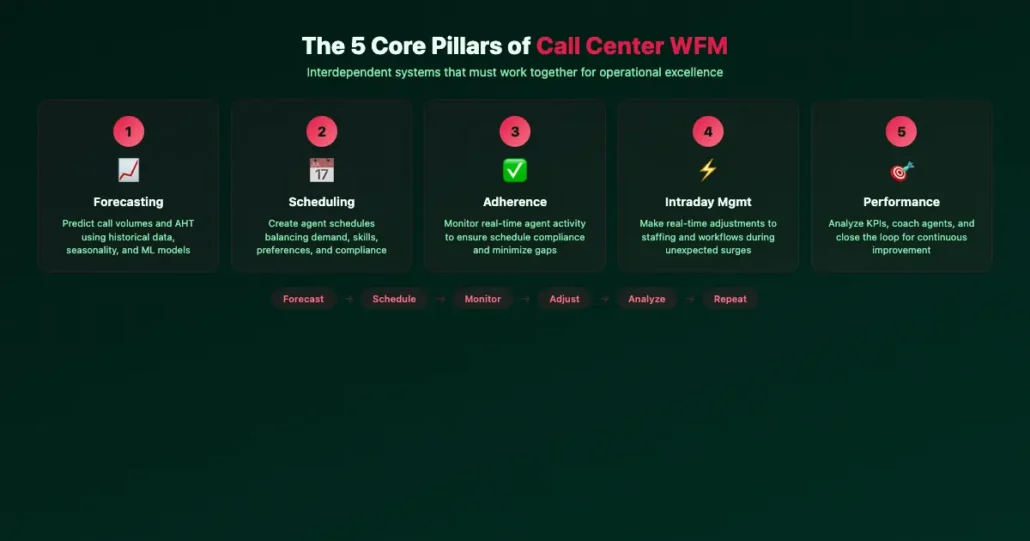
To truly master WFM, you need to understand its foundational components. Think of these as the interdependent systems of a high-performance engine; each must function optimally for the whole to succeed.
1. Forecasting: Predicting the Unpredictable (or Trying To)
Forecasting is the bedrock of workforce management. It’s the act of predicting future customer contact volumes and average handling times (AHT) with the highest possible accuracy. This isn’t just a wild guess; it involves analyzing historical data—call volumes from previous weeks, months, and even years, accounting for seasonality, marketing campaigns, product launches, and even external events like public holidays.
Consider a retail call center. Their forecasting model needs to factor in the predictable spike in calls around Black Friday, the dip during Christmas Eve, and the surge after a major product recall. They also need to predict the type of calls—a billing inquiry might take 3 minutes, while a complex technical support issue could take 15. The better your forecast, the more accurate your staffing plan will be, ensuring you can meet your staffing needs without wasting resources. It’s like a weather report for your call center: you can’t control the weather, but an accurate forecast helps you prepare with the right gear.
2. Scheduling: The Jigsaw Puzzle of Staffing
Once you have your forecast, scheduling takes over. This is where you translate those predictions into actual agent schedules, ensuring the right number of agents with the right skills are available at the right times to meet the predicted demand. It’s a complex jigsaw puzzle, often with thousands of pieces. You’re not just assigning shifts; you’re factoring in agent availability, preferences, skill sets (e.g., multilingual agents, technical support specialists), regulatory compliance for breaks, holidays, and training sessions.
Imagine you have 100 agents, but you know from your forecast that you need 80 agents from 9 AM to 10 AM, 120 from 10 AM to 11 AM, and 70 from 11 AM to 12 PM. How do you create shifts that cover these fluctuating needs while also giving agents their required lunch breaks and ensuring nobody works more than their contracted hours? This is the scheduler’s daily challenge. Modern workforce management tools automate much of this, but the underlying logic remains crucial.
3. Adherence: Keeping Everyone on Track
Adherence refers to how well agents stick to their assigned schedules. Are they logging in on time? Are they taking their breaks exactly when scheduled? Are they returning from lunch promptly? Any deviation—even a few minutes—or unplanned absences can have a ripple effect, creating staffing gaps and impacting service levels.
Think of it like a synchronized swim team. If one swimmer is out of sync by even a second, the entire routine looks messy. In a call center, if several agents extend their breaks or log in late, what seems like minor infractions quickly accumulate into missed calls, increased wait times, and frustrated customers. Adherence monitoring provides real-time visibility into agent activity, allowing supervisors to intervene proactively and maintain the integrity of the schedule.
4. Intraday Management: Navigating the Daily Storm
No matter how good your forecast or schedule, the real world rarely unfolds exactly as planned. Intraday management is the art of making real-time adjustments to your staffing levels and agent activities during the day to cope with unexpected fluctuations. Did a news report cause a sudden surge in calls about your product? Is a critical system down, leading to an influx of technical support queries?
This is where WFM truly becomes dynamic. Intraday managers might re-prioritize queues, adjust workflows to redirect contact center agents from less critical tasks like email responses to handle live calls, or even authorize overtime if absolutely necessary. It’s about constantly monitoring key metrics like service level, average speed of answer, and agent occupancy, and then making swift, informed decisions to keep the ship steady amidst the daily storms. Effective intraday management streamlines response times and keeps your operation running smoothly even when reality deviates from plan.
5. Performance Management: Fueling Growth and Improvement
The final pillar is performance management, which closes the loop by using data to improve all previous stages. It involves analyzing individual and team performance against key performance indicators—AHT, quality scores, first call resolution, customer satisfaction (CSAT) scores, and adherence. This data provides insights into what’s working and what isn’t, and where agent productivity can be improved.
Are certain agents consistently exceeding quality targets but struggling with AHT? Perhaps they need coaching on efficiency. Is a specific team constantly missing its service level goals? It might indicate a gap in training or an inaccurate forecast for that queue. Performance management isn’t about pointing fingers; it’s about identifying areas for development, providing targeted coaching, and celebrating successes, ultimately leading to better forecasts, more efficient schedules, and a more engaged workforce.
The Benefits of Mastering Call Center Workforce Management
Getting WFM right isn’t just about avoiding chaos; it unlocks a cascade of benefits that impact every facet of your call center and contact center operation.
![{"type":"elementor","siteurl":"https://www.hivedesk.com/wp-json/","elements":[{"id":"0364ddd","elType":"widget","isInner":false,"isLocked":false,"settings":{"image":{"url":"https://www.hivedesk.com/wp-content/uploads/2026/02/workforce-management-in-call-centers-pillars.webp","id":14494,"size":"","alt":"The Core Pillars of Effective Call Center WFM","source":"library"},"image_size":"large","image_custom_dimension":{"width":"","height":""},"caption_source":"none","caption":"","link_to":"none","link":{"url":"","is_external":"","nofollow":"","custom_attributes":""},"open_lightbox":"default","align":"","align_laptop":"","align_tablet":"","align_mobile":"","width":{"unit":"%","size":"","sizes":[]},"width_laptop":{"unit":"px","size":"","sizes":[]},"width_tablet":{"unit":"%","size":"","sizes":[]},"width_mobile":{"unit":"%","size":"","sizes":[]},"space":{"unit":"%","size":"","sizes":[]},"space_laptop":{"unit":"px","size":"","sizes":[]},"space_tablet":{"unit":"%","size":"","sizes":[]},"space_mobile":{"unit":"%","size":"","sizes":[]},"height":{"unit":"px","size":"","sizes":[]},"height_laptop":{"unit":"px","size":"","sizes":[]},"height_tablet":{"unit":"px","size":"","sizes":[]},"height_mobile":{"unit":"px","size":"","sizes":[]},"object-fit":"","object-fit_laptop":"","object-fit_tablet":"","object-fit_mobile":"","object-position":"center center","object-position_laptop":"","object-position_tablet":"","object-position_mobile":"","opacity":{"unit":"px","size":"","sizes":[]},"css_filters_css_filter":"","css_filters_blur":{"unit":"px","size":0,"sizes":[]},"css_filters_brightness":{"unit":"px","size":100,"sizes":[]},"css_filters_contrast":{"unit":"px","size":100,"sizes":[]},"css_filters_saturate":{"unit":"px","size":100,"sizes":[]},"css_filters_hue":{"unit":"px","size":0,"sizes":[]},"opacity_hover":{"unit":"px","size":"","sizes":[]},"css_filters_hover_css_filter":"","css_filters_hover_blur":{"unit":"px","size":0,"sizes":[]},"css_filters_hover_brightness":{"unit":"px","size":100,"sizes":[]},"css_filters_hover_contrast":{"unit":"px","size":100,"sizes":[]},"css_filters_hover_saturate":{"unit":"px","size":100,"sizes":[]},"css_filters_hover_hue":{"unit":"px","size":0,"sizes":[]},"background_hover_transition":{"unit":"px","size":"","sizes":[]},"hover_animation":"","image_border_border":"","image_border_width":{"unit":"px","top":"","right":"","bottom":"","left":"","isLinked":true},"image_border_width_laptop":{"unit":"px","top":"","right":"","bottom":"","left":"","isLinked":true},"image_border_width_tablet":{"unit":"px","top":"","right":"","bottom":"","left":"","isLinked":true},"image_border_width_mobile":{"unit":"px","top":"","right":"","bottom":"","left":"","isLinked":true},"image_border_color":"","image_border_radius":{"unit":"px","top":"","right":"","bottom":"","left":"","isLinked":true},"image_border_radius_laptop":{"unit":"px","top":"","right":"","bottom":"","left":"","isLinked":true},"image_border_radius_tablet":{"unit":"px","top":"","right":"","bottom":"","left":"","isLinked":true},"image_border_radius_mobile":{"unit":"px","top":"","right":"","bottom":"","left":"","isLinked":true},"image_box_shadow_box_shadow_type":"","image_box_shadow_box_shadow":{"horizontal":0,"vertical":0,"blur":10,"spread":0,"color":"rgba(0,0,0,0.5)"},"caption_align":"","caption_align_laptop":"","caption_align_tablet":"","caption_align_mobile":"","text_color":"","caption_background_color":"","caption_typography_typography":"","caption_typography_font_family":"","caption_typography_font_size":{"unit":"px","size":"","sizes":[]},"caption_typography_font_size_laptop":{"unit":"px","size":"","sizes":[]},"caption_typography_font_size_tablet":{"unit":"px","size":"","sizes":[]},"caption_typography_font_size_mobile":{"unit":"px","size":"","sizes":[]},"caption_typography_font_weight":"","caption_typography_text_transform":"","caption_typography_font_style":"","caption_typography_text_decoration":"","caption_typography_line_height":{"unit":"px","size":"","sizes":[]},"caption_typography_line_height_laptop":{"unit":"px","size":"","sizes":[]},"caption_typography_line_height_tablet":{"unit":"em","size":"","sizes":[]},"caption_typography_line_height_mobile":{"unit":"em","size":"","sizes":[]},"caption_typography_letter_spacing":{"unit":"px","size":"","sizes":[]},"caption_typography_letter_spacing_laptop":{"unit":"px","size":"","sizes":[]},"caption_typography_letter_spacing_tablet":{"unit":"px","size":"","sizes":[]},"caption_typography_letter_spacing_mobile":{"unit":"px","size":"","sizes":[]},"caption_typography_word_spacing":{"unit":"px","size":"","sizes":[]},"caption_typography_word_spacing_laptop":{"unit":"px","size":"","sizes":[]},"caption_typography_word_spacing_tablet":{"unit":"em","size":"","sizes":[]},"caption_typography_word_spacing_mobile":{"unit":"em","size":"","sizes":[]},"caption_text_shadow_text_shadow_type":"","caption_text_shadow_text_shadow":{"horizontal":0,"vertical":0,"blur":10,"color":"rgba(0,0,0,0.3)"},"caption_space":{"unit":"px","size":"","sizes":[]},"caption_space_laptop":{"unit":"px","size":"","sizes":[]},"caption_space_tablet":{"unit":"px","size":"","sizes":[]},"caption_space_mobile":{"unit":"px","size":"","sizes":[]},"_title":"","_margin":{"unit":"px","top":"","right":"","bottom":"","left":"","isLinked":true},"_margin_laptop":{"unit":"px","top":"","right":"","bottom":"","left":"","isLinked":true},"_margin_tablet":{"unit":"px","top":"","right":"","bottom":"","left":"","isLinked":true},"_margin_mobile":{"unit":"px","top":"","right":"","bottom":"","left":"","isLinked":true},"_padding":{"unit":"px","top":"","right":"","bottom":"","left":"","isLinked":true},"_padding_laptop":{"unit":"px","top":"","right":"","bottom":"","left":"","isLinked":true},"_padding_tablet":{"unit":"px","top":"","right":"","bottom":"","left":"","isLinked":true},"_padding_mobile":{"unit":"px","top":"","right":"","bottom":"","left":"","isLinked":true},"_element_width":"","_element_width_laptop":"","_element_width_tablet":"","_element_width_mobile":"","_element_custom_width":{"unit":"%","size":"","sizes":[]},"_element_custom_width_laptop":{"unit":"px","size":"","sizes":[]},"_element_custom_width_tablet":{"unit":"px","size":"","sizes":[]},"_element_custom_width_mobile":{"unit":"px","size":"","sizes":[]},"_grid_column":"","_grid_column_laptop":"","_grid_column_tablet":"","_grid_column_mobile":"","_grid_column_custom":"","_grid_column_custom_laptop":"","_grid_column_custom_tablet":"","_grid_column_custom_mobile":"","_grid_row":"","_grid_row_laptop":"","_grid_row_tablet":"","_grid_row_mobile":"","_grid_row_custom":"","_grid_row_custom_laptop":"","_grid_row_custom_tablet":"","_grid_row_custom_mobile":"","_flex_align_self":"","_flex_align_self_laptop":"","_flex_align_self_tablet":"","_flex_align_self_mobile":"","_flex_order":"","_flex_order_laptop":"","_flex_order_tablet":"","_flex_order_mobile":"","_flex_order_custom":"","_flex_order_custom_laptop":"","_flex_order_custom_tablet":"","_flex_order_custom_mobile":"","_flex_size":"","_flex_size_laptop":"","_flex_size_tablet":"","_flex_size_mobile":"","_flex_grow":1,"_flex_grow_laptop":"","_flex_grow_tablet":"","_flex_grow_mobile":"","_flex_shrink":1,"_flex_shrink_laptop":"","_flex_shrink_tablet":"","_flex_shrink_mobile":"","_element_vertical_align":"","_element_vertical_align_laptop":"","_element_vertical_align_tablet":"","_element_vertical_align_mobile":"","_position":"","_offset_orientation_h":"start","_offset_x":{"unit":"px","size":0,"sizes":[]},"_offset_x_laptop":{"unit":"px","size":"","sizes":[]},"_offset_x_tablet":{"unit":"px","size":"","sizes":[]},"_offset_x_mobile":{"unit":"px","size":"","sizes":[]},"_offset_x_end":{"unit":"px","size":0,"sizes":[]},"_offset_x_end_laptop":{"unit":"px","size":"","sizes":[]},"_offset_x_end_tablet":{"unit":"px","size":"","sizes":[]},"_offset_x_end_mobile":{"unit":"px","size":"","sizes":[]},"_offset_orientation_v":"start","_offset_y":{"unit":"px","size":0,"sizes":[]},"_offset_y_laptop":{"unit":"px","size":"","sizes":[]},"_offset_y_tablet":{"unit":"px","size":"","sizes":[]},"_offset_y_mobile":{"unit":"px","size":"","sizes":[]},"_offset_y_end":{"unit":"px","size":0,"sizes":[]},"_offset_y_end_laptop":{"unit":"px","size":"","sizes":[]},"_offset_y_end_tablet":{"unit":"px","size":"","sizes":[]},"_offset_y_end_mobile":{"unit":"px","size":"","sizes":[]},"_z_index":"","_z_index_laptop":"","_z_index_tablet":"","_z_index_mobile":"","_element_id":"","_css_classes":"","e_display_conditions":"","_element_cache":"","motion_fx_motion_fx_scrolling":"","motion_fx_translateY_effect":"","motion_fx_translateY_direction":"","motion_fx_translateY_speed":{"unit":"px","size":4,"sizes":[]},"motion_fx_translateY_affectedRange":{"unit":"%","size":"","sizes":{"start":0,"end":100}},"motion_fx_translateX_effect":"","motion_fx_translateX_direction":"","motion_fx_translateX_speed":{"unit":"px","size":4,"sizes":[]},"motion_fx_translateX_affectedRange":{"unit":"%","size":"","sizes":{"start":0,"end":100}},"motion_fx_opacity_effect":"","motion_fx_opacity_direction":"out-in","motion_fx_opacity_level":{"unit":"px","size":10,"sizes":[]},"motion_fx_opacity_range":{"unit":"%","size":"","sizes":{"start":20,"end":80}},"motion_fx_blur_effect":"","motion_fx_blur_direction":"out-in","motion_fx_blur_level":{"unit":"px","size":7,"sizes":[]},"motion_fx_blur_range":{"unit":"%","size":"","sizes":{"start":20,"end":80}},"motion_fx_rotateZ_effect":"","motion_fx_rotateZ_direction":"","motion_fx_rotateZ_speed":{"unit":"px","size":1,"sizes":[]},"motion_fx_rotateZ_affectedRange":{"unit":"%","size":"","sizes":{"start":0,"end":100}},"motion_fx_scale_effect":"","motion_fx_scale_direction":"out-in","motion_fx_scale_speed":{"unit":"px","size":4,"sizes":[]},"motion_fx_scale_range":{"unit":"%","size":"","sizes":{"start":20,"end":80}},"motion_fx_transform_origin_x":"center","motion_fx_transform_origin_y":"center","motion_fx_devices":["desktop","laptop","tablet","mobile"],"motion_fx_range":"","motion_fx_motion_fx_mouse":"","motion_fx_mouseTrack_effect":"","motion_fx_mouseTrack_direction":"","motion_fx_mouseTrack_speed":{"unit":"px","size":1,"sizes":[]},"motion_fx_tilt_effect":"","motion_fx_tilt_direction":"","motion_fx_tilt_speed":{"unit":"px","size":4,"sizes":[]},"handle_motion_fx_asset_loading":"","sticky":"","sticky_on":["desktop","laptop","tablet","mobile"],"sticky_offset":0,"sticky_offset_laptop":"","sticky_offset_tablet":"","sticky_offset_mobile":"","sticky_effects_offset":0,"sticky_effects_offset_laptop":"","sticky_effects_offset_tablet":"","sticky_effects_offset_mobile":"","sticky_anchor_link_offset":0,"sticky_anchor_link_offset_laptop":"","sticky_anchor_link_offset_tablet":"","sticky_anchor_link_offset_mobile":"","sticky_parent":"","_animation":"","_animation_laptop":"","_animation_tablet":"","_animation_mobile":"","animation_duration":"","_animation_delay":"","_transform_rotate_popover":"","_transform_rotateZ_effect":{"unit":"px","size":"","sizes":[]},"_transform_rotateZ_effect_laptop":{"unit":"deg","size":"","sizes":[]},"_transform_rotateZ_effect_tablet":{"unit":"deg","size":"","sizes":[]},"_transform_rotateZ_effect_mobile":{"unit":"deg","size":"","sizes":[]},"_transform_rotate_3d":"","_transform_rotateX_effect":{"unit":"px","size":"","sizes":[]},"_transform_rotateX_effect_laptop":{"unit":"deg","size":"","sizes":[]},"_transform_rotateX_effect_tablet":{"unit":"deg","size":"","sizes":[]},"_transform_rotateX_effect_mobile":{"unit":"deg","size":"","sizes":[]},"_transform_rotateY_effect":{"unit":"px","size":"","sizes":[]},"_transform_rotateY_effect_laptop":{"unit":"deg","size":"","sizes":[]},"_transform_rotateY_effect_tablet":{"unit":"deg","size":"","sizes":[]},"_transform_rotateY_effect_mobile":{"unit":"deg","size":"","sizes":[]},"_transform_perspective_effect":{"unit":"px","size":"","sizes":[]},"_transform_perspective_effect_laptop":{"unit":"px","size":"","sizes":[]},"_transform_perspective_effect_tablet":{"unit":"px","size":"","sizes":[]},"_transform_perspective_effect_mobile":{"unit":"px","size":"","sizes":[]},"_transform_translate_popover":"","_transform_translateX_effect":{"unit":"px","size":"","sizes":[]},"_transform_translateX_effect_laptop":{"unit":"px","size":"","sizes":[]},"_transform_translateX_effect_tablet":{"unit":"px","size":"","sizes":[]},"_transform_translateX_effect_mobile":{"unit":"px","size":"","sizes":[]},"_transform_translateY_effect":{"unit":"px","size":"","sizes":[]},"_transform_translateY_effect_laptop":{"unit":"px","size":"","sizes":[]},"_transform_translateY_effect_tablet":{"unit":"px","size":"","sizes":[]},"_transform_translateY_effect_mobile":{"unit":"px","size":"","sizes":[]},"_transform_scale_popover":"","_transform_keep_proportions":"yes","_transform_scale_effect":{"unit":"px","size":"","sizes":[]},"_transform_scale_effect_laptop":{"unit":"px","size":"","sizes":[]},"_transform_scale_effect_tablet":{"unit":"px","size":"","sizes":[]},"_transform_scale_effect_mobile":{"unit":"px","size":"","sizes":[]},"_transform_scaleX_effect":{"unit":"px","size":"","sizes":[]},"_transform_scaleX_effect_laptop":{"unit":"px","size":"","sizes":[]},"_transform_scaleX_effect_tablet":{"unit":"px","size":"","sizes":[]},"_transform_scaleX_effect_mobile":{"unit":"px","size":"","sizes":[]},"_transform_scaleY_effect":{"unit":"px","size":"","sizes":[]},"_transform_scaleY_effect_laptop":{"unit":"px","size":"","sizes":[]},"_transform_scaleY_effect_tablet":{"unit":"px","size":"","sizes":[]},"_transform_scaleY_effect_mobile":{"unit":"px","size":"","sizes":[]},"_transform_skew_popover":"","_transform_skewX_effect":{"unit":"px","size":"","sizes":[]},"_transform_skewX_effect_laptop":{"unit":"deg","size":"","sizes":[]},"_transform_skewX_effect_tablet":{"unit":"deg","size":"","sizes":[]},"_transform_skewX_effect_mobile":{"unit":"deg","size":"","sizes":[]},"_transform_skewY_effect":{"unit":"px","size":"","sizes":[]},"_transform_skewY_effect_laptop":{"unit":"deg","size":"","sizes":[]},"_transform_skewY_effect_tablet":{"unit":"deg","size":"","sizes":[]},"_transform_skewY_effect_mobile":{"unit":"deg","size":"","sizes":[]},"_transform_flipX_effect":"","_transform_flipY_effect":"","_transform_rotate_popover_hover":"","_transform_rotateZ_effect_hover":{"unit":"px","size":"","sizes":[]},"_transform_rotateZ_effect_hover_laptop":{"unit":"deg","size":"","sizes":[]},"_transform_rotateZ_effect_hover_tablet":{"unit":"deg","size":"","sizes":[]},"_transform_rotateZ_effect_hover_mobile":{"unit":"deg","size":"","sizes":[]},"_transform_rotate_3d_hover":"","_transform_rotateX_effect_hover":{"unit":"px","size":"","sizes":[]},"_transform_rotateX_effect_hover_laptop":{"unit":"deg","size":"","sizes":[]},"_transform_rotateX_effect_hover_tablet":{"unit":"deg","size":"","sizes":[]},"_transform_rotateX_effect_hover_mobile":{"unit":"deg","size":"","sizes":[]},"_transform_rotateY_effect_hover":{"unit":"px","size":"","sizes":[]},"_transform_rotateY_effect_hover_laptop":{"unit":"deg","size":"","sizes":[]},"_transform_rotateY_effect_hover_tablet":{"unit":"deg","size":"","sizes":[]},"_transform_rotateY_effect_hover_mobile":{"unit":"deg","size":"","sizes":[]},"_transform_perspective_effect_hover":{"unit":"px","size":"","sizes":[]},"_transform_perspective_effect_hover_laptop":{"unit":"px","size":"","sizes":[]},"_transform_perspective_effect_hover_tablet":{"unit":"px","size":"","sizes":[]},"_transform_perspective_effect_hover_mobile":{"unit":"px","size":"","sizes":[]},"_transform_translate_popover_hover":"","_transform_translateX_effect_hover":{"unit":"px","size":"","sizes":[]},"_transform_translateX_effect_hover_laptop":{"unit":"px","size":"","sizes":[]},"_transform_translateX_effect_hover_tablet":{"unit":"px","size":"","sizes":[]},"_transform_translateX_effect_hover_mobile":{"unit":"px","size":"","sizes":[]},"_transform_translateY_effect_hover":{"unit":"px","size":"","sizes":[]},"_transform_translateY_effect_hover_laptop":{"unit":"px","size":"","sizes":[]},"_transform_translateY_effect_hover_tablet":{"unit":"px","size":"","sizes":[]},"_transform_translateY_effect_hover_mobile":{"unit":"px","size":"","sizes":[]},"_transform_scale_popover_hover":"","_transform_keep_proportions_hover":"yes","_transform_scale_effect_hover":{"unit":"px","size":"","sizes":[]},"_transform_scale_effect_hover_laptop":{"unit":"px","size":"","sizes":[]},"_transform_scale_effect_hover_tablet":{"unit":"px","size":"","sizes":[]},"_transform_scale_effect_hover_mobile":{"unit":"px","size":"","sizes":[]},"_transform_scaleX_effect_hover":{"unit":"px","size":"","sizes":[]},"_transform_scaleX_effect_hover_laptop":{"unit":"px","size":"","sizes":[]},"_transform_scaleX_effect_hover_tablet":{"unit":"px","size":"","sizes":[]},"_transform_scaleX_effect_hover_mobile":{"unit":"px","size":"","sizes":[]},"_transform_scaleY_effect_hover":{"unit":"px","size":"","sizes":[]},"_transform_scaleY_effect_hover_laptop":{"unit":"px","size":"","sizes":[]},"_transform_scaleY_effect_hover_tablet":{"unit":"px","size":"","sizes":[]},"_transform_scaleY_effect_hover_mobile":{"unit":"px","size":"","sizes":[]},"_transform_skew_popover_hover":"","_transform_skewX_effect_hover":{"unit":"px","size":"","sizes":[]},"_transform_skewX_effect_hover_laptop":{"unit":"deg","size":"","sizes":[]},"_transform_skewX_effect_hover_tablet":{"unit":"deg","size":"","sizes":[]},"_transform_skewX_effect_hover_mobile":{"unit":"deg","size":"","sizes":[]},"_transform_skewY_effect_hover":{"unit":"px","size":"","sizes":[]},"_transform_skewY_effect_hover_laptop":{"unit":"deg","size":"","sizes":[]},"_transform_skewY_effect_hover_tablet":{"unit":"deg","size":"","sizes":[]},"_transform_skewY_effect_hover_mobile":{"unit":"deg","size":"","sizes":[]},"_transform_flipX_effect_hover":"","_transform_flipY_effect_hover":"","_transform_transition_hover":{"unit":"px","size":"","sizes":[]},"motion_fx_transform_x_anchor_point":"","motion_fx_transform_x_anchor_point_laptop":"","motion_fx_transform_x_anchor_point_tablet":"","motion_fx_transform_x_anchor_point_mobile":"","motion_fx_transform_y_anchor_point":"","motion_fx_transform_y_anchor_point_laptop":"","motion_fx_transform_y_anchor_point_tablet":"","motion_fx_transform_y_anchor_point_mobile":"","_background_background":"","_background_color":"","_background_color_stop":{"unit":"%","size":0,"sizes":[]},"_background_color_stop_laptop":{"unit":"%"},"_background_color_stop_tablet":{"unit":"%"},"_background_color_stop_mobile":{"unit":"%"},"_background_color_b":"#f2295b","_background_color_b_stop":{"unit":"%","size":100,"sizes":[]},"_background_color_b_stop_laptop":{"unit":"%"},"_background_color_b_stop_tablet":{"unit":"%"},"_background_color_b_stop_mobile":{"unit":"%"},"_background_gradient_type":"linear","_background_gradient_angle":{"unit":"deg","size":180,"sizes":[]},"_background_gradient_angle_laptop":{"unit":"deg"},"_background_gradient_angle_tablet":{"unit":"deg"},"_background_gradient_angle_mobile":{"unit":"deg"},"_background_gradient_position":"center center","_background_gradient_position_laptop":"","_background_gradient_position_tablet":"","_background_gradient_position_mobile":"","_background_image":{"url":"","id":"","size":""},"_background_image_laptop":{"url":"","id":"","size":""},"_background_image_tablet":{"url":"","id":"","size":""},"_background_image_mobile":{"url":"","id":"","size":""},"_background_position":"","_background_position_laptop":"","_background_position_tablet":"","_background_position_mobile":"","_background_xpos":{"unit":"px","size":0,"sizes":[]},"_background_xpos_laptop":{"unit":"px","size":"","sizes":[]},"_background_xpos_tablet":{"unit":"px","size":0,"sizes":[]},"_background_xpos_mobile":{"unit":"px","size":0,"sizes":[]},"_background_ypos":{"unit":"px","size":0,"sizes":[]},"_background_ypos_laptop":{"unit":"px","size":"","sizes":[]},"_background_ypos_tablet":{"unit":"px","size":0,"sizes":[]},"_background_ypos_mobile":{"unit":"px","size":0,"sizes":[]},"_background_attachment":"","_background_repeat":"","_background_repeat_laptop":"","_background_repeat_tablet":"","_background_repeat_mobile":"","_background_size":"","_background_size_laptop":"","_background_size_tablet":"","_background_size_mobile":"","_background_bg_width":{"unit":"%","size":100,"sizes":[]},"_background_bg_width_laptop":{"unit":"px","size":"","sizes":[]},"_background_bg_width_tablet":{"unit":"px","size":"","sizes":[]},"_background_bg_width_mobile":{"unit":"px","size":"","sizes":[]},"_background_video_link":"","_background_video_start":"","_background_video_end":"","_background_play_once":"","_background_play_on_mobile":"","_background_privacy_mode":"","_background_video_fallback":{"url":"","id":"","size":""},"_background_slideshow_gallery":[],"_background_slideshow_loop":"yes","_background_slideshow_slide_duration":5000,"_background_slideshow_slide_transition":"fade","_background_slideshow_transition_duration":500,"_background_slideshow_background_size":"","_background_slideshow_background_size_laptop":"","_background_slideshow_background_size_tablet":"","_background_slideshow_background_size_mobile":"","_background_slideshow_background_position":"","_background_slideshow_background_position_laptop":"","_background_slideshow_background_position_tablet":"","_background_slideshow_background_position_mobile":"","_background_slideshow_lazyload":"","_background_slideshow_ken_burns":"","_background_slideshow_ken_burns_zoom_direction":"in","_background_hover_background":"","_background_hover_color":"","_background_hover_color_stop":{"unit":"%","size":0,"sizes":[]},"_background_hover_color_stop_laptop":{"unit":"%"},"_background_hover_color_stop_tablet":{"unit":"%"},"_background_hover_color_stop_mobile":{"unit":"%"},"_background_hover_color_b":"#f2295b","_background_hover_color_b_stop":{"unit":"%","size":100,"sizes":[]},"_background_hover_color_b_stop_laptop":{"unit":"%"},"_background_hover_color_b_stop_tablet":{"unit":"%"},"_background_hover_color_b_stop_mobile":{"unit":"%"},"_background_hover_gradient_type":"linear","_background_hover_gradient_angle":{"unit":"deg","size":180,"sizes":[]},"_background_hover_gradient_angle_laptop":{"unit":"deg"},"_background_hover_gradient_angle_tablet":{"unit":"deg"},"_background_hover_gradient_angle_mobile":{"unit":"deg"},"_background_hover_gradient_position":"center center","_background_hover_gradient_position_laptop":"","_background_hover_gradient_position_tablet":"","_background_hover_gradient_position_mobile":"","_background_hover_image":{"url":"","id":"","size":""},"_background_hover_image_laptop":{"url":"","id":"","size":""},"_background_hover_image_tablet":{"url":"","id":"","size":""},"_background_hover_image_mobile":{"url":"","id":"","size":""},"_background_hover_position":"","_background_hover_position_laptop":"","_background_hover_position_tablet":"","_background_hover_position_mobile":"","_background_hover_xpos":{"unit":"px","size":0,"sizes":[]},"_background_hover_xpos_laptop":{"unit":"px","size":"","sizes":[]},"_background_hover_xpos_tablet":{"unit":"px","size":0,"sizes":[]},"_background_hover_xpos_mobile":{"unit":"px","size":0,"sizes":[]},"_background_hover_ypos":{"unit":"px","size":0,"sizes":[]},"_background_hover_ypos_laptop":{"unit":"px","size":"","sizes":[]},"_background_hover_ypos_tablet":{"unit":"px","size":0,"sizes":[]},"_background_hover_ypos_mobile":{"unit":"px","size":0,"sizes":[]},"_background_hover_attachment":"","_background_hover_repeat":"","_background_hover_repeat_laptop":"","_background_hover_repeat_tablet":"","_background_hover_repeat_mobile":"","_background_hover_size":"","_background_hover_size_laptop":"","_background_hover_size_tablet":"","_background_hover_size_mobile":"","_background_hover_bg_width":{"unit":"%","size":100,"sizes":[]},"_background_hover_bg_width_laptop":{"unit":"px","size":"","sizes":[]},"_background_hover_bg_width_tablet":{"unit":"px","size":"","sizes":[]},"_background_hover_bg_width_mobile":{"unit":"px","size":"","sizes":[]},"_background_hover_video_link":"","_background_hover_video_start":"","_background_hover_video_end":"","_background_hover_play_once":"","_background_hover_play_on_mobile":"","_background_hover_privacy_mode":"","_background_hover_video_fallback":{"url":"","id":"","size":""},"_background_hover_slideshow_gallery":[],"_background_hover_slideshow_loop":"yes","_background_hover_slideshow_slide_duration":5000,"_background_hover_slideshow_slide_transition":"fade","_background_hover_slideshow_transition_duration":500,"_background_hover_slideshow_background_size":"","_background_hover_slideshow_background_size_laptop":"","_background_hover_slideshow_background_size_tablet":"","_background_hover_slideshow_background_size_mobile":"","_background_hover_slideshow_background_position":"","_background_hover_slideshow_background_position_laptop":"","_background_hover_slideshow_background_position_tablet":"","_background_hover_slideshow_background_position_mobile":"","_background_hover_slideshow_lazyload":"","_background_hover_slideshow_ken_burns":"","_background_hover_slideshow_ken_burns_zoom_direction":"in","_background_hover_transition":{"unit":"px","size":"","sizes":[]},"_border_border":"","_border_width":{"unit":"px","top":"","right":"","bottom":"","left":"","isLinked":true},"_border_width_laptop":{"unit":"px","top":"","right":"","bottom":"","left":"","isLinked":true},"_border_width_tablet":{"unit":"px","top":"","right":"","bottom":"","left":"","isLinked":true},"_border_width_mobile":{"unit":"px","top":"","right":"","bottom":"","left":"","isLinked":true},"_border_color":"","_border_radius":{"unit":"px","top":"","right":"","bottom":"","left":"","isLinked":true},"_border_radius_laptop":{"unit":"px","top":"","right":"","bottom":"","left":"","isLinked":true},"_border_radius_tablet":{"unit":"px","top":"","right":"","bottom":"","left":"","isLinked":true},"_border_radius_mobile":{"unit":"px","top":"","right":"","bottom":"","left":"","isLinked":true},"_box_shadow_box_shadow_type":"","_box_shadow_box_shadow":{"horizontal":0,"vertical":0,"blur":10,"spread":0,"color":"rgba(0,0,0,0.5)"},"_box_shadow_box_shadow_position":" ","_border_hover_border":"","_border_hover_width":{"unit":"px","top":"","right":"","bottom":"","left":"","isLinked":true},"_border_hover_width_laptop":{"unit":"px","top":"","right":"","bottom":"","left":"","isLinked":true},"_border_hover_width_tablet":{"unit":"px","top":"","right":"","bottom":"","left":"","isLinked":true},"_border_hover_width_mobile":{"unit":"px","top":"","right":"","bottom":"","left":"","isLinked":true},"_border_hover_color":"","_border_radius_hover":{"unit":"px","top":"","right":"","bottom":"","left":"","isLinked":true},"_border_radius_hover_laptop":{"unit":"px","top":"","right":"","bottom":"","left":"","isLinked":true},"_border_radius_hover_tablet":{"unit":"px","top":"","right":"","bottom":"","left":"","isLinked":true},"_border_radius_hover_mobile":{"unit":"px","top":"","right":"","bottom":"","left":"","isLinked":true},"_box_shadow_hover_box_shadow_type":"","_box_shadow_hover_box_shadow":{"horizontal":0,"vertical":0,"blur":10,"spread":0,"color":"rgba(0,0,0,0.5)"},"_box_shadow_hover_box_shadow_position":" ","_border_hover_transition":{"unit":"px","size":"","sizes":[]},"_mask_switch":"","_mask_shape":"circle","_mask_image":{"url":"","id":"","size":""},"_mask_image_laptop":{"url":"","id":"","size":""},"_mask_image_tablet":{"url":"","id":"","size":""},"_mask_image_mobile":{"url":"","id":"","size":""},"_mask_size":"contain","_mask_size_laptop":"","_mask_size_tablet":"","_mask_size_mobile":"","_mask_size_scale":{"unit":"%","size":100,"sizes":[]},"_mask_size_scale_laptop":{"unit":"px","size":"","sizes":[]},"_mask_size_scale_tablet":{"unit":"px","size":"","sizes":[]},"_mask_size_scale_mobile":{"unit":"px","size":"","sizes":[]},"_mask_position":"center center","_mask_position_laptop":"","_mask_position_tablet":"","_mask_position_mobile":"","_mask_position_x":{"unit":"%","size":0,"sizes":[]},"_mask_position_x_laptop":{"unit":"px","size":"","sizes":[]},"_mask_position_x_tablet":{"unit":"px","size":"","sizes":[]},"_mask_position_x_mobile":{"unit":"px","size":"","sizes":[]},"_mask_position_y":{"unit":"%","size":0,"sizes":[]},"_mask_position_y_laptop":{"unit":"px","size":"","sizes":[]},"_mask_position_y_tablet":{"unit":"px","size":"","sizes":[]},"_mask_position_y_mobile":{"unit":"px","size":"","sizes":[]},"_mask_repeat":"no-repeat","_mask_repeat_laptop":"","_mask_repeat_tablet":"","_mask_repeat_mobile":"","hide_desktop":"","hide_laptop":"","hide_tablet":"","hide_mobile":"","_attributes":"","custom_css":""},"defaultEditSettings":{"defaultEditRoute":"content"},"interactions":{},"elements":[],"widgetType":"image","editSettings":{"defaultEditRoute":"content","panel":{"activeTab":"content","activeSection":"section_image"}}}]}](https://www.hivedesk.com/wp-content/uploads/2026/02/workforce-management-in-call-centers-benefits-1030x541.webp)
Improved Customer Experience (CX)
This is often the most direct and impactful benefit. When you have the right number of agents available to answer calls promptly, customers spend less time waiting. When those agents are adequately trained and not burnt out, they provide higher service quality, resolve issues faster, and create positive interactions. Imagine calling a company and getting through immediately to a knowledgeable, helpful agent versus being stuck on hold for 20 minutes only to speak with someone who sounds stressed and unhelpful. Which experience would you prefer? Optimal workforce management directly translates to happier customers.
Enhanced Agent Satisfaction and Retention
Agents are your most valuable asset. Poor WFM leads to unpredictable workloads, constant stress, extended hours, and a feeling of being overwhelmed. When agents are consistently overworked, under-scheduled, or constantly asked to switch tasks without notice, burnout and turnover become rampant. Effective workforce management, on the other hand, creates a more predictable, balanced work environment. Agents have clear schedules, manageable workloads, and feel supported, leading to higher employee satisfaction, better morale, and significantly lower attrition rates. Employee engagement also improves when agents feel their input matters and their work-life balance is respected. It’s a virtuous cycle: happy agents lead to happy customers.
Optimized Operational Efficiency
Think of all the wasted resources when you’re either overstaffed (paying agents to do nothing) or understaffed (missing calls, losing customers). Workforce management aims for “just right” staffing, minimizing wasted labor and operational costs while maximizing productivity. By optimizing schedules, reducing idle time, and ensuring agents are working on the most critical tasks, WFM directly improves the efficiency of your entire operation. Workforce optimization at this level means getting the most bang for your buck from your labor investment.
Cost Savings and ROI
The cumulative effect of improved CX, agent satisfaction, and operational efficiency directly impacts your bottom line. Reduced agent turnover means lower recruitment and training costs. Better first call resolution means fewer repeat calls, saving agent time. Optimized staffing eliminates unnecessary overtime and reduces idle time. All these factors contribute to significant cost savings and a strong return on investment (ROI) from your WFM efforts and technology. It’s not just a cost center; it’s a profit driver.
Common Challenges in Call Center WFM (and How to Overcome Them)
While the benefits are clear, the path to WFM mastery is often paved with challenges. Recognizing them is the first step to overcoming them.
High Agent Turnover
This is a persistent headache in many call centers and contact centers. The repetitive nature of calls, dealing with frustrated customers, and often inflexible schedules can lead to agents burning out and leaving.
Overcoming it: WFM plays a crucial role. By ensuring balanced workloads, offering more predictable schedules, empowering agents with input into their shifts, and enabling skill-based routing (so agents handle calls they’re good at), workforce management can significantly improve job satisfaction. Combine this with robust performance management that includes coaching and development, and you create a more engaging work environment that fosters loyalty.
Forecasting Inaccuracies
Life happens, and sometimes even the best historical data can’t predict a sudden viral video that sends your call volume skyrocketing. Inaccurate forecasts ripple through the entire WFM process, leading to understaffing during peak periods or wasteful overstaffing during lulls.
Overcoming it: Don’t rely solely on historical data. Integrate real-time data sources (marketing campaigns, system outages, social media trends). Use advanced WFM software with machine learning capabilities that can identify subtle patterns. Most importantly, foster strong communication channels between WFM, marketing, IT, and operations to anticipate potential impacts on call volume before they hit. Regularly review forecast accuracy and refine your models.
Balancing Service Levels and Agent Well-being
This is the classic WFM tightrope walk. Do you push agents harder to meet service level agreements (SLAs), or do you prioritize their well-being, potentially letting SLAs slip? The answer is “both.”
Overcoming it: This requires sophisticated scheduling and intraday management. Utilize workforce management tools that allow for dynamic scheduling adjustments. Explore innovative shift patterns (e.g., micro-shifts, split shifts) to cover peak periods without overworking individuals. Implement robust break and lunch adherence policies, and ensure agents have access to development opportunities and breaks from “on-the-phone” time for training or administrative tasks. It’s about designing a system that respects both customer needs and agent needs.
Technology Adoption and Integration
Implementing new workforce management software can be daunting—it’s a time-consuming process—and integrating it with existing CRM, ACD, and HR systems can be a complex technical hurdle. Poor adoption by agents and supervisors can negate any benefits.
Overcoming it: Plan your technology rollout meticulously. Involve key stakeholders (WFM analysts, supervisors, agents) in the selection process. Prioritize user-friendly interfaces. Provide comprehensive training and ongoing support. Highlight the “what’s in it for me” for agents (e.g., more predictable schedules, more control over swaps) to drive adoption. Ensure robust APIs and data connectors for seamless integration with your existing tech stack.
Technology's Role: WFM Software Solutions
Gone are the days of manual spreadsheets for WFM. Modern call centers rely heavily on sophisticated workforce management software to handle the immense complexity and real-time demands. These solutions automate tedious tasks, streamline workflows, provide powerful analytical capabilities, and enable dynamic adjustments. Whether you’re evaluating dedicated call center software or a broader contact center workforce management platform, the right technology is transformative.
Key Features to Look For in WFM Software
When evaluating workforce management solutions, keep these essential features in mind:
Advanced Forecasting: Look for capabilities that leverage historical data, machine learning, and multi-channel input to provide highly accurate predictions of call volume, chat volume, email queues, and AHT.
Automated Scheduling: The ability to generate optimized agent schedules that balance demand with agent preferences, skills, and labor laws, often with “what-if” scenario planning.
Real-time Adherence Monitoring: Tools that provide immediate visibility into agent activity, alerting supervisors to deviations from the schedule.
Intraday Management: Features for monitoring real-time performance against KPIs and making quick adjustments to agent activities, skill assignments, or queue priorities.
Agent Self-Service: Portals that allow agents to view schedules, request time off, swap shifts, and set preferences, giving them more control and reducing administrative burden.
Multi-Channel & Multi-Skill Management: Ability to manage staffing across various channels (voice, chat, email, social) and route interactions based on agent skills. Omnichannel capabilities ensure a seamless experience for both agents and customers regardless of the channel.
Reporting & Analytics: Robust dashboards and customizable reports that provide insights into historical performance, forecast accuracy, adherence, and service level attainment.
Integration Capabilities: Seamless connection with your existing Automatic Call Distributor (ACD), CRM, HRIS, and quality management systems.
Choosing the Right WFM Solution
This isn’t a one-size-fits-all decision. The best workforce management solution for you depends on your call center’s size, complexity, budget, and specific business needs.
- Assess your current pain points: What are your biggest WFM challenges today?
- Define your requirements: Create a detailed list of must-have and nice-to-have features.
- Consider scalability: Will the solution grow with your business?
- Look for user-friendliness: Will your WFM analysts and supervisors find it intuitive?
- Request demos and trials: See the software in action and get hands-on experience.
- Check references: Speak to other companies using the solution.
Best Practices for Implementing and Optimizing WFM
Even the best software won’t magically solve all your problems. Successful contact center workforce management requires a strategic approach and continuous effort.
Start with a Clear Strategy
Before you even think about software, define your WFM goals. What are you trying to achieve? Higher service levels? Reduced costs? Improved agent satisfaction? These goals will guide your entire WFM strategy, from technology selection to process design. Contact center managers who align their workforce management strategy with broader organizational objectives see the strongest results.
Involve Your Agents
WFM impacts agents more than anyone. Involve them in the process. Solicit their feedback on schedules, self-service options, and system usability. When agents feel heard and have a sense of ownership, adoption rates soar, and resistance plummets. They can also offer invaluable insights into what works and what doesn’t on the frontline. The onboarding process for any new WFM tool should include hands-on training and clear communication about how it benefits agents directly.
Regularly Review and Adjust
Contact center workforce management is not a set-it-and-forget-it process. The call center environment is dynamic. Regularly review your forecasts, schedules, and adherence metrics. Are your assumptions still valid? Are there new trends emerging? Use the data to iterate and improve your workflows and processes constantly.
Invest in Training
Invest in comprehensive training for your WFM team, supervisors, and even agents (on self-service tools). A powerful workforce management software platform is only as good as the people operating it. Ensure your team understands the “why” behind WFM decisions, not just the “how.”
Foster a Culture of Continuous Improvement
Embrace a mindset of ongoing optimization. Encourage your WFM analysts to experiment with different scheduling strategies, forecasting models, and intraday tactics. Create a feedback loop where insights from quality assurance, customer surveys, and agent feedback inform WFM adjustments. Effective call center workforce management is built on this foundation of continuous learning.
The Future of Call Center WFM
WFM is a field in constant evolution, driven by technological advancements and changing work paradigms.
AI and Machine Learning’s Impact
Artificial intelligence and ML are transforming forecasting accuracy by identifying complex patterns in vast datasets that humans might miss. AI-powered workforce management systems are enabling more sophisticated skill-based routing, predicting agent performance, and even suggesting optimal coaching interventions. Expect WFM systems to become even more predictive, proactive, and prescriptive, automating more routine tasks and freeing up analysts for strategic work. These advances streamline call handling processes and elevate overall service quality across the contact center.
The Rise of Remote and Hybrid Workforces
The shift to remote and hybrid work models brings new WFM challenges and opportunities. Workforce management tools are adapting to manage geographically dispersed teams, ensure equitable scheduling across time zones, and maintain adherence and engagement without direct physical oversight. Expect greater emphasis on self-service, flexible scheduling options, and robust communication tools integrated into WFM platforms.
Personalized Agent Experiences
The future of contact center workforce management will focus more on the individual agent. This means not just managing their schedule, but understanding their preferences, strengths, and development needs. AI might suggest personalized learning paths, recommend optimal shift patterns based on an agent’s historical performance and well-being metrics, and even predict potential burnout before it occurs, leading to even higher agent satisfaction and retention.
Key Takeaways for Your WFM Journey
Workforce management in a call center is a complex, dynamic discipline, but mastering it is non-negotiable for success in today’s customer-centric world.
Remember these core principles:
- It’s a continuous cycle: Forecasting, scheduling, adherence, intraday management, and performance management are interconnected and constantly evolving.
Balance is key: Always strive to balance customer satisfaction with agent well-being and operational efficiency. - Data is your guide: Leverage historical and real-time data to make informed decisions and drive continuous improvement.
- Technology is an enabler: Invest in robust workforce management software, but understand it’s a tool, not a magic bullet.
- People are paramount: Involve your agents, empower your WFM team, and foster a culture of support and development.
By embracing these insights, you’re not just managing a call center; you’re orchestrating a high-performing customer experience engine. Your WFM journey will be one of continuous learning and adaptation, but the rewards—happier customers, engaged agents, and a thriving business—are well worth the effort.
Start your outsourcing company’s transformation today!
Say hello to productivity, accuracy, and profitable growth. Streamline your operations and project management with HiveDesk.