An essay on The Productivity Project by Chris Bailey

By Amy Shah
Many people struggle with setting and working on more challenging goals. It always feels good to achieve a goal, but the goal should be important and not too easy. Checking off easy-to-accomplish items from your to-do list might feel good, but it may not help you accomplish the difficult tasks you need to do. In fact, picking off the low-hanging fruit may prevent you from focusing on the harder tasks that will bring real rewards.

I came to this realization while reading The Productivity Project by Chris Bailey. Bailey writes about his experiences becoming an efficiency expert. There are many helpful ideas in the book, but one of the most applicable to goal setting is his Rule of Three.
The Rule of Three
The idea is to wake up early enough each day to think about your work and come up with three things you want to accomplish that day. These should be three things that are in line with your values or important to helping you accomplish your goals. You choose only three because it's easy to remember that many without referring to a list.
Bailey even suggests setting an alarm in the middle of the day to remind you about the goals and to make sure you are making progress. Beyond daily goals, you can also establish three personal goals for the week. This helps you stay balanced with both your work and personal life. These might be to remember to call relatives to check in on them or exercise two to three times per week.
Setting difficult goals
I have a favorite picture on my wall that says, "Dream Big." Difficult goals are worth achieving, but setting them can seem monumental. An idea might be to write down the goal at the top of a page. Then break the goal into many smaller steps and write each one down. Each day, you take three small steps as part of the Rule of Three. It is important to visualize yourself succeeding at these tasks.
Create a mental picture of yourself in the future benefiting from the positive steps you are taking today.
As Bailey mentions in his book, we are not hardwired to think of the future. We do not think about how our current actions will affect us. When our ancestors were running from predators, they were certainly more concerned with surviving that day. Imagine your future self and your future life being improved by the actions you are taking when you accomplish your daily goals. This might help you find the activities more interesting and motivating.
Time management and peak energy
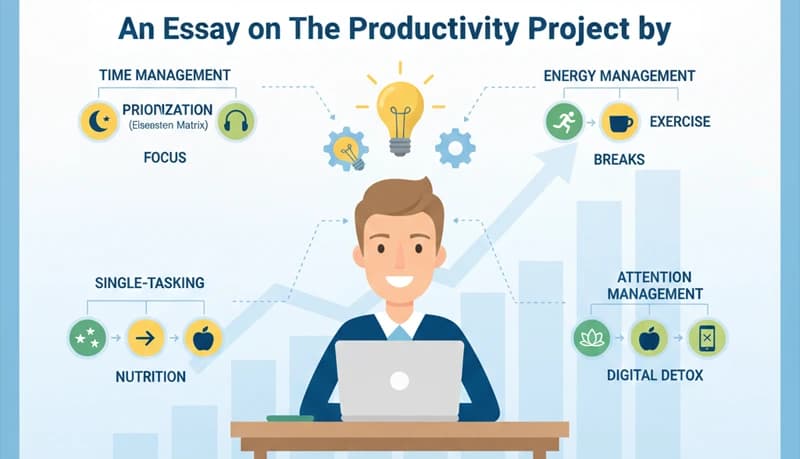
Bailey also writes about time management. He states that using the time of day when you are at your peak energy and attention for the hardest tasks will help you improve your productivity. Creating deadlines and limiting the time you work on a task will help you get it done more efficiently.
Bailey has found the time of day he feels most energetic by tracking his energy and attention levels daily. This has helped him find the best time to accomplish important tasks. He suggests readers find their most productive time of day and block off that time on their calendars. Then set an alarm to remind yourself to tackle the most difficult tasks during that window.
Shrinking the unimportant
There are many small tasks that take valuable time throughout the day — doing laundry, running errands, and other maintenance work. Bailey suggests "shrinking and removing the unimportant" for these tasks. By lumping many of them into one day, you can reduce the time impact of small but necessary tasks. You can also seek the help of a virtual assistant (VA) if needed. Bailey writes about his experience working with a VA and found it helped his productivity considerably.
Emptying the brain
In the section entitled "Emptying the brain," there is a quote from David Allen, author of Getting Things Done:
"Your head is not for holding ideas — it's for having ideas."
This was compelling because it encourages you to write down all the ideas floating in your head. The author prioritizes any ideas or tasks that come from this "brain dump," and it helps him keep on track.
Takeaway
The Productivity Project by Chris Bailey is an interesting read that helps you focus your goal setting. Goal setting can be personally rewarding rather than boring. Pairing these techniques with a good productivity tracker can help you measure whether your daily habits are actually moving the needle. Using visualization and imagination to push yourself to work harder might help you accomplish more difficult and rewarding goals.