

Labor Law Compliance Guide for Antigua
Complete labor law and hiring compliance guide for Antigua and Barbuda, including minimum wage, overtime, social security, and employment regulations.
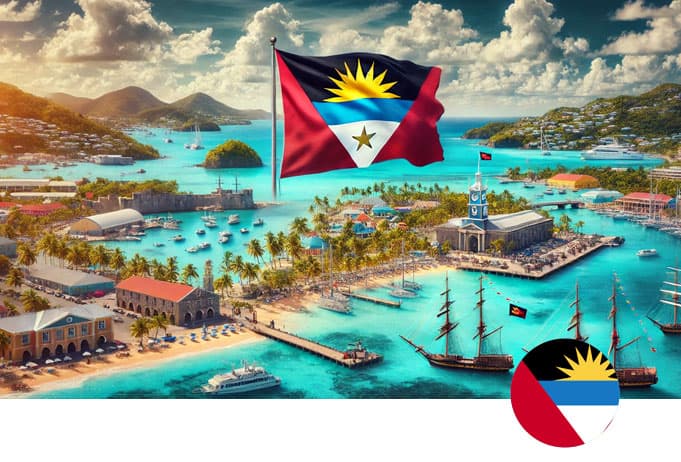
Antigua and Barbuda is a vibrant island nation in the Caribbean with a GDP of approximately $2.3 billion USD (2025 est.). The economy is primarily driven by tourism, which accounts for around 60% of GDP, followed by financial services, manufacturing, and agriculture. The country’s currency is the Eastern Caribbean dollar (XCD), pegged to the US dollar.
| Category | Details |
|---|---|
| Minimum Wage | EC$9.00 per hour (2025) |
| Overtime Wage | 1.5x first 4 hrs, 2x thereafter |
| Meal Breaks | Not mandated |
| Rest Breaks | Not mandated |
| Working hours | 8 hours/day, 40 hours/week |
| Salary Payment Cycle | Bi-weekly or monthly |
| Payroll Taxes | Social Security (16%), Medical Benefits (7%) |
| Paid Vacation | 2 weeks, 3 weeks after 5 years |
| Overtime Hours | Over 8 hours/day or 48 hours/week |
| Night Shift Hours | 2x regular pay |
| Holidays | 13 |
| No Work Days | Sunday |
Hiring Laws
When hiring workers in Antigua, businesses must register as a local entity with the Registrar of Companies. The cost of setting up a business entity typically ranges from $1,200 to $2,500 XCD, depending on the business structure, and the incorporation process generally takes 3-6 weeks. Employers are required to provide employees with written contracts that clearly outline the terms of employment, including job responsibilities, salary, working hours, and conditions for termination. Employment agreements should also contain clauses on confidentiality, non-compete agreements, and dispute resolution mechanisms. Antigua’s labor laws differentiate between employees and independent contractors, with employees receiving more comprehensive protections and benefits under the law. Additionally, businesses must comply with local labor regulations regarding workplace safety, anti-discrimination policies, and employee rights. There are no specific exemptions for certain jobs or categories of workers, ensuring that all employees receive at least the minimum wage. Additionally, Antigua does not have state-mandated minimum wage rates that differ from the federal rate. Employers are also required to provide holiday pay to their employees at the standard hourly rate during recognized public holidays.
Working Hours
The standard working hours in Antigua are 8 hours per day and 40 hours per week. Overtime is defined as any work performed beyond the standard 40 hours per week, and employers must compensate employees at 1.5 times their regular hourly rate for overtime hours. Night shifts, typically scheduled between 10 PM and 6 AM, are paid at 1.25 times the regular hourly rate.
The minimum legal working age in Antigua is 16 years old, with strict regulations in place to prevent child labor, especially in hazardous occupations. Employers must adhere to labor laws that protect young workers, ensuring safe working conditions and limiting the types of work they can perform.
Payroll and Taxes
Antigua and Barbuda has no personal income tax since 2016. However, employers must make Social Security and Medical Benefits Scheme contributions:
| Contribution | Employee | Employer | Total |
|---|---|---|---|
| Social Security (Private) | 6.5% | 9.5% | 16% |
| Medical Benefits Scheme | 3.5% | 3.5% | 7% |
Maximum insurable earnings: EC$78,000/year (EC$6,500/month). Self-employed persons contribute 10% to Social Security.
Statutory Leave Policies
Antigua mandates several types of leave for employees, including paid vacation, maternity leave, paternity leave, and sick leave. Employees are entitled to 2 weeks of paid vacation per year, increasing to 3 weeks after 5 years of continuous service. Maternity leave is granted for 12 weeks, with at least 8 weeks paid, while paternity leave is available for up to 2 weeks, though it may not always be paid. Sick leave is provided for up to 10 days per year, with a medical certificate required after 2 days of absence.
| Holiday | Date (2026) |
|---|---|
| New Year’s Day | January 1 |
| Good Friday | April 3 |
| Easter Monday | April 6 |
| Labour Day | May 4 |
| Whit Monday | May 25 |
| Carnival Monday (J’ouvert) | August 3 |
| Carnival Tuesday (Last Lap) | August 4 |
| National Day of Prayer | September 17 |
| Independence Day | November 1 |
| V.C. Bird Day | December 9 |
| Christmas Day | December 25 |
| Boxing Day | December 26 |
Employee Benefits
Employers in Antigua are required to contribute to the Social Security program, which provides employees with retirement pensions, sickness and maternity benefits, and unemployment insurance. While healthcare benefits are not mandatory, many employers offer private health insurance as part of their employee benefits package.
Additionally, employers may choose to provide gratuity payments or annual bonuses, although these are not legally required. Other common benefits include paid time off, wellness programs, and professional development opportunities.
Employee Termination
Antigua does not follow At-Will Employment laws, meaning that employers must have a valid reason for terminating an employee. The termination process requires employers to provide notice based on the length of service: typically two weeks for employees with less than one year of service and one month for those employed longer.
Employees terminated without cause are entitled to severance pay, calculated as one week’s pay for each year of service. Employees have the right to challenge unfair terminations through labor tribunals or legal channels.
Employers can legally terminate employees for reasons such as gross misconduct, redundancy, breach of contract, or failure to perform job duties satisfactorily. Proper documentation and adherence to legal procedures are essential to avoid legal disputes.
Stay Compliant with Labor Laws
Track time, attendance, time-off, and schedules with HiveDesk — workforce management software built for compliance. $5/user/month, all features included.