

Delaware Labor Law Guide 2026: Wages, Overtime, Breaks, and Leave
Delaware labor laws for employers in 2026: the $15.00 minimum wage with a $2.23 tipped cash wage, federal overtime after 40 hours, the mandatory 30-minute meal break on shifts of 7.5 hours or more, Delaware Paid Leave benefits that began January 1, 2026, work permits and hour limits for minors, and final pay by the next regular payday.
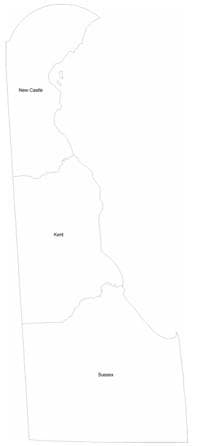
Delaware is small, but its employment code is not. The state reached a $15.00 minimum wage in 2025, requires a meal break on longer shifts, mandates work permits for every minor under 18, and on January 1, 2026 began paying benefits under the Healthy Delaware Families Act, one of the newer state paid family and medical leave programs. The Department of Labor's Division of Industrial Affairs, through its Office of Labor Law Enforcement, handles wage and hour, child labor, and discrimination complaints, and a separate Division of Paid Leave runs the insurance program.
- Delaware's minimum wage is $15.00 an hour, reached on January 1, 2025 at the end of a four-step climb, with a $2.23 cash wage for tipped employees and no scheduled increase or indexing
- Employees who work 7.5 or more consecutive hours must get a 30-minute meal break after the first two hours and before the last two
- Delaware Paid Leave pays 80 percent of wages up to $900 a week for up to 12 weeks of parental leave a year and 6 weeks of medical or family leave every two years, funded by a 0.8 percent contribution split evenly between employer and employee
- Every minor under 18 needs a work permit on file with the employer, and 14 and 15 year olds are limited to 4 hours on a school day and 18 hours in a school week
- Final wages are due on the next regular payday for any separation
Minimum Wage in Delaware
Delaware's minimum wage is $15.00 an hour, effective January 1, 2025 and unchanged for 2026. The state statute adopts the federal rate whenever it is higher, but there is no cost-of-living adjustment, so the next change requires legislation. Tipped employees may be paid a cash wage of $2.23 with a tip credit of $12.77, one of the largest tip credits in the country, as long as tips bring them to $15.00 in every workweek. Delaware has no local minimum wages.
For the tipped rules, the 2022 to 2025 step schedule, and how Delaware compares with Maryland, New Jersey, and Pennsylvania, see the Delaware minimum wage guide and the national minimum wage by state table.
Overtime Rules
Delaware has no state overtime statute; the federal FLSA governs. Non-exempt employees are owed 1.5 times their regular rate for hours over 40 in a workweek, and there is no daily overtime.
Worked example at the minimum wage: an employee paid $15.00 works 45 hours. Regular pay is 40 hours at $15.00, or $600.00, and overtime is 5 hours at $22.50, or $112.50, for $712.50 gross. The overtime calculator handles any rate, and the overtime pay laws in the US guide explains the federal rule.
Exempt status follows the federal $684 per week threshold and duties tests. Delaware has no higher state threshold.
Meal and Rest Breaks
Delaware is one of the states that mandates a meal break for adults. Employees who work 7.5 or more consecutive hours must receive an unpaid meal break of at least 30 minutes, taken after the first two hours of work and before the last two. The rule does not apply where a collective bargaining agreement provides otherwise, where fewer than five employees are on shift at one location, or in certain jobs where the employer permits eating while working. Rest breaks are not required.
| Break type | Requirement | Applies to |
|---|---|---|
| Meal break | 30 minutes, unpaid, on shifts of 7.5 consecutive hours or more, after hour 2 and before the last 2 hours | Employees 18 and over, with statutory exceptions |
| Rest breaks | Not required | All employees |
| Minors | 30-minute break after 5 consecutive hours of work | Under 18 |
| Pay for breaks | Breaks under 20 minutes are paid work time under the FLSA; the 30-minute meal is unpaid only if duty-free | All employees |
For an 8-hour contact center shift, the meal break must start between the second and sixth hour. The break time calculator lays out the window, and the rest and meal break laws by state guide compares Delaware with neighboring states.
Paid Sick Leave and Other Leave
Delaware has no paid sick leave mandate, but it does have a state paid family and medical leave insurance program.
Delaware Paid Leave. Under the Healthy Delaware Families Act, contributions began January 1, 2025 and benefits became available January 1, 2026. The program covers up to 12 weeks of parental leave every year and up to 6 weeks combined every two years for the employee's own serious health condition, care of a family member, or a military qualifying exigency. Benefits replace 80 percent of average weekly wages up to $900 a week for 2026 and 2027, with a $100 minimum. Employers with 25 or more employees participate in all three lines of coverage; employers with 10 to 24 employees are covered for parental leave only unless they opt in; employers with fewer than 10 are exempt. The total contribution is 0.8 percent of wages (0.32 percent parental, 0.40 percent medical, 0.08 percent family caregiving), split 50/50 between employer and employee unless the employer chooses to pay more. A 2025 amendment removed the employer's ability to require employees to exhaust accrued PTO before claiming benefits.
| Leave type | Delaware rule |
|---|---|
| Paid sick leave | Not required by state law; employer policy governs |
| Delaware Paid Leave | 12 weeks parental per year; 6 weeks medical, family, or military every 2 years; 80 percent of wages up to $900 |
| Federal FMLA | 12 weeks unpaid at employers with 50 or more employees, running concurrently with state paid leave |
| Jury duty | Job-protected; unpaid unless policy provides |
| Voting | No statutory voting leave |
| Volunteer emergency responders | Job-protected leave to respond to emergencies at employers with 10 or more employees |
| Military | Federal USERRA plus state protections |
See paid sick leave laws in the US for the states that mandate sick leave and jury duty laws in the US for court leave rules.
PTO Payout and Final Paychecks
Delaware's Wage Payment and Collection Act requires employers to pay all final wages to an employee who separates for any reason, including termination, resignation, or a labor dispute, by the next regularly scheduled payday. Employers must pay at least monthly on regular paydays, and wages must be paid within 7 days of the end of the pay period.
Vacation and PTO payout follows the employer's written policy. Delaware does not require payout by statute, and a clear forfeiture policy is generally enforceable, while a policy that promises payout makes the balance a wage due on the next payday. The PTO payout laws by state guide has the Delaware entry.
Employers must give a written statement of wages, hours, and deductions each payday, and may not deduct for cash shortages, breakage, or damaged property without the employee's signed authorization for the employee's benefit.
Exempt vs Non-Exempt Employees
Delaware applies the federal salary basis, salary level ($684 per week), and duties tests with no state additions. Because the meal break rule applies to non-exempt shift workers, classification affects scheduling as well as overtime. Our exempt vs non-exempt employees guide covers the tests and the FLSA exemption flowchart helps classify a role.
Child Labor Rules
Delaware's child labor law, Title 19 Chapter 5, requires a work permit for every employed minor under 18. Permits are issued through public high schools and middle schools, district offices, and Department of Labor offices, and the employer must verify, validate, and keep them on file.
| Age group | Hours and time limits | Other rules |
|---|---|---|
| 14 and 15, school in session | No work during school hours; up to 4 hours on a school day, 8 on a non-school day, 18 hours in a week when school is in session 5 days, and no more than 6 days a week; 7 AM to 7 PM | Work permit on file; 30-minute break after 5 consecutive hours |
| 14 and 15, school not in session | 8 hours a day; 7 AM to 9 PM from June 1 through Labor Day | |
| 16 and 17 | Work and school hours combined may not exceed 12 hours a day; at least 8 consecutive hours off in every 24 | Work permit on file; 30-minute break after 5 consecutive hours; hazardous occupation rules apply |
See child labor laws in the US for the federal hazardous occupation list that applies on top of state law.
Other Delaware Employment Rules
- Whistleblower protection. The Delaware Whistleblowers' Protection Act bars retaliation against employees who report violations of law.
- Social media privacy. Employers may not require applicants or employees to disclose personal social media passwords.
- Salary history. Employers may not ask applicants about compensation history or screen applicants based on it.
- Medical marijuana. The Delaware Medical Marijuana Act protects registered patients from discrimination based on their status or a positive test, with exceptions for safety-sensitive roles.
- Non-competes. Enforceable if reasonable, and Delaware courts closely scrutinize scope; physician non-competes are limited.
- Sexual harassment training. Employers with 50 or more employees must provide interactive training to new hires within one year and every two years.
Hiring, Termination, and Record-Keeping
Delaware is an at-will state with exceptions for discrimination, retaliation, and public policy. The Delaware Discrimination in Employment Act covers employers with 4 or more employees and protects race, marital status, genetic information, color, age, religion, sex, sexual orientation, gender identity, national origin, pregnancy, and reproductive health decisions, enforced by the Office of Anti-Discrimination.
Keep payroll records showing hours worked, wages, and deductions for at least 3 years under the FLSA, and keep every minor's work permit on file at the workplace. Post the Delaware minimum wage, child labor, Paid Leave, and Whistleblower notices with the federal posters. Because the meal break must fall inside a defined window on 7.5-hour shifts, a time card calculator that records break times and a written timekeeping policy keep the record straightforward.
Frequently Asked Questions
Is Delaware an at-will state? Yes, with exceptions for discrimination, retaliation, and public policy.
Does Delaware require lunch breaks? Yes, for shifts of 7.5 consecutive hours or more: an unpaid 30-minute meal break after the first two hours and before the last two. Minors get a 30-minute break after 5 consecutive hours.
When is overtime paid in Delaware? After 40 hours in a workweek under the federal FLSA. Delaware has no daily overtime rule.
When is the final paycheck due in Delaware? On the next regularly scheduled payday, for any type of separation.
Does Delaware have paid sick leave? No sick leave mandate, but Delaware Paid Leave has paid benefits since January 1, 2026 for parental, medical, family caregiving, and military leave.
Who has to participate in Delaware Paid Leave? Employers with 25 or more employees participate fully; employers with 10 to 24 employees are covered for parental leave only unless they opt in; employers with fewer than 10 are exempt.
How many hours can a minor work in Delaware? Ages 14 and 15: 4 hours on a school day, 8 on a non-school day, and 18 in a school week, between 7 AM and 7 PM (9 PM in summer). Ages 16 and 17: work plus school may not exceed 12 hours a day with 8 consecutive hours off. Every minor needs a work permit.
Does Delaware pay out unused PTO? Only if the employer's written policy provides for it; a clear forfeiture policy is generally enforceable.
Sources
- Delaware Department of Labor: Child Labor Law booklet (PDF)
- Delaware Department of Labor: Child labor and work permits
- Delaware Division of Industrial Affairs
- US Department of Labor: State Meal Period Requirements
- US Department of Labor: State Payday Requirements
- US Department of Labor: State Minimum Wage Laws
Reviewed September 2026
The Delaware Department of Labor's wage and hour FAQ moved to a new site while this guide was prepared, so the meal break, final pay, and pay frequency rules are drawn from the US Department of Labor's state tables and published summaries of Delaware law. The Delaware Paid Leave figures, the 2025 PTO-exhaustion amendment, the 7-day payment rule, the deduction rules, the leave for volunteer responders, the salary history, social media, medical marijuana, harassment training, and non-compete rules, the Discrimination in Employment Act threshold, and the record retention period are stated from general knowledge and the prior version of this guide, and should be confirmed with the Department of Labor before you rely on them.
Meal Breaks in the Window, Every Shift
HiveDesk records clock-ins, breaks, and clock-outs to the minute and shows when each break was taken, so Delaware's 7.5-hour meal break rule and minors' break requirements are documented from real data. $5/user/month, 14-day free trial.