

Illinois Labor Law Guide 2026: Minimum Wage, Overtime, Breaks, and Leave
Illinois labor laws for employers in 2026: the $15.00 minimum wage with Chicago at $17.05, overtime after 40 hours, the 20-minute meal period under the One Day Rest in Seven Act, 40 hours of paid leave for any reason, mandatory vacation payout, pay transparency in job postings, and the 2024 Child Labor Law.
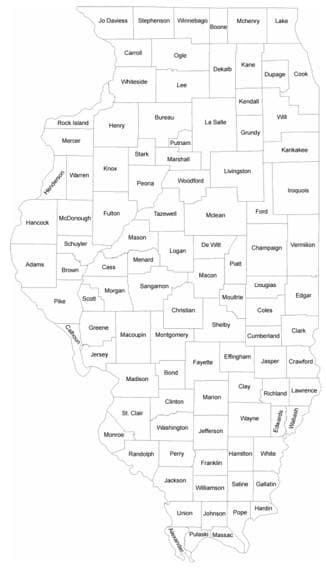
Illinois has moved quickly on employee protections in the last five years: a $15.00 minimum wage, paid leave for any reason, pay transparency in job postings, a rewritten child labor law, and restrictions on AI in hiring. The Illinois Department of Labor (IDOL) enforces the wage and hour statutes, while Chicago and Cook County run their own minimum wage and paid leave ordinances with separate enforcement. Employers with staff in the city, the suburbs, and downstate face three sets of rules.
- The statewide minimum wage is $15.00, with $13.00 for workers under 18 and a $9.00 tipped cash wage; Chicago pays $17.05 and Cook County $15.40
- Overtime is due after 40 hours in a workweek at 1.5x, with no daily rule, and the exempt threshold is the federal $684 per week
- Shifts of 7.5 hours or more require a 20-minute meal period that starts by the fifth hour, and employees are entitled to 24 consecutive hours of rest in every calendar week
- The Paid Leave for All Workers Act gives employees 1 hour of paid leave per 40 hours worked, up to 40 hours a year, usable for any reason
- Accrued, unused vacation must be paid with the final check on the next regular payday
Minimum Wage in Illinois
The Illinois minimum wage is $15.00 per hour for workers 18 and older, unchanged since January 1, 2025 when the 2019 schedule completed. Workers under 18 who work fewer than 650 hours in a calendar year may be paid $13.00, and tipped employees receive a cash wage of $9.00, which is 60 percent of the minimum, with the employer responsible for making up any shortfall. The Illinois Minimum Wage Law applies to employers with 4 or more employees, excluding family members. Chicago's rate is $17.05 and suburban Cook County's is $15.40 from July 1, 2026, and both adjust each July.
There is no scheduled statewide increase and no inflation indexing. For the local ordinances, the tipped rules, and the training wage, see the Illinois minimum wage guide.
Overtime Rules
The Illinois Minimum Wage Law requires 1.5 times the regular rate for hours over 40 in a workweek. There is no daily overtime. The state exemptions track the federal executive, administrative, and professional categories, and Illinois uses the federal $684 weekly salary threshold. Certain occupations, including some agricultural workers and commissioned salespeople, are exempt under state law.
Worked example at the state minimum: an employee paid $15.00 works 45 hours. That is 40 hours at $15.00 ($600.00) plus 5 hours at $22.50 ($112.50), for $712.50 gross. In Chicago at $17.05 the same week is $682.00 plus $127.88, or $809.88. The overtime calculator handles the math, and the overtime pay laws in the US guide compares Illinois with other states.
Employees who prevail in a wage claim recover the unpaid amount plus damages of 5 percent per month, so misclassification is expensive.
Meal and Rest Breaks
The One Day Rest in Seven Act (ODRISA) is the Illinois break statute. IDOL requires a meal period of at least 20 minutes for employees who work 7.5 continuous hours or more, beginning no later than 5 hours into the shift, plus an additional 20-minute meal period for every additional 4.5 hours worked beyond 7.5. The same law entitles employees to at least 24 consecutive hours of rest in every calendar week; employers may apply to IDOL for a permit to work employees on the seventh day. Hotel room attendants in Cook County have separate paid break rights.
| Break type | Requirement | Applies to |
|---|---|---|
| Meal period | 20 minutes, starting by the 5th hour, for shifts of 7.5 hours or more; another 20 minutes per additional 4.5 hours | Most employees; exceptions for collective bargaining agreements and employees who monitor equipment |
| Rest break | Not required; breaks of 20 minutes or less must be paid if given | All employees |
| Day of rest | 24 consecutive hours off in every calendar week unless IDOL grants a permit | Most employees |
| Nursing mothers | Paid break time to express milk for one year after birth, under the 2026 amendment to the Nursing Mothers in the Workplace Act | All employers |
| Minors | 30-minute meal period after 5 hours under the Child Labor Law of 2024 | Under 16 |
A meal period may be unpaid only if the employee is fully relieved of duty. For an 8-hour contact-center shift, that means a 20-minute meal beginning by 4 hours and 59 minutes in. The break time calculator shows the minimum breaks for any shift, and our rest and meal break laws by state guide covers every state.
Paid Sick Leave and Other Leave
The Paid Leave for All Workers Act (PLAWA) took effect January 1, 2024. IDOL summarizes it: "Workers earn one (1) hour of paid leave for every 40 hours they work," up to 40 hours a year, and "Workers can use paid leave for any reason and employers may not require workers to provide a basis for their time off request." Employers may front-load 40 hours instead of tracking accrual, may require a 90-day waiting period for new hires, and must let unused accrued leave carry over unless they front-load. The state law does not apply in Chicago or Cook County, which have their own ordinances: Chicago requires 40 hours of paid leave plus 40 hours of paid sick leave a year, and Cook County requires 40 hours of paid leave.
| Leave type | Illinois rule |
|---|---|
| Paid leave (any reason) | 1 hour per 40 worked, 40 hours a year, under PLAWA; Chicago 40 plus 40; Cook County 40 |
| Family and medical leave | Federal FMLA; no state paid family leave program |
| Victims' Economic Security and Safety Act | 4 to 12 weeks of unpaid leave for domestic, sexual, or gender violence, scaled by employer size |
| Jury duty | Job-protected; unpaid unless policy provides |
| Voting | Up to 2 hours paid if the employee lacks 2 hours outside work while polls are open, with advance notice |
| Family bereavement | Up to 2 weeks unpaid at FMLA-covered employers, including pregnancy loss and fertility-related losses |
| Neonatal intensive care | Unpaid, job-protected leave when a child is in a NICU at employers with 16 or more employees, since June 1, 2026 |
| Blood and organ donation | Up to 10 days of leave in 12 months for organ donors, extended to part-time employees |
| Military and school visitation | State protections for service members and 8 hours a year for school conferences at employers with 50 or more employees |
See paid sick leave laws in the US for how PLAWA compares with sick-only mandates, and jury duty laws in the US for court leave.
PTO Payout and Final Paychecks
The Illinois Wage Payment and Collection Act requires all final compensation, including earned vacation, bonuses, and commissions, to be paid on the next regularly scheduled payday, whether the employee quit or was discharged. Illinois is a payout state: accrued, unused vacation is earned wages and must be paid at separation. Use-it-or-lose-it policies are permitted only if employees have written notice and a reasonable opportunity to use the time before it expires. PLAWA leave does not have to be paid out unless it is pooled with vacation. Our PTO payout laws by state guide covers the details.
Pay frequency: at least semimonthly, within 13 days of the end of the pay period; executive, administrative, and professional employees may be paid monthly. Deductions require written consent given at the time of the deduction or a court order. Late final pay accrues damages of 2 percent per month.
Exempt vs Non-Exempt Employees
Illinois follows the federal salary basis and salary level tests, so exemption requires at least $684 per week ($35,568 a year) and primarily exempt duties. The state does not set a higher threshold. Job titles and salaried status do not determine exemption; a salaried team lead who mostly handles calls is non-exempt. Our exempt vs non-exempt employees guide and the FLSA exemption flowchart cover the duties tests.
Child Labor Rules
The Child Labor Law of 2024, effective January 1, 2025, replaced the 1944 statute and is enforced by IDOL. It requires employment certificates for minors under 16 and, as IDOL states, prohibits "All work before 7 a.m. and after 7 p.m.," with work until 9 p.m. allowed from June 1 through Labor Day. The hour limits below follow the statute and should be confirmed with IDOL's child labor bulletin for the current year.
| Age group | School in session | School not in session | Other rules |
|---|---|---|---|
| Under 16 | 3 hours on a school day, 8 hours on a non-school day, 18 hours in a school week | 8 hours a day, 40 hours a week, 6 days a week | 7 AM to 7 PM (9 PM in summer); 30-minute meal period after 5 hours; employment certificate required |
| 16 and 17 | No state hour limits | No state hour limits | Federal hazardous occupation rules; no certificate required |
| Child performers | Permitted with a certificate; 15 percent of gross earnings must go into a trust |
See child labor laws in the US for the federal rules that also apply.
Other Illinois Employment Rules
- Pay transparency. Since January 1, 2025, employers with 15 or more employees must include the pay scale and a general description of benefits in every job posting for work performed in Illinois; penalties run from $500 to $10,000 per violation.
- AI in hiring. Since January 1, 2026, the Illinois Human Rights Act bars employers from using AI in employment decisions in a way that discriminates against protected classes and requires notice when AI is used.
- Biometric Information Privacy Act. Fingerprint and facial-scan time clocks require written consent and a retention policy before collection; damages accrue per person.
- Salary history ban. Employers may not ask applicants about prior pay.
- Equal Pay registration. Private employers with 100 or more employees must obtain an Equal Pay Registration Certificate from IDOL every 2 years.
- Non-competes. Barred for employees earning $75,000 or less, and non-solicits for those earning $45,000 or less, under the 2022 Freedom to Work Act amendments, with 14 days to review and a right to counsel.
Hiring, Termination, and Record-Keeping
Illinois is an at-will state with exceptions for discrimination, retaliation, whistleblowing, and public policy. The Illinois Department of Human Rights enforces the Human Rights Act, which covers every employer with 1 or more employees. The Job Opportunities for Qualified Applicants Act bars criminal history questions until after an interview or conditional offer at employers with 15 or more employees.
Employers must keep payroll records, including hours worked each day, rates, deductions, and paid leave accruals, for at least 3 years and give employees pay stubs on request. Post the state minimum wage notice, the PLAWA notice, the ODRISA notice, the VESSA notice, and, where applicable, the Chicago and Cook County posters. Because ODRISA measures the meal period to the hour and PLAWA accrual is per hour worked, a time card calculator for audits and a written timekeeping policy keep both compliant.
Frequently Asked Questions
Is Illinois an at-will state? Yes, with exceptions for discrimination, retaliation, whistleblowing, and public policy, and the Human Rights Act covers employers of any size.
Does Illinois require lunch breaks? Yes. Employees working 7.5 hours or more must get a 20-minute meal period that begins by the fifth hour, plus another 20 minutes for every additional 4.5 hours.
When is overtime paid in Illinois? After 40 hours in a workweek at 1.5x. There is no daily overtime.
When is the final paycheck due in Illinois? On the next regular payday, and it must include accrued, unused vacation.
Does Illinois have paid sick leave? Illinois has paid leave for any reason: 1 hour per 40 hours worked, up to 40 hours a year, under PLAWA. Chicago and Cook County have their own ordinances.
What is the minimum wage in Illinois in 2026? $15.00 statewide, $17.05 in Chicago, and $15.40 in suburban Cook County.
How many hours can a minor work in Illinois? Workers under 16 may work 3 hours on a school day, 8 on a non-school day, and 18 hours in a school week, between 7 AM and 7 PM, with an employment certificate.
Does Illinois pay out unused PTO? Yes. Earned vacation is wages and must be paid at separation; use-it-or-lose-it is allowed only with advance notice and a reasonable chance to use the time.
Sources
- Illinois Department of Labor: Paid Leave for All Workers Act
- Illinois Department of Labor: Child Labor Law
- Illinois Department of Labor: Wage Payment and Collection Act
- Illinois Department of Labor: Minimum Wage Law
- Illinois Department of Labor: Equal Pay Act Salary Transparency
- US Department of Labor: State Meal Period Requirements
Reviewed September 2026
The paid leave, child labor, and pay transparency rules quote or summarize IDOL pages. The ODRISA meal timing follows the US Department of Labor's state table; the IDOL ODRISA page could not be retrieved for this review. VESSA, bereavement, NICU, blood donation, voting leave, BIPA, Equal Pay registration, non-compete thresholds, and record-retention details are stated from general knowledge of Illinois statutes and should be confirmed with IDOL or counsel before you rely on them.
Track Paid Leave Accrual Automatically
HiveDesk records hours worked to the minute, so PLAWA accrual at 1 hour per 40 and the ODRISA fifth-hour meal rule are calculated from real punches rather than estimates. $5/user/month, 14-day free trial.