Nearshore Outsourcing in Latin America: A Cultural Guide

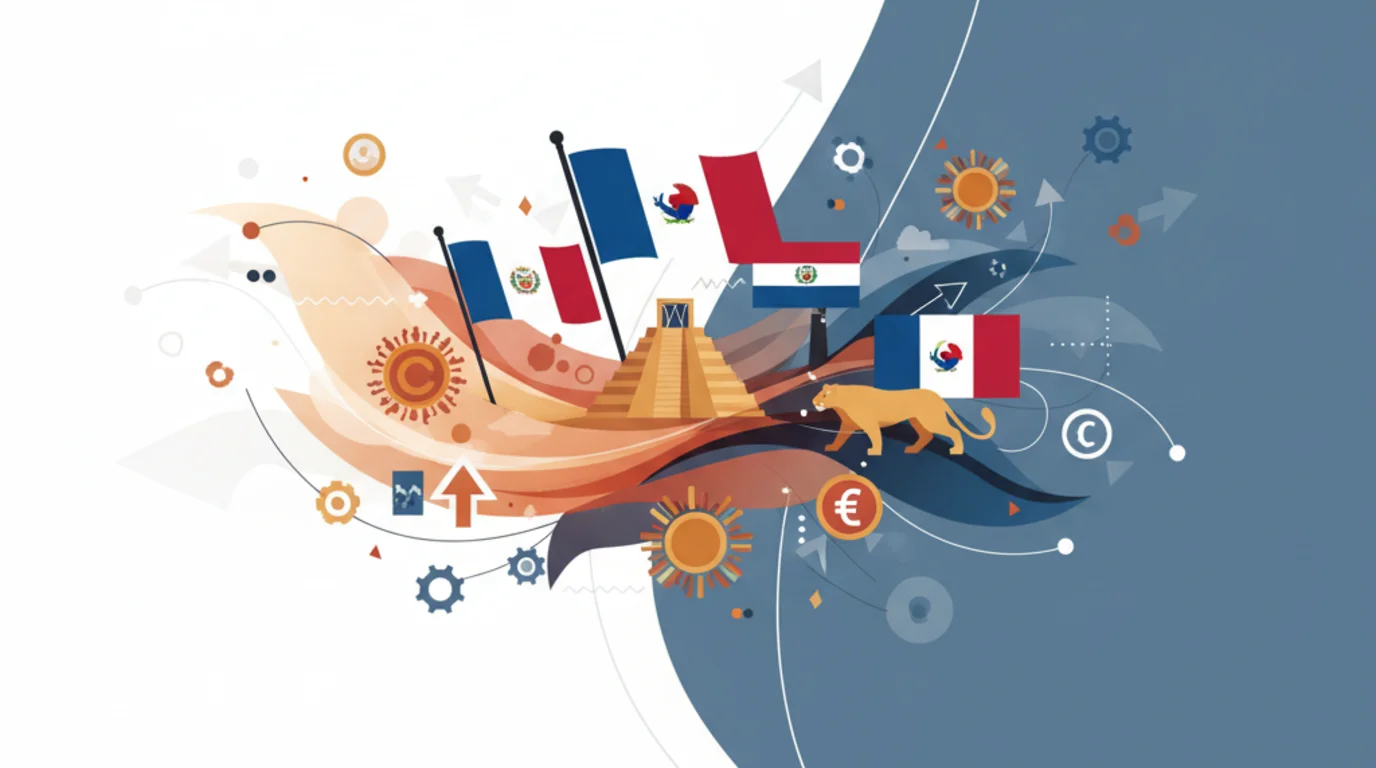
Latin America is the fastest-growing outsourcing region for US companies. Time zone alignment, cultural affinity, growing bilingual talent pools, and 30-50% cost savings make it the default nearshore choice. But "Latin America" is not one culture — it is many. A team in Bogota operates differently from one in Santo Domingo or Mexico City.
This guide covers the cultural fundamentals that cut across LATAM countries, plus country-specific insights for the most popular outsourcing destinations.
- Business relationships in LATAM are personal — invest in rapport before expecting performance
- Indirect communication is the norm; public criticism damages relationships and drives attrition
- Each country has distinct cultural nuances: Colombia is entrepreneurial, Mexico is formal and hierarchical, DR is energetic, Costa Rica is harmony-focused
- LATAM has more public holidays than the US — plan capacity around them instead of fighting them
- Annual or semi-annual in-person visits are not optional; the ROI in trust and retention is significant
LATAM Work Culture Fundamentals
These patterns hold broadly across Latin American business culture, even as specifics vary by country.
Relationships First, Business Second
In LATAM, business relationships are personal. People work with people they like and trust. Building rapport is not a preliminary step — it is the foundation of everything that follows.
What this means in practice:
- Spend the first 5-10 minutes of calls on personal conversation
- Ask about family, local events, and personal interests
- Visit in person when you can — a single visit does more for the relationship than months of video calls
- Remember personal details and reference them later
Flexible Time Orientation
LATAM cultures have a more flexible relationship with time than US or Northern European cultures. This does not mean people are unreliable — it means the relationship matters more than the clock.
How to manage it:
- Set clear deadlines and confirm them explicitly
- For shift work and customer-facing roles, punctuality expectations must be explicit from day one
- Build 10-15% buffer into project timelines
- Do not interpret 5 minutes late as disrespect
Warmth and Social Connection
Latin American workplaces are social environments. Colleagues are often friends. Team lunches, birthday celebrations, and social events are not optional nice-to-haves — they are team infrastructure.
For remote teams: Create virtual equivalents. Regular team social calls, celebration of local holidays, and informal chat channels replace the in-office social connection.
Managing a Nearshore Team in Latin America?
Track time, monitor productivity, and manage schedules with HiveDesk — built for distributed teams across time zones. $5/user/month.
Indirect Communication
Direct negative feedback, especially in public, is avoided across LATAM cultures. Saying "no" directly can feel confrontational. Disagreement is often expressed indirectly or not at all.
How to adapt:
- Ask specific questions rather than open-ended ones: "What concerns do you have about meeting this deadline?" not "Is everything okay?"
- Deliver feedback privately
- Frame constructive criticism positively: "Here's how to make this even better" rather than "This is wrong"
Ask Specific Questions
Replace "Is everything okay?" with "What concerns do you have about meeting this deadline?" Specific questions surface real issues in cultures where direct disagreement is avoided.
Country-Specific Insights
Colombia
Communication: Warm, entrepreneurial, values personal relationships above transactional efficiency. Colombians are generally more direct than some LATAM cultures but still prefer a soft approach to criticism.
Management style: Approachable but clear. Colombians respond well to leaders who show genuine interest in their development while setting clear expectations.
Key considerations: 18 public holidays, progressive working-hour reductions (42 hours/week from July 2026), strong labor protections. See our Colombia EOR guide.
Mexico
Communication: Formal in initial interactions, becoming warmer as relationships develop. Respect for hierarchy is strong, especially in traditional industries.
Management style: Clear direction from leadership is expected. Mexican professionals value stability and loyalty — companies that invest in their teams earn deep commitment.
Key considerations: Mandatory profit sharing (PTU) at 10% of pre-tax profits, aguinaldo (15 days minimum Christmas bonus), high overtime premiums (200-300%). See our Mexico EOR guide.
Dominican Republic
Communication: Outgoing and warm. Dominican professionals are often highly energetic communicators. Social connection is central to workplace dynamics.
Management style: Be visible and approachable. Dominicans value managers who are present (even virtually) and engaged with their team.
Key considerations: Size-based minimum wages, mandatory Christmas salary (double salary in December), 45-60 day entity setup process. See our Dominican Republic EOR guide.
Costa Rica
Communication: Polite and measured. Costa Ricans (Ticos) avoid conflict and value harmony. The phrase "pura vida" reflects an easy-going approach to life and work.
Management style: Supportive and patient. Costa Ricans respond well to positive reinforcement and constructive coaching.
Key considerations: Occupation-based minimum wages, mandatory aguinaldo, high social security contributions (26%+ employer). See our Costa Rica EOR guide.
LATAM vs Asia-Pacific: When to Choose Each
| Factor | LATAM (Nearshore) | Asia-Pacific (Offshore) |
|---|---|---|
| Time zone overlap with US | 4-8 hours | 0-3 hours |
| Cost savings | 30-50% | 60-80% |
| Cultural alignment with US | Medium-high | Varies |
| Talent pool depth | Growing | Very large |
| Best for | Customer-facing, real-time collaboration | Back-office, technical, 24/7 coverage |
| Communication style | Warm, relationship-first | Varies (hierarchical in India, harmony-focused in Philippines) |
Many companies use both: LATAM for customer-facing nearshore roles and Asia-Pacific for back-office and technical offshore work. For a deeper comparison, see our nearshore vs offshore guide. For country-specific guidance, see our guides on outsourcing to Colombia and outsourcing to the Dominican Republic.
Building Long-Term LATAM Teams
Invest in relationships. Teams that feel personally connected to their managers and company stay longer and perform better. Workforce management software that provides transparent scheduling, fair attendance tracking, and real-time dashboards helps build that trust across distance.
Respect local holidays. LATAM has more public holidays than the US. Plan capacity around these instead of fighting them.
Offer stability. In markets where economic uncertainty is common, job stability is a powerful retention tool.
Career development. Create visible promotion paths. Internal mobility signals that you are invested in people, not just headcount.
Visit in person. Annual or semi-annual visits to your LATAM teams are not optional. The ROI in trust, retention, and performance improvement is significant.
Key Takeaway
The companies that succeed with LATAM teams treat cultural diversity as an operational advantage — investing in relationships, respecting local holidays, and offering the stability that earns deep loyalty.
Related salary guides: Mexico, Colombia, Costa Rica, Dominican Republic, Jamaica, Peru, Brazil, and Argentina, or the full average salary by country comparison.