

New Jersey Labor Laws for Business Owners
Complete guide to New Jersey labor laws including minimum wage, overtime, meal and rest breaks, paid leave, tax rates, and hiring regulations for 2026.
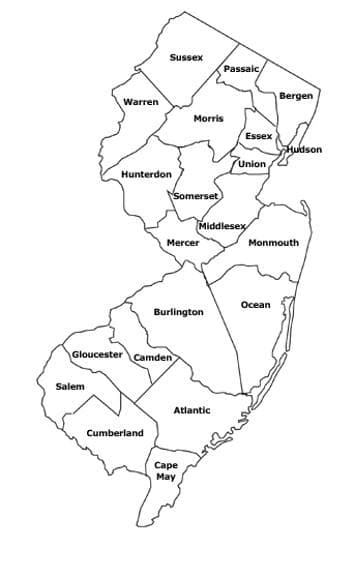
New Jersey is strategically located in the Northeastern United States, providing businesses with proximity to major markets such as New York City and Philadelphia. It has a diverse economy with many businesses in pharmaceuticals, biotechnology, healthcare, finance, technology, and logistics sectors. The Research Triangle in North Jersey and the Princeton corridor are technology hubs and have many startups and large technology companies.
Minimum Wage Mandates
See the full New Jersey minimum wage guide for tipped rates, local ordinances, and scheduled increases.
As of January 1, 2026, the minimum wage in New Jersey is $15.92 per hour for most employees, an increase of $0.43 from the prior year. Different categories of workers have different rates:
| Worker Category | 2026 Hourly Rate |
|---|---|
| Most employees | $15.92 |
| Seasonal & small employers (fewer than 6 employees) | $15.23 |
| Agricultural workers | $14.20 |
| Tipped workers (cash wage) | $6.05 |
| Long-term care facility direct care staff | $18.92 |
The maximum tip credit employers can claim for tipped workers is $9.87 per hour.
New Jersey law requires the minimum wage to be reviewed annually and increased by the percentage the cost of living has changed from year to year, as measured by the Consumer Price Index (CPI).
If the federal minimum wage is increased and becomes higher than that of New Jersey, the state's minimum wage will automatically increase to the higher federal rate.
Overtime Rules
Overtime rules in New Jersey are governed by both federal and state labor laws.
New Jersey's labor laws align with the federal law Fair Labor Standards Act (FLSA) regarding overtime. Therefore, non-exempt employees in New Jersey are generally subject to the federal overtime rules outlined in the FLSA.
Non-exempt employees in New Jersey are entitled to overtime pay for the hours worked beyond 40 hours in a week. The overtime pay is calculated at 1.5 times the regular hourly pay.
Meal and Rest Breaks
The state of New Jersey follows the Fair Labor Standards Act (FLSA) which does not require employers to provide meal or rest breaks. Employers are free to offer breaks that follow applicable guidelines.
Employers don't need to pay for meal breaks if the employee is completely relieved of duties during the break. Otherwise, employer may have to pay for the meal break.
The FLSA does not require employers to give rest breaks for adult employees. If employers choose to give short rest breaks, they must pay the employees for the time.
Employers in New Jersey should understand that while federal law does not mandate breaks, they still need to comply with any collective bargaining agreements, employment contracts, or industry-specific regulations that may require breaks.
Employers with young workers must comply with the federal child labor laws which require breaks for young workers.
Paid Leaves and Time Off Rules in New Jersey
New Jersey has several laws related to paid leaves and time off. Here are the key provisions for 2026:
- Paid Family Leave Insurance (FLI): New Jersey's Paid Family Leave program provides eligible employees with partial wage replacement when taking time off to bond with a newborn or newly adopted child or to care for a family member with a serious health condition. For 2026, the maximum weekly benefit for FLI claims is $1,119 (up from $1,081 in 2025). The employee contribution rate is 0.23% of taxable wages, up to a taxable wage base of $171,100 (maximum annual contribution of $393.53).
- Family Leave Act: The New Jersey Family Leave Act allows eligible employees to take up to 12 weeks of unpaid leave in a 24-month period for certain family-related reasons, including the birth or adoption of a child or the serious health condition of a family member.
- Paid Sick Leave: New Jersey's Earned Sick Leave law requires employers to provide eligible employees with paid sick leave. Employees accrue one hour of sick leave for every 30 hours worked, up to 40 hours per year, and they can use this leave for their own illness or the illness of a family member.
- Temporary Disability Insurance (TDI): New Jersey's TDI program provides partial wage replacement to eligible employees who are unable to work due to non-work-related illnesses, injuries, or conditions, including pregnancy. For 2026, the maximum weekly benefit for TDI claims is $1,119. The employee contribution rate is 0.19% of taxable wages, up to a taxable wage base of $171,100 (maximum annual contribution of $325.09).
- Employer Policies: Many employers in New Jersey provide paid time off (PTO) or vacation days as part of their employment policies. However, there is no state law mandating such leave. Most employers also give time off for common US holidays.
- Collective Bargaining Agreements: For employees covered by collective bargaining agreements, the terms related to paid leave and time off may be outlined in the agreement.
2026 Public Holidays in New Jersey
| Holiday | Date | Day |
|---|---|---|
| New Year's Day | January 1 | Thursday |
| Martin Luther King Jr. Day | January 19 | Monday |
| Lincoln's Birthday | February 12 | Thursday |
| Presidents' Day | February 16 | Monday |
| Good Friday | April 3 | Friday |
| Memorial Day | May 25 | Monday |
| Juneteenth | June 19 | Friday |
| Independence Day | July 4 (observed July 3) | Saturday (Friday) |
| Labor Day | September 7 | Monday |
| Columbus Day | October 12 | Monday |
| Veterans Day | November 11 | Wednesday |
| Thanksgiving Day | November 26 | Thursday |
| Christmas Day | December 25 | Friday |
Employer Tax Obligations
New Jersey employers must be aware of the following payroll tax rates and contribution requirements for 2026:
| Tax / Contribution | Rate | Taxable Wage Base | Notes |
|---|---|---|---|
| Unemployment Insurance (UI) | 0.5%–5.8% | $44,800 | Rate depends on employer's experience rating; new employer rate is 2.8% |
| Temporary Disability Insurance (TDI) – Employer | 0.10%–0.75% | $44,800 | Based on employer experience |
| TDI – Employee | 0.19% | $171,100 | Max annual contribution: $325.09 |
| Family Leave Insurance (FLI) – Employee | 0.23% | $171,100 | Max annual contribution: $393.53; employers do not contribute |
| Workforce Development/Supplemental Workforce Fund (WF/SWF) – Employer | 0.1175% | $44,800 | Combined rate |
| WF/SWF – Employee | 0.0425% | $44,800 | Combined rate |
State Income Tax: New Jersey has a progressive income tax with seven brackets ranging from 1.4% to 10.75%. The top marginal rate of 10.75% applies to taxable income exceeding $1 million, making it the fourth-highest state income tax rate in the nation.
Exempt vs. Non-Exempt Classification
The classification of employees as exempt or non-exempt in New Jersey, like most other states, is based on the Fair Labor Standards Act (FLSA).
Exempt Employees:
- Salary Basis Test: Exempt employees are typically paid on a salary basis, meaning they receive a fixed salary that is not subject to reduction based on the quality or quantity of work performed.
- Salary Level Test: Exempt employees must earn a minimum salary to qualify for exemption. The federal minimum salary threshold is $684 per week ($35,568 per year).
- Duties Test: Exempt employees must perform specific job duties that fall into one of the FLSA's exempt categories, such as executive, administrative, professional, or certain computer-related duties.
Non-Exempt Employees:
- Hourly Pay: Non-exempt employees are typically paid on an hourly basis and are entitled to overtime pay for hours worked beyond 40 hours in a workweek.
- Overtime Pay: Overtime pay for non-exempt employees is generally calculated at 1.5 times their regular rate of pay for each hour worked beyond 40 hours in a workweek.
Equal Pay Act
New Jersey has its own equal pay laws in addition to the federal Equal Pay Act (EPA). The New Jersey Equal Pay Act (NJEPA) is aimed at ensuring that employees receive equal pay for substantially similar work.
- Equitable Work: The federal Equal Pay Act (EPA) prohibits wage discrimination based on sex, ensuring that employees of one sex are paid the same as employees of the opposite sex for equal work.
- Exceptions to the equal pay is allowed in cases where the differences in pay arise from seniority systems, merit systems, systems that assess earnings based on quantity or quality of production, or other factors not related to employee's sex.
- The NJEPA prohibits employers from paying employees who are members of a protected class less than employees who are not members of that class for substantially similar work.
- In addition to the EPA and NJEPA, employers must also adhere to Title VII of the Civil Rights Act of 1964 that prohibits discrimination based on race, color, religion, and national origin.
- Protection against Retaliation: The NJEPA includes provisions protecting employees from retaliation for asserting their rights under the Act. Employers are prohibited from taking adverse employment actions against employees who exercise their rights under the NJEPA.
- Record-Keeping Requirements: Employers must maintain records of job classifications and wage rates for a period of up to five years. These records may be subject to inspection by the New Jersey Department of Labor and Workforce Development.
- Expanded Protections: The NJEPA applies not only to gender-based wage discrimination but also to wage differentials based on other protected characteristics, including race, creed, color, national origin, nationality, ancestry, age, marital status, civil union status, domestic partnership status, affectional or sexual orientation, genetic information, pregnancy, sex, gender identity or expression, disability, and atypical hereditary cellular or blood trait.
New and Notable Laws for 2025–2026
- Pay Transparency (effective June 1, 2025): Employers with 10 or more employees must disclose salary ranges, benefits, and other compensation information in postings for new job and transfer opportunities, and must make reasonable efforts to notify current employees of promotional opportunities.
- Worker Freedom from Employer Intimidation Act Amendment (effective December 2, 2025): Expanded New Jersey's "captive audience" ban, further restricting employer-mandated meetings on political or religious matters.
- Commissions as Wages: On March 17, 2025, the New Jersey Supreme Court ruled in Musker v. Suuchi that commissions qualify as wages under the New Jersey Wage Payment Law, giving them full WPL protections.
Rules for Hiring and Firing Employees in New Jersey
Employment laws in New Jersey cover various aspects of the hiring and firing processes. Employers in the state need to be aware of both federal and state regulations to ensure compliance. Here are key considerations:
- Employment-At-Will: State of New Jersey follows the employment-at-will principle. It allows employers to terminate employees with or without cause, and employees can resign from their positions at any time. However, there are exceptions, such as when termination is based on discriminatory or retaliatory reasons.
- Anti-Discrimination Laws: Employers in New Jersey must adhere to the federal anti-discrimination laws, including Title VII of the Civil Rights Act of 1964. It prohibits discrimination based on race, color, religion, sex, or national origin. Employers must also follow federal laws such as the Americans with Disabilities Act (ADA) and the Age Discrimination in Employment Act (ADEA). Additional protections are provided by the New Jersey Law Against Discrimination (NJLAD), which covers additional categories such as age, marital status, sexual orientation, gender identity, and more.
- Background Checks: Employers conducting background checks in New Jersey need to comply with federal Fair Credit Reporting Act (FCRA), which governs the use of consumer reports for employment purposes. New Jersey has laws regulating the use of criminal history information in employment decisions.
- Work Eligibility Verification: Employers must comply with federal immigration laws, including completing Form I-9 to verify the work eligibility of employees.
- Final Paychecks: The state of New Jersey requires employers to provide employees with their final paychecks in a timely manner upon termination.
- WARN Act: The federal Worker Adjustment and Retraining Notification (WARN) Act may apply to employers with 100 or more employees, requiring them to provide advance notice of plant closings or mass layoffs.
- Retaliation Protections: Employees in New Jersey are protected from retaliation for engaging in certain protected activities, such as reporting workplace violations or filing discrimination complaints.
It is important for employers to remain well-informed about changes in employment laws and to seek guidance from legal professionals to ensure compliance with the latest regulations. It's advisable to establish clear and meticulously documented employment policies and procedures to aid employers in complying with the labor laws.
Stay Compliant with Labor Laws
Track time, attendance, time-off, and schedules with HiveDesk — workforce management software built for compliance. $5/user/month, all features included.