

Indiana Labor Law Guide 2026: Wages, Overtime, Breaks, and Leave
Indiana labor laws for employers in 2026: the $7.25 minimum wage with a $2.13 tipped cash wage, overtime after 40 hours, breaks required only for minors, no paid sick leave mandate, final pay by the next regular payday, biweekly or semimonthly paydays, and youth rules that no longer restrict 16 and 17 year olds.
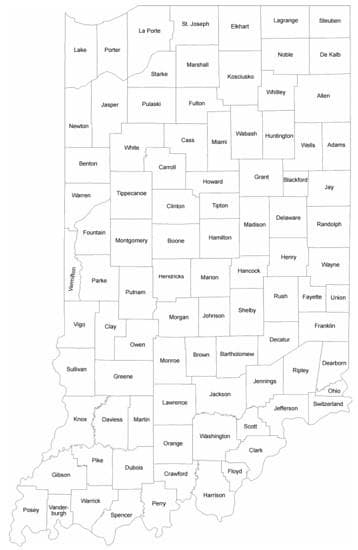
Indiana runs one of the leaner employment codes in the Midwest. The state minimum wage matches the federal $7.25, overtime mirrors the FLSA, breaks are required only for minors, and there is no paid sick leave or paid family leave mandate, with local governments barred from adding their own. What Indiana does regulate closely is wage payment: pay frequency, deductions, and final pay under the Wage Payment and Wage Claims statutes carry liquidated damages. The Indiana Department of Labor (IDOL) Wage and Hour Division enforces these rules along with the youth employment law.
- Indiana's minimum wage is the federal $7.25 for employers with 2 or more employees, with a $2.13 tipped cash wage and a $4.25 training wage for workers under 20 in their first 90 days
- Overtime is due after 40 hours at 1.5 times the regular rate under the state Minimum Wage Law and the FLSA; there is no daily overtime
- Minors under 18 who work 6 or more hours must get one or two breaks totaling 30 minutes; adults have no break entitlement
- Employers must pay at least biweekly or semimonthly and must deliver final wages by the next regular payday, with liquidated damages for late payment
- Since January 1, 2025, Indiana no longer restricts the hours of 16 and 17 year olds; 14 and 15 year olds keep the 3-hour school-day limit
Minimum Wage in Indiana
Indiana's minimum wage is $7.25 per hour under the Minimum Wage Law (IC 22-2-2), which covers employers with 2 or more employees that are not covered by the FLSA. Tipped employees may be paid $2.13 with a $5.12 tip credit, and employees under 20 may be paid $4.25 for their first 90 days. Indiana Code 22-2-2-10.5 bars cities and counties from setting a higher rate, so $7.25 applies statewide. No increase is scheduled.
For the training wage, coverage rules, and what a minimum wage worker earns, see the Indiana minimum wage guide.
Overtime Rules
Indiana requires overtime at 1.5 times the regular rate for hours over 40 in a workweek under IC 22-2-2-4, matching the federal FLSA. There is no daily overtime, no premium for weekends or holidays, and no state exempt salary threshold; the federal $684 per week floor and duties tests apply. Employers may schedule compressed workweeks without daily overtime as long as the weekly total does not exceed 40.
Worked example at the minimum wage: an employee paid $7.25 works 45 hours. Regular pay is 40 hours at $7.25 ($290.00) plus 5 hours at $10.88 ($54.38), for $344.38 gross. The overtime calculator handles other rates, and our overtime pay laws in the US guide compares states.
Meal and Rest Breaks
Indiana does not require meal or rest breaks for employees aged 18 and older, so federal rules apply: short breaks of 20 minutes or less are paid, and a bona fide meal period of 30 minutes or more may be unpaid if the employee is fully relieved of duty. Minors are covered by IC 22-2-18.1, which requires one or two rest periods totaling 30 minutes for a minor scheduled to work 6 or more consecutive hours.
| Break type | Requirement | Applies to |
|---|---|---|
| Meal period, adults | Not required by state law; unpaid only if duty-free | 18 and older |
| Rest break, adults | Not required; breaks under 20 minutes are paid if given | 18 and older |
| Minors | One or two breaks totaling 30 minutes for shifts of 6 or more consecutive hours | Under 18 |
| Lactation | Employers with 25 or more employees must provide reasonable paid break time and a private space | 25 or more employees |
The break time calculator suggests a schedule for any shift, and our rest and meal break laws by state guide lists the states with mandates.
Paid Sick Leave and Other Leave
Indiana has no paid sick leave, paid family leave, or vacation mandate, and IC 22-2-16 prohibits local governments from requiring employers to provide paid leave, so the Indianapolis ordinance mentioned in older guides applies only to city contractors. Leave beyond the federal FMLA is up to the employer, with a few narrow state exceptions.
| Leave type | Indiana rule |
|---|---|
| Paid sick leave | None; local mandates for private employers are preempted |
| Federal FMLA | 12 weeks unpaid at employers with 50 or more employees |
| School meeting leave | Since July 1, 2025, one day of unpaid leave a year to attend a child's school meeting, under Senate Enrolled Act 409 |
| Jury duty | Employers may not discharge or penalize an employee for jury service; unpaid |
| Voting | No state voting leave statute |
| Military | Federal USERRA plus state protections for National Guard members and up to 10 days of unpaid leave for military family members at employers with 50 or more employees |
| Court witness | Employers may not penalize an employee subpoenaed as a witness |
See paid sick leave laws in the US for the states that do mandate leave and jury duty laws in the US for court leave.
PTO Payout and Final Paychecks
Indiana's Wage Payment Statute (IC 22-2-5) and Wage Claims Statute (IC 22-2-9) require that an employee who quits or is discharged be paid all wages due by the next regular payday. An employee who leaves without a forwarding address may be paid within 10 business days of providing one. Wages withheld in bad faith carry liquidated damages of up to double the unpaid amount plus attorney fees under IC 22-2-5-2, following the 2015 amendment that removed the automatic treble-damages rule.
Payout of unused vacation follows the employer's written policy. Indiana courts treat promised vacation as deferred wages, so accrued vacation is owed at separation unless a written policy clearly conditions or forfeits it. Our PTO payout laws by state guide has the details.
Pay frequency: employers must pay at least biweekly or semimonthly, within 10 business days of the end of the pay period, and must honor an employee's written request for biweekly pay. Deductions beyond taxes and benefits require a written wage assignment signed by the employee, revocable at any time, for purposes IC 22-2-6-2 allows, such as insurance, retirement, uniforms (capped), and equipment purchases.
Exempt vs Non-Exempt Employees
Indiana applies the federal duties tests and the federal $684 per week salary floor. A salaried employee below the floor or outside the executive, administrative, professional, computer, or outside sales categories is non-exempt and owed overtime. The state Minimum Wage Law also exempts some agricultural, seasonal, student, and family-business workers from the state rate. Our exempt vs non-exempt employees guide and the FLSA exemption flowchart walk through the tests.
Child Labor Rules
Indiana replaced school-issued work permits with employer registration in the Youth Employment System in 2021; employers with 5 or more minor employees must register and report them. House Enrolled Act 1093 then repealed every hour and time restriction for minors aged 16 and older effective January 1, 2025, so 16 and 17 year olds may now work the same hours as adults. Restrictions remain for 14 and 15 year olds.
| Age group | School week | Non-school week | Hours of day |
|---|---|---|---|
| 14 and 15 | 3 hours on a school day, 18 hours in a school week; 8 hours on a non-school day | 8 hours a day, 40 hours a week | 7 AM to 7 PM; until 9 PM from June 1 to Labor Day |
| 16 and 17 | No state hour or time restrictions since January 1, 2025 | No restrictions | No restrictions; federal hazardous-occupation rules apply |
| All minors | One or two breaks totaling 30 minutes on shifts of 6 or more hours |
See child labor laws in the US for the federal rules, which still limit 14 and 15 year olds at FLSA-covered employers.
Other Indiana Employment Rules
- Earned wage access. House Enrolled Act 1125 created a licensing framework for earned wage access providers effective January 1, 2026.
- Physician non-competes. Senate Enrolled Act 475 (July 1, 2025) bars hospitals and hospital systems from entering non-competes with physicians.
- Right to work. Indiana is a right-to-work state; union membership cannot be a condition of employment.
- Smokers' rights. Employers may not discriminate based on lawful tobacco use outside work.
- E-Verify. Required for state agencies and contractors, not for private employers generally.
- Income tax. The state income tax rate fell to 2.95 percent on January 1, 2026, with county taxes added on top.
Hiring, Termination, and Record-Keeping
Indiana is an at-will state with exceptions for discrimination, retaliation, and a narrow public policy doctrine. The Indiana Civil Rights Law covers employers with 6 or more employees, and the Indiana Civil Rights Commission enforces it; the state adds age discrimination protection for employers with 1 or more employees under a separate statute.
Employers must keep payroll records for at least 3 years under the FLSA and keep youth employment records for minors, and must post the IDOL minimum wage and youth employment notices with the federal posters. Because the wage statutes attach liquidated damages to late or short payments, weekly hours records are the first line of defense; a time card calculator and a written timekeeping policy keep them auditable.
Frequently Asked Questions
Is Indiana an at-will state? Yes, with exceptions for discrimination, retaliation, and public policy.
Does Indiana require lunch breaks? Not for adults. Minors under 18 scheduled for 6 or more consecutive hours must receive one or two breaks totaling 30 minutes.
When is overtime paid in Indiana? After 40 hours in a workweek at 1.5 times the regular rate; there is no daily overtime.
When is the final paycheck due in Indiana? By the next regular payday, whether the employee quit or was fired.
Does Indiana have paid sick leave? No. The state has no mandate and prohibits local governments from creating one for private employers.
How many hours can a minor work in Indiana? 14 and 15 year olds are limited to 3 hours on a school day and 18 in a school week, or 8 hours a day and 40 a week when school is out. Since January 1, 2025, 16 and 17 year olds have no state hour limits.
How often must Indiana employers pay employees? At least biweekly or semimonthly, within 10 business days of the end of the pay period.
Does Indiana pay out unused vacation? Yes, unless a written policy clearly conditions or forfeits it; courts treat promised vacation as deferred wages.
Sources
- Indiana Department of Labor: Wage and Hour FAQs
- Indiana Department of Labor: Youth Employment
- Krieg DeVault: 2025 updates to Indiana child labor laws
- US Department of Labor: State minimum wage laws
- US Department of Labor: State payday requirements
Reviewed September 2026
The Indiana Department of Labor pages did not respond to automated requests, so the wage payment, deduction, break, and youth employment rules are taken from the Indiana Code and published summaries of the 2025 legislation. The lactation break threshold, military family leave, civil rights coverage thresholds, and the vacation payout case law are stated from general knowledge and should be confirmed with IDOL or counsel before you rely on them.
Biweekly Paydays Run on Clean Hours
HiveDesk tracks hours automatically and closes each pay period with a timesheet ready for payroll, so Indiana's next-payday and 10-business-day rules are easy to meet. $5/user/month, 14-day free trial.