

Massachusetts State Labor Laws for Business Owners
Massachusetts labor law guide for employers. Covers the $15.00/hr minimum wage, overtime, meal and rest break rules.
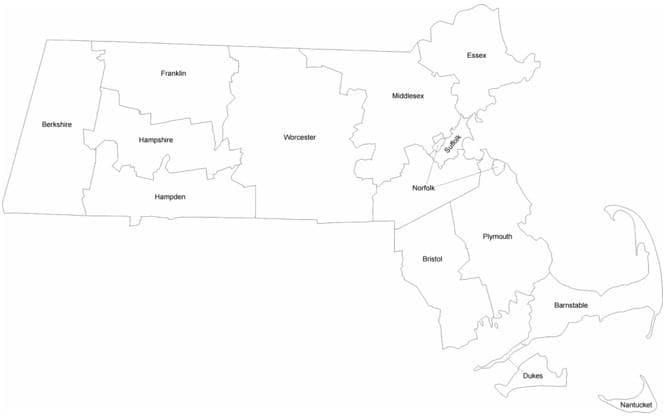
Massachusetts is economically an important state in the US. The state has some of the best-known universities, including Harvard and MIT. These colleges have made the Greater Boston area into a hub for technology and innovation. Massachusetts is home to numerous technology companies, startups, and research institutions. Financial services and insurance industries are also big contributors to the state’s economy.
Minimum Wage Mandates
The minimum wage in the state of Massachusetts is $15.00 per hour as of 2026. This rate has remained unchanged since January 1, 2023. No increases are currently scheduled unless the legislature enacts new legislation.
Tipped employees must be paid a minimum service rate of $6.75 per hour, provided their combined tips and wages equal at least the full minimum wage of $15.00 per hour. If an employee's tips do not bring their total hourly compensation to $15.00, the employer must make up the difference.
The minimum wage law applies to all employees except agricultural workers. There is no differentiation between full-time and part-time employees, meaning the minimum wage is the same for both.
Overtime Rules
Massachusetts has its own state overtime rules in addition to the federal overtime rules included in the Fair Labor Standards Act (FLSA). Employers must adhere to the rules that are most favorable to the employees.
Non-exempt employees in Massachusetts get overtime pay for the hours worked beyond 40 hours in a week. The overtime pay is calculated at 1.5 times the regular hourly pay.
Exempt employees are not eligible for overtime pay. Exempt employees are typically salaried employees who meet the minimum salary threshold of $684 per week ($35,568 per year) and specific criteria related to their job duties.
Meal and Rest Breaks
Massachusetts has specific regulations regarding meal and rest breaks for employees. These regulations are outlined in the Massachusetts Meal Break and Rest Period Law.
In Massachusetts, employees are generally entitled to a meal break of at least 30 minutes if they work more than six consecutive hours. The meal break must be provided no later than the end of the sixth consecutive hour of work. Employers must provide an uninterrupted break, and employees should be relieved of all job-related duties during this time.
While employees are not required to be compensated for meal breaks, if an employee is not completely relieved of duties during the break, the employer may have to pay for the meal break.
Massachusetts law also requires short rest breaks for employees. Employees are entitled to a rest break of at least 10 minutes for every four consecutive hours worked. Rest breaks should be scheduled as close to the midpoint of the work period as possible.
Rest breaks are generally considered paid time, and employees must be compensated for the time spent on rest breaks.
Massachusetts state law provides more detailed and specific requirements for meal and rest breaks than federal law. Employers must comply with the more stringent of the state or federal regulations.
Paid Leaves and time off rules in the state of Massachusetts
Massachusetts has specific regulations regarding paid leave and time off for employees. The Massachusetts Paid Family and Medical Leave (PFML) program is a significant component of the state's policies on leave.
-
Massachusetts PFML provides eligible employees with paid leave for various family and medical reasons, including the birth or adoption of a child, a serious health condition of the employee or a family member, or certain military-related events.
-
Eligible employees may be entitled to up to 12 weeks of paid family leave and up to 20 weeks of paid medical leave in a benefit year. The maximum weekly PFML benefit is $1,230.39 as of January 1, 2026 (up from $1,170.64 in 2025).
-
The total PFML contribution rate for 2026 is 0.88% of eligible wages. For employers with 25 or more covered individuals, the employer's required share is 0.42% (60% of total medical leave), with employees paying the remaining 0.46%. Employers with fewer than 25 covered individuals are not required to pay the employer share.
-
Starting January 1, 2026, medical leave benefits attributable to the required employer contribution are subject to federal and state income tax and employment taxes, and the employer must report these payments on an employee's Form W-2.
-
Employees on PFML are generally entitled to job protection, meaning that they have the right to return to the same or an equivalent position after taking leave.
-
PFML may run concurrently with other leave laws, such as the federal Family and Medical Leave Act (FMLA) and the Massachusetts Parental Leave Act.
-
Massachusetts has the Earned Sick Time Law, which requires certain employers to provide employees with earned sick time. Eligible employees accrue sick time based on hours worked, and they can use this time for their own illness or medical appointments, or to care for a family member.
-
Most Massachusetts employers choose to offer paid time off as part of their benefits package even though the state does not have a law mandating it.
Exempt vs. Non-Exempt Classification
Massachusetts follows guidelines established by federal labor law, specifically the Fair Labor Standards Act (FLSA). The Massachusetts Wage and Hour Laws generally align with federal laws, but it's important to be aware of both state and federal regulations.
Exempt Employees:
- Salary Basis Test: Exempt employees are typically paid on a salary basis, meaning they receive a fixed salary that is not subject to reduction based on the quality or quantity of work performed.
- Salary Level Test: Exempt employees must earn a minimum salary to qualify for exemption. The minimum salary for exemption is $684 per week ($35,568 per year) as of 2026.
- Duties Test: Exempt employees must perform specific job duties that fall into one of the FLSA’s exempt categories, such as executive, administrative, professional, or certain computer-related duties.
Non-Exempt Employees:
- Hourly Pay: Non-exempt employees are typically paid on an hourly basis and are entitled to overtime pay for hours worked beyond 40 hours in a workweek.
- Overtime Pay: Overtime pay for non-exempt employees is generally calculated at 1.5 times their regular rate of pay for each hour worked beyond 40 hours in a workweek.
- Employers must keep accurate records of non-exempt employees’ hours worked, wages paid, and other related information.
Pay Transparency: As of October 29, 2025, Massachusetts employers with 25 or more employees are required to disclose pay ranges in all job postings and to current employees upon request. Employers must also report certain pay data to the state.
Equal Pay Act
Massachusetts has its own state-specific Equal Pay Act (MA EPA) that is designed to address and remedy wage disparities based on gender. The Massachusetts Equal Pay Act, which went into effect on July 1, 2018, is more stringent than federal EPA in certain aspects.
The MA EPA has a broader definition of “comparable work” and includes additional provisions related to transparency and affirmative defenses that are not present in the federal EPA.
- Equitable Work: The law requires that men and women be paid equally for comparable work. This is not limited to identical job titles, but extends to work that is substantially similar in skill, effort, responsibility, and working conditions.
- Employers are prohibited from restricting employees’ ability to discuss their wages with coworkers. This promotes transparency and allows employees to inquire about, discuss, or disclose information about their own wages or the wages of others.
- The MA EPA provides affirmative defenses for employers who have conducted a good faith, reasonable self-evaluation of their pay practices within the previous three years and have made progress toward eliminating gender-based wage differentials.
- Employees have the right to file civil actions for alleged violations of the MA EPA. Remedies may include unpaid wages, liquidated damages, and attorneys’ fees.
- Employers in Massachusetts should review and, if necessary, adjust their pay practices to ensure compliance with the Massachusetts Equal Pay Act. This may include conducting self-evaluations, addressing any identified wage disparities, and promoting transparency regarding wages within the workplace.
Rules for hiring and firing employees in the state of Massachusetts
Massachusetts has its own rules and regulations governing the hiring and firing of employees. These regulations cover various aspects, including anti-discrimination laws, at-will employment, background checks, and final pay requirements.
These laws work alongside applicable federal laws. Employers must comply with both the state and federal laws in the state of Massachusetts.
-
At-Will Employment: Massachusetts follows the doctrine of at-will employment, which means that employment relationships can be terminated by either the employer or the employee at any time, with or without cause, and with or without notice.
-
While at-will employment allows for termination without cause, employers cannot terminate employees for illegal reasons, such as discrimination, retaliation, or in violation of public policy.
-
Anti-Discrimination Laws: Massachusetts has robust anti-discrimination laws that prohibit discrimination in employment based on various protected characteristics, including race, color, religion, sex, sexual orientation, gender identity, national origin, age, disability, genetic information, veteran status, and more. Employers are required to make employment decisions based on merit and job-related criteria.
-
Massachusetts has regulations regarding the use of criminal history information in hiring (CORI reform). Employers are generally prohibited from asking about arrests that did not result in convictions and from considering certain criminal records in employment decisions.
-
Employers are prohibited from terminating employees based on protected characteristics, such as race, gender, age, disability, or other factors covered by anti-discrimination laws. Retaliation against employees exercising their legal rights is also prohibited.
-
Equal Employment Opportunity (EEO). Employers should provide equal employment opportunities to all individuals regardless of their protected characteristics, and hiring decisions should be made based on merit and job-related criteria.
-
Work Eligibility Verification: All employers in Massachusetts are required to verify the work eligibility of employees through the Form I-9 process in compliance with federal immigration laws.
-
Final Paychecks: Massachusetts requires employers to pay an employee’s final paycheck by the next regularly scheduled payday.
-
Unemployment Compensation: Terminated employees may be eligible for unemployment benefits through the Massachusetts Department of Unemployment Assistance.
-
Record Keeping: Massachusetts has regulations regarding access to personnel records. Employees generally have the right to access their personnel records within five business days of making a written request.
-
Employers are encouraged to have clear and comprehensive employee handbooks that outline policies, procedures, and expectations.
-
WARN Act: The federal Worker Adjustment and Retraining Notification (WARN) Act may apply to employers with 100 or more employees, requiring them to provide advance notice of plant closings or mass layoffs.
It is important for employers to remain well-informed about changes in employment laws and to seek guidance from legal professionals to ensure compliance with the latest regulations. It’s advisable to establish clear and meticulously documented employment policies and procedures to aid employers in complying with the labor laws.
Stay Compliant with Labor Laws
Track time, attendance, time-off, and schedules with HiveDesk — workforce management software built for compliance. $5/user/month, all features included.