Elevating Contact Center Agent Performance — A Guide

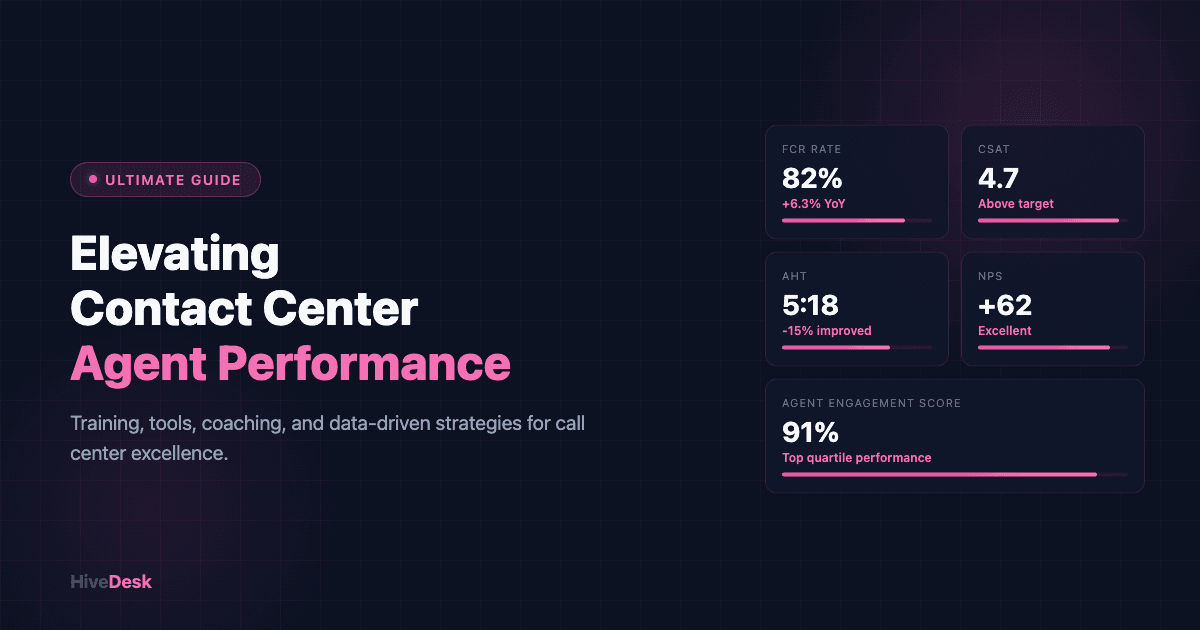
Welcome, future contact center leaders! If you're here, you understand a fundamental truth: your agents are the frontline of your brand, the human voice that shapes customer experiences, and ultimately, the heartbeat of your business. This isn't just a job; it's a critical strategic function. This guide isn't about quick fixes; it's about building a robust, sustainable framework for agent excellence. Let's dive in.
Understanding the Heartbeat of Your Business: Contact Center Agent Performance
Think of your contact center as an orchestra. Each agent is a musician, playing their part to create a harmonious customer experience. When one instrument is out of tune, or a musician is struggling, the entire performance suffers. Agent performance isn't merely about individual metrics; it's the collective pulse that dictates your organization's health, its customer loyalty, and its profitability. Whether you manage a dedicated contact center or a traditional call center, the principles of performance excellence remain the same.
Why Agent Performance is Your CX North Star
Imagine a customer calling with a complex issue. Their experience with your agent—the clarity of communication, the empathy shown, the efficiency of the resolution—will define their perception of your entire company. A stellar call center agent can turn a frustrated detractor into a loyal advocate. Conversely, a struggling agent can alienate even your most dedicated customers. This isn't just about service; it's about reputation, retention, and revenue. Your agents are the direct conduits for customer sentiment, providing invaluable feedback and insights that no survey alone can capture. Their performance is the clearest indicator of your customer experience (CX) health, making it your undisputed North Star.
The Pillars of High-Performing Agents: What Does "Good" Look Like?
When we talk about "good" contact center performance, it's easy to get lost in a sea of numbers. But true excellence goes beyond the spreadsheet. It's about a blend of efficiency, effectiveness, and empathy that creates memorable customer interactions.
Defining Key Performance Indicators (KPIs) Beyond Just Numbers
While performance metrics like Average Handle Time (AHT) and First Call Resolution (FCR) are crucial, they are symptoms, not the sole definition, of great performance. Think of an iceberg: the numbers are the tip, but below the surface lies a wealth of qualitative factors. A high-performing call center agent doesn't just resolve customer issues quickly; they do it with a tone that reassures, using language that clarifies, and offering solutions that anticipate future needs. They balance efficiency with efficacy, ensuring the customer feels heard and valued, not just processed. Good looks like an agent who can de-escalate a heated conversation, cross-sell a relevant product without sounding pushy, and consistently leave customers feeling better than when they started the interaction. It's about combining the "what" with the "how."
Common Pitfalls: Why Agent Performance Stalls
Even the most dedicated call center agents can find their performance stalling. Often, it's not a lack of effort, but rather systemic issues within the call center environment. Let's explore some of these common roadblocks.
Lack of Clear Expectations: Aiming Without a Target
Imagine giving an archer a bow and arrow but no target. That's what it's like for agents without clear, well-defined expectations. If they don't know precisely what success looks like—beyond vague notions of "being helpful"—how can they possibly achieve it? This confusion leads to frustration, inconsistency, and a feeling of aimlessness. Agents in any call center need to understand not only what they are expected to do but why it matters and how their performance contributes to the larger organizational goals.
Inadequate Training & Onboarding: Building on a Shaky Foundation
Your agents are the architects of customer satisfaction, but if their foundational training is shaky, the entire structure will eventually crumble. Onboarding shouldn't be a one-time event where agents are rushed through product knowledge and then thrown onto the phones. It requires a comprehensive, multi-faceted approach that covers technical skills, soft skills, company culture, and continuous reinforcement. Without this, agents will lack confidence, make preventable mistakes, and provide inconsistent service quality, leaving them and your customers feeling unsupported. A robust training program should also cover self-service tools and routing logic so agents understand how customers reach them and what those customers have already tried before connecting with a live agent.
Insufficient Tools & Technology: Fighting with One Hand Tied Behind Their Back
Picture a chef trying to prepare a gourmet meal with dull knives, a broken oven, and missing ingredients. That's the daily reality for agents struggling with outdated or clunky tools. Slow systems, disconnected platforms, and a lack of access to critical customer information force agents to put customers on hold, transfer calls unnecessarily, or simply fail to provide timely resolutions. This isn't just inefficient; it's demoralizing for agents and infuriating for customers. Technology should empower, not hinder.
Burnout & Low Morale: The Hidden Costs of a Demanding Role
Being a contact center agent is inherently demanding. They face back-to-back calls, often dealing with frustrated or angry customers, while adhering to strict metrics. Without proactive measures to support their well-being, burnout is inevitable. High stress, repetitive tasks, lack of autonomy, and perceived unfairness can decimate morale. Burnout doesn't just lead to decreased performance; it contributes to high absenteeism, increased error rates, and ultimately, higher agent attrition—a costly cycle that impacts both your bottom line and your customer experience.
Feedback Fails: When Coaching Misses the Mark
Feedback is the compass that guides agents toward improvement. But if that compass is broken or pointed in the wrong direction, it's worse than having no guidance at all. Feedback fails can manifest in several ways: it's too infrequent, too critical without being constructive, too vague, or delivered without empathy. If agents feel constantly judged rather than supported, or if feedback sessions don't offer clear, actionable steps for improvement, they'll disengage. Effective coaching is a dialogue, not a monologue, focusing on growth and development rather than simply pointing out flaws.
Strategies to Ignite Agent Performance: Your Playbook for Success

Now that we've identified the common challenges, let's shift our focus to actionable strategies that will not only address these pitfalls but proactively elevate your call center agents to new heights.
Invest in Robust Training and Ongoing Development
Your training program isn't a cost center; it's a profit driver. Start with a comprehensive onboarding that goes beyond product knowledge to include active listening, empathy, de-escalation techniques, problem-solving skills, and cultural alignment. But the learning shouldn't stop there. Implement continuous development programs: regular workshops on new products or services, refresher courses on soft skills, and cross-training opportunities. Consider peer-to-peer coaching programs where experienced agents mentor newer ones. This ongoing investment fosters expertise, boosts confidence, and demonstrates your commitment to their growth. Think of it as cultivating a garden; you don't just plant the seeds, you nourish them continually.
Empower with the Right Tools and Technology
Equip your call center agents with a modern, intuitive tech stack that streamlines their workflows. This means a unified desktop that consolidates customer information from your CRM and various systems, smart routing that connects customers to the most qualified agent, and AI-powered assistance tools that provide real-time suggestions and knowledge base articles. Voice AI can transcribe calls and automate summaries, freeing agents to focus on the human connection. Deploy chatbots and IVR systems to handle routine inquiries through self-service channels, reducing call volumes and allowing agents to focus on complex customer issues that require a human touch. Self-service options like FAQs, automated account lookups, and chatbot-powered self-service portals reduce unnecessary contacts and lower wait times across the board. The goal is to remove technological friction, allowing agents to access information quickly and resolve issues efficiently, reducing AHT and improving FCR without sacrificing quality.
Optimize Workforce Management and Scheduling
Effective workforce management (WFM) is the backbone of a well-run call center operation. Use WFM tools to forecast call volumes, optimize staffing levels, and ensure the right agents with the right skills are available at the right times. Proper forecasting based on historical data and seasonal trends prevents both understaffing (which leads to long wait times and high call abandonment rates) and overstaffing (which inflates costs). When workforce management is done right, it balances agent workload, reduces burnout, and ensures consistent service levels throughout the day. Intelligent skills-based routing ensures that complex queries reach experienced agents while simpler issues are directed to newer team members or self-service channels, optimizing workflows across the entire operation. Monitor key metrics like schedule adherence, occupancy rates, and the total number of calls handled per shift to identify optimization opportunities.
Cultivate a Culture of Continuous Feedback and Coaching
Shift from "gotcha" quality assurance to "growth-oriented" quality management. Schedule regular, constructive 1:1 coaching sessions focusing on specific behaviors and offering actionable improvement strategies. Use call recordings or chat transcripts as learning tools, not just punitive evidence. Encourage self-reflection and peer feedback. Implement gamification to make learning engaging and celebrate small wins. Remember, feedback is a gift designed to help someone grow, not a weapon to criticize. When agents feel supported in their development, they become more receptive and engaged. A strong culture of continuous improvement ensures that coaching isn't a one-time event but an ongoing commitment to excellence.
Prioritize Agent Well-being and Engagement
Happy agents make happy customers. Implement strategies to combat burnout: flexible scheduling options, regular breaks, mental health resources, and opportunities for social connection. Foster a positive work environment where agents feel valued and heard. Recognize and reward performance publicly and privately, not just with monetary incentives but with genuine appreciation. Encourage a sense of purpose by regularly communicating how their work directly impacts customer satisfaction and business success. An engaged agent is a productive agent, and engagement stems from feeling respected, supported, and connected.
Leverage Data and Analytics for Actionable Insights
Your contact center generates a goldmine of performance data. Don't just track KPIs; analyze them to uncover patterns and root causes. For example, if the first contact resolution rate is low, is it due to insufficient training on a particular product, a broken process, or a gap in your knowledge base? Use sentiment analysis to identify common customer pain points or agent coaching opportunities. Predictive analytics can forecast performance trends and highlight at-risk agents before problems escalate. Monitor dashboards that display real-time metrics including resolution rate, customer satisfaction scores, NPS, and agent productivity—providing instant visibility into contact center performance. Share these insights transparently with your team, empowering them to understand their impact and contribute to solutions. Data should inform, not just report, guiding your coaching strategies and process improvements. Benchmark your key metrics against industry standards to understand where you stand and set meaningful targets. The workforce analytics guide covers how to build this analytical practice.
Measuring Success: How Do You Know You're Making a Difference?

Implementing these strategies is the first step. The next, and equally crucial, is to measure their impact. How will you know if your efforts are truly elevating agent performance?
Tracking KPI Improvement Over Time
This is where your quantitative data becomes invaluable. Monitor your core KPIs—FCR, AHT, Customer Satisfaction (CSAT), Net Promoter Score (NPS), and even agent adherence and occupancy rates—on an ongoing basis. Look for trends and sustained improvements in your customer satisfaction score over time. If FCR is consistently increasing, or CSAT scores are steadily climbing, you're on the right track. But don't just look at averages; drill down to individual agent performance to identify star performers and those who may need additional support. A rising customer satisfaction score across the team is the clearest sign that your optimization efforts are paying off. Track operational efficiency improvements alongside agent metrics to understand the full picture.
Gathering Agent Feedback: Are Your Strategies Resonating?
Your agents are living the experience every day. Their insights are invaluable. Conduct regular surveys, hold town halls, and create open forums where call center agents can voice their opinions on new tools, training programs, or well-being initiatives. Are they finding the new unified desktop helpful? Do they feel the coaching sessions are productive? Are they experiencing less stress? Listen actively to their feedback and demonstrate that their input leads to meaningful change. This not only provides crucial data but also reinforces their sense of value and engagement.
Customer Feedback Loops: The Ultimate Validation
Ultimately, the true measure of elevated agent performance lies in the customer's experience. Leverage post-interaction surveys (CSAT, CES), analyze customer comments, and monitor social media mentions. Are customers reporting more positive customer interactions? Are they expressing higher satisfaction with issue resolution? Are they less likely to churn? Prompt follow-up on negative feedback can recover at-risk relationships and provide valuable coaching insights. If your customers are feeling the positive impact of your agent performance initiatives, then you have achieved your ultimate goal. Their positive feedback is the ultimate validation of your call center's success.
The Future is Bright: Continuous Evolution in Call Center Management
The world of customer service is constantly evolving, driven by technological advancements and ever-increasing customer expectations. Elevating agent performance isn't a destination; it's a continuous journey of improvement, adaptation, and innovation. Embrace new technologies like AI-powered automation and omnichannel platforms that unify voice, chat, email, and social media into a seamless experience. Remain agile in your training and coaching methods, and, most importantly, never lose sight of the human element. By investing in your call center agents—their skills, their tools, and their well-being—you're not just optimizing a metric; you're building a resilient, customer-centric organization prepared for whatever the future holds. Addressing inefficiencies proactively and empowering agents with the right resources will drive lasting improvements in service quality and customer loyalty. Keep learning, keep adapting, and keep empowering your team, and your call center will not just survive, but thrive.