

Kansas State Labor Laws for Business Owners
Kansas labor law guide for employers. Covers the $7.25/hr federal minimum wage, overtime rules, and break time regulations.
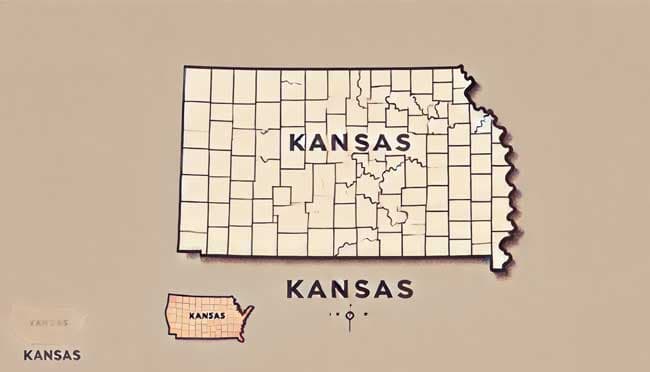
Kansas is located in the central United States, often referred to as part of the Midwest. With a population of approximately 2.9 million people, the economy of Kansas is largely driven by agriculture, aerospace, manufacturing, and energy production. The state is known for being a top producer of wheat, corn, and cattle, while also housing major aircraft manufacturing operations. Kansas maintains a business-friendly environment with relatively low taxes and labor regulations that are balanced for both businesses and workers.
Minimum Wage Mandates
Kansas adheres to the federal minimum wage of $7.25 per hour as of 2026. The state has not enacted its own minimum wage law above the federal level, though legislation has been proposed. There are no counties or cities in Kansas with a higher minimum wage than the federal standard.
The minimum wage for workers on certain federal contracts is $13.65 per hour, effective May 11, 2026 (under Executive Order 13658).
Tipped employees must be paid a minimum cash wage of $2.13 per hour, as long as their tips bring their total compensation to at least $7.25 per hour.
Overtime Rules
Kansas follows the federal Fair Labor Standards Act (FLSA) for overtime rules. Non-exempt employees must be paid overtime at a rate of 1.5 times their regular hourly wage for any hours worked over 40 in a workweek. There are no daily overtime requirements in Kansas.
Alternate Workweek Agreements: Kansas does not have specific state regulations allowing alternate workweek agreements, but employers and employees can agree on such arrangements, provided they adhere to federal guidelines.
Exemptions: Executive, administrative, professional employees, outside salespeople, and some other categories of workers are exempt from overtime rules, provided they meet the salary threshold of $684 per week ($35,568 per year) and applicable duties tests.
Meal and Rest Breaks
Meal Breaks: Kansas does not have a law mandating meal breaks for adult employees. Employers are not required to provide meal breaks, though many choose to offer a 30-minute unpaid meal break for shifts longer than 6 hours.
Rest Breaks: There are no laws in Kansas requiring employers to provide rest breaks. However, it is common practice for employers to offer short paid rest breaks, typically around 10 minutes for every 4 hours worked.
Rules for Young Employees: Kansas law requires that minors under the age of 16 must receive a 30-minute meal break if they work more than 5 hours continuously. Employers must also comply with federal FLSA rules regarding young employees, which impose restrictions on working hours and conditions for minors.
Paid Leaves and Time Off
Paid Sick Leave Laws: Kansas does not have a statewide paid sick leave mandate. Employers may choose to provide paid sick leave, but it is not required by law.
Accrual and Usage of Sick Leave: In the absence of a state mandate, the accrual and use of sick leave are determined by the employer’s policies.
Paid Time Off (PTO) Laws: Kansas does not require employers to offer paid time off. However, employers who offer PTO must follow any written agreements or policies regarding accrual and usage.
Other Leave Laws:
- Jury Duty Leave: Employers must provide unpaid time off for employees serving jury duty.
- Parental Leave: Kansas follows the federal Family and Medical Leave Act (FMLA), which provides eligible employees with up to 12 weeks of unpaid leave for the birth or adoption of a child, or to care for a seriously ill family member.
- Bereavement Leave: Kansas does not require bereavement leave, but many employers offer it as a benefit.
- Voting Leave: Kansas law requires employers to provide up to two hours of paid leave for employees to vote if their work schedule does not allow them sufficient time to vote outside of working hours.
FMLA Eligibility: Employees in Kansas who have worked for a covered employer for at least 12 months and have worked 1,250 hours in the past year are eligible for FMLA leave.
Exempt vs. Non-Exempt Classification
Exempt Employees:
- Salary Basis: Exempt employees must be paid a salary rather than an hourly wage.
- Salary Level: The minimum salary for exempt employees under federal law is $684 per week ($35,568 per year) as of 2026.
- Duties Test: Exempt employees must primarily perform executive, administrative, or professional duties. Kansas aligns with federal regulations when determining exempt status.
Non-Exempt Employees:
- Hourly Pay Rules: Non-exempt employees must be paid at least the federal minimum wage of $7.25 per hour.
- Overtime Wage Rules: Non-exempt employees are entitled to overtime pay at 1.5 times their regular hourly rate for all hours worked over 40 in a workweek.
Wage Statements: As of January 1, 2025, Kansas employers are permitted to issue wage statements electronically by default, though they must still provide a printed wage statement if an employee requests one.
Equal Pay Act
The federal Equal Pay Act requires that men and women receive equal pay for equal work. Kansas does not have a state-specific equal pay law, but it follows the federal guidelines to ensure that employees are paid fairly, regardless of gender.
Employers in Kansas must also comply with Title VII of the Civil Rights Act of 1964, which prohibits discrimination in employment decisions based on race, color, religion, sex, or national origin.
Rules for Hiring and Firing Employees in Kansas
At-Will Employment: Kansas is an at-will employment state, meaning either the employer or the employee can terminate the employment relationship at any time and for any lawful reason, with or without cause.
Anti-Discrimination Laws: Kansas’s anti-discrimination laws, enforced through the Kansas Act Against Discrimination (KAAD), protect employees from discrimination based on race, sex, age, disability, religion, national origin, ancestry, and other protected characteristics.
Equal Employment Opportunity (EEO) Act: Kansas follows both state and federal EEO regulations to ensure fair employment practices. Employers must not discriminate against employees or applicants based on protected categories.
Background Verification Rules: Employers in Kansas may conduct background checks, but they must comply with the Fair Credit Reporting Act (FCRA) and any applicable state laws when using criminal history or credit information in employment decisions.
Work Eligibility Verification Rules: Employers must verify an employee’s eligibility to work in the United States by completing and retaining the federal I-9 form.
Final Paychecks: Kansas law requires employers to pay final wages by the next regular payday when an employee is terminated.
Unemployment Compensation Rules: Employees who are terminated without cause may be eligible for unemployment benefits, provided they meet the eligibility requirements set by the Kansas Department of Labor.
Compliance with WARN Act: Employers must follow the federal Worker Adjustment and Retraining Notification (WARN) Act, which requires 60 days’ notice before large-scale layoffs or plant closures.
Stay Compliant with Labor Laws
Track time, attendance, time-off, and schedules with HiveDesk — workforce management software built for compliance. $5/user/month, all features included.