Rotating Shift Schedules: Types, Examples, Best Practices

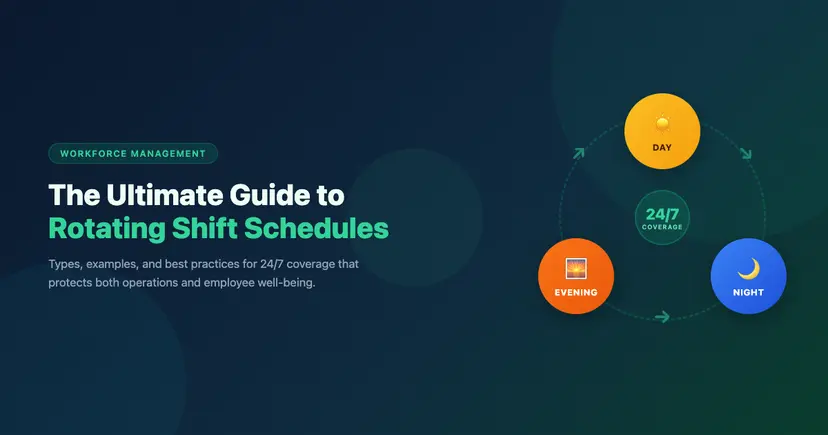
Imagine a world where your business never sleeps, where operations continue seamlessly 24 hours a day, 7 days a week. For many industries, this isn't a dream; it's a necessity. But how do you staff such an endeavor without burning out your workforce? The answer often lies in the strategic deployment of rotating shift schedules.
This guide will demystify the world of rotating shifts, exploring not just what they are, but why they're used, their diverse forms, and how to implement them effectively while prioritizing the well-being of your most valuable asset: your employees.
What Exactly is a Rotating Shift Schedule?
At its core, a rotating shift schedule is a system where employees cycle through different work periods over a defined timeframe. Instead of following the same work schedule every week—a fixed 9-to-5 or permanent night shift—workers will move from, say, day shifts to evening shifts, then to night shifts, and back again. The shift rotation can be weekly, bi-weekly, monthly, or even within a single 24-hour period, ensuring continuous coverage while distributing the burden (and sometimes the benefits) of less desirable shifts among the team.
Think of it like a carefully choreographed dance. Each dancer (employee) takes their turn in different positions on the stage (shift types) to keep the performance (your business operations) flowing without interruption. It's a dynamic approach designed to meet continuous operational demands.
Why Do Businesses Even Use Them?
The primary driver behind rotating shifts is the need for constant operational presence. Industries like manufacturing, healthcare, public safety, emergency services, transportation, utilities, and customer support often cannot simply close their doors at the end of a traditional workday. These sectors require full-time staff working at different times of the day and night to keep critical services running.
Beyond continuous coverage, rotating shifts can also address:
Optimized Resource Utilization: Ensuring expensive machinery or critical infrastructure is always running to meet core business needs.
Fairness in Shift Distribution: Spreading the less popular shifts (nights, weekends, holidays) more equitably among staff, rather than permanently assigning them to a subset of employees.
Reduced Overtime Costs: By efficiently scheduling staff, businesses can minimize the need for employees to work beyond their standard hours to cover gaps.
Employee Development: Exposure to different shifts can sometimes broaden an employee's understanding of various operational periods and challenges.
It's a strategic choice, not a casual one, driven by the fundamental operational requirements of the business.
The Pros and Cons: A Balanced Perspective
Like any complex system, rotating shift schedules come with a unique set of advantages and disadvantages. Understanding both sides is crucial for any organization considering or currently utilizing them.
Benefits for the Business
For organizations, the benefits can be substantial, directly impacting operational efficiency and financial performance:
24/7 Coverage: This is the undisputed champion benefit. Critical services and continuous production lines don't stop, and rotating shifts ensure they never have to. Imagine a hospital without night nurses or a power plant without engineers at 3 AM—impossible.
Enhanced Productivity: By having staff available around the clock, businesses can maximize the output of their assets and infrastructure. This means machines run longer, customer inquiries are answered faster, and crises are managed instantly.
Fairness in Burden Sharing: While some shifts are inherently less desirable, shift rotation ensures that no single group of employees is permanently stuck with the most inconvenient hours. This can lead to higher morale and improved retention compared to fixed schedules where the same individuals always bear the brunt.
Reduced Absenteeism (Potentially): In some well-managed systems, employees might feel more obligated to show up for their rotating shifts, as their absence directly impacts others in the rotation.
Cost Efficiency: While not always immediately obvious, a well-designed rotating schedule can reduce overtime pay by ensuring adequate coverage without requiring employees to constantly work beyond their regular hours.
Benefits for Employees (Yes, There Are Some!)
While often associated with challenges, rotating shifts aren't without their perks for employees:
More Days Off in a Row: Many rotating schedules, particularly those with longer shift durations (like 12-hour shifts), are designed to group working days together, leading to extended blocks of time off. Imagine having 4-5 consecutive days off every few weeks—that's a significant chunk of personal time for appointments, hobbies, or short trips, improving overall work-life balance.
Variety and Reduced Monotony: For some, working the same shift day in and day out can be dull. Rotating shifts offer a change of pace, different challenges, and interactions with different colleagues depending on the shift.
Opportunities for Personal Errands: Day shifts allow for morning errands, night shifts free up daytime for appointments, and evening shifts can mean a leisurely start to the day. This flexibility, while disruptive to routine, can boost job satisfaction.
Higher Pay (Sometimes): Often, night and weekend shifts come with shift differentials or premium pay, boosting an employee's overall earnings. This financial incentive can be a major draw for some.
The Challenges for Businesses
The complexities of rotating shifts also present significant hurdles for employers:
Increased Administrative Overhead: Designing, implementing, and managing these schedules is far more intricate than fixed shifts. It requires sophisticated planning, communication, and often, specialized workforce management software.
Higher Turnover Rates: The lifestyle demands of constant shift rotation can be a major factor in full-time employees seeking alternative employment, especially if schedules are poorly managed or inflexible.
Potential for Reduced Morale: If not managed well, the negative impacts on employee health and social life can lead to resentment, burnout, and a general decline in team spirit.
Training Challenges: Ensuring all staff are competent across different operational periods (e.g., night shift protocols might differ from day shift) can require more extensive and continuous training.
Communication Gaps: Handover between shifts is critical. Poor communication can lead to errors, missed information, and operational inefficiencies.
The Challenges for Employees
This is where the rubber often meets the road, as employees bear the brunt of managing their lives around constantly changing work patterns:
Circadian Rhythm Disruption: This is the most significant challenge. Our bodies are naturally wired for consistent sleep schedules. Rotating shifts constantly fight against this internal clock, leading to chronic fatigue, sleep disorders, and impaired cognitive function.
Impact on Social and Family Life: Attending consistent social events, participating in community activities, or even simply coordinating family meals becomes incredibly difficult. Imagine trying to coach a kids' sports team when your work schedule changes weekly.
Health Concerns: Beyond sleep issues, long-term rotating shift work has been linked to an increased risk of various health problems, including cardiovascular disease, diabetes, obesity, and gastrointestinal issues.
Mental Health Strain: The disruption to routine, lack of consistent social support, and chronic fatigue can contribute to increased stress, anxiety, and burnout.
Difficulty with Childcare/Elder Care: Finding consistent, reliable care when your work hours are unpredictable is a monumental task and often a major source of stress.
Popular Rotating Shift Schedule Examples You Should Know
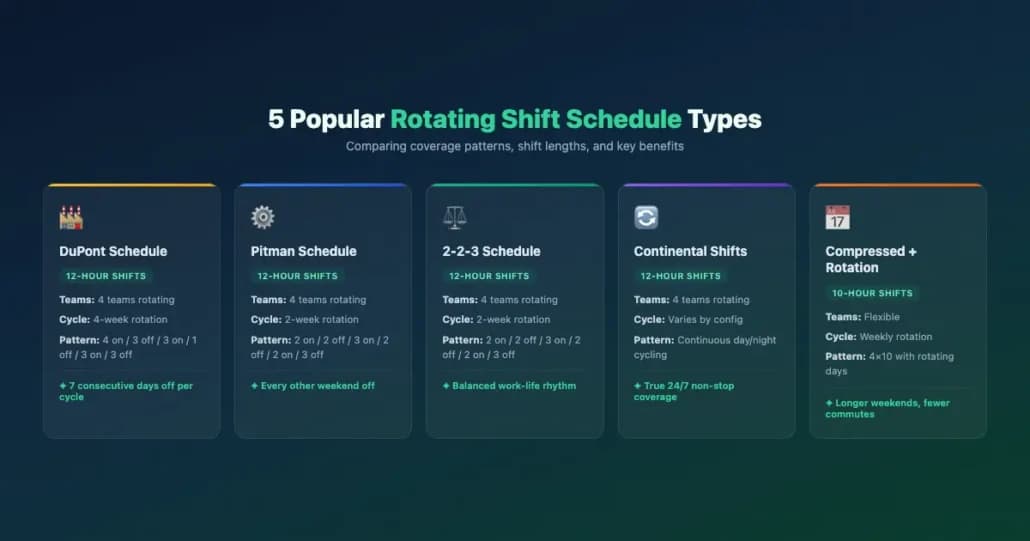
The world of rotating shifts isn't a one-size-fits-all scenario. Different industries and operational needs have given rise to various common schedule types—from standard 8-hour shifts to 12-hour shifts and even 24-hour shifts in fields like firefighting—each with its own rhythm and implications. Let's explore some of the most prevalent ones.
The DuPont Schedule: A Classic Example
The DuPont schedule is one of the most well-known and often referenced rotating shift patterns, typically used in 24/7 operations. It divides employees into four teams, working 12-hour shifts. A common pattern might look like this:
Team A: Works 4 consecutive night shifts.
Team B: Gets 3 days off.
Team C: Works 3 consecutive day shifts.
Team D: Gets 1 day off.
Team A: Then works 3 consecutive night shifts.
Team B: Gets 4 days off.
Team C: Works 4 consecutive day shifts.
Team D: Gets 7 days off.
This cycle then repeats, ensuring each team rotates through all shift types and also receives a generous seven-day break once per rotation. The advantage here is the long blocks of time off, but the 12-hour shifts and rapid rotation between day and night shifts can be very taxing on circadian rhythms.
The Pitman Schedule: A 12-Hour Workhorse
Also known as the "2-3-2" or "every other weekend off" schedule, the Pitman schedule is another popular 12-hour shift pattern designed for 24/7 coverage. It typically involves four teams working two consecutive 12-hour day shifts, followed by two days off, then three consecutive 12-hour night shifts, followed by two days off, then two consecutive 12-hour day shifts, followed by three days off.
A simpler way to visualize it:
- Work 2 days
- Off 2 days
- Work 3 days
- Off 2 days
- Work 2 days
- Off 3 days
This pattern allows every employee to have every other weekend off, which is a significant draw. It provides long stretches of days off and a relatively predictable pattern, but still involves rapid transitions between day and night shifts and the intensity of 12-hour shifts.
The 2-2-3 Schedule: Balancing Work and Life (Relatively Speaking)
The 2-2-3 schedule (often part of a larger rotation) is another common pattern, especially within 12-hour shift environments. An employee might work two days, have two days off, work three days, have two days off, work two days, and then have three days off. This specific segment allows for regular days off, including some extended breaks. When incorporated into a full rotation, it ensures 24/7 coverage across multiple teams. Its appeal lies in its relatively balanced approach, providing more frequent breaks than some other 12-hour patterns, and the "every other weekend off" benefit.
Continental Shifts: Round-the-Clock Coverage
Continental shifts are a broad category often used for 24/7 operations, usually involving 12-hour shifts. They typically involve four teams working on a rotational basis. While specific patterns vary, the core idea is continuous coverage with each team cycling through day and night shifts. Many of the schedules mentioned above (DuPont, Pitman) are forms of continental shifts. The key characteristic is the continuous rotation of teams across 12-hour shifts to ensure non-stop operations.
Compressed Workweeks with Rotation: A Modern Twist
This approach combines the concept of a compressed workweek (e.g., four 10-hour shifts instead of five 8-hour shifts) with a rotating element. For example, a team might work Monday-Thursday one week, then Tuesday-Friday the next week, and Wednesday-Saturday the week after. While it doesn't always provide 24/7 coverage in the same way as 12-hour patterns, it's effective for businesses needing extended hours during the week or some weekend coverage without full 24/7 operations. It offers employees longer weekends and fewer commute days, while the rotation distributes the less desirable late or weekend shifts fairly.
Designing Your Rotating Shift Schedule: Key Principles
Designing an effective rotating shift schedule is more art than science, requiring careful consideration of both operational demands and human factors. It's a strategic process that shouldn't be rushed.
1. Prioritize Predictability (Where Possible)
One of the biggest stressors for employees on rotating shifts is the lack of a stable routine. While the nature of rotation dictates some change, strive for patterns that are as predictable as possible. Can you establish a rotation template that repeats consistently? Can employees know their shift times for weeks or even months in advance?
For instance, instead of ad-hoc changes, clearly communicate the 4-week or 6-week rotation pattern. When employees can anticipate their shifts, they can better plan their personal lives, childcare, and appointments, significantly reducing stress and improving morale. Predictability doesn't mean no rotation; it means a predictable rotation.
2. Embrace Forward Rotation
Our bodies naturally find it easier to adjust to a delayed sleep-wake cycle (staying up later) than an advanced one (going to bed earlier). This is why jet lag is often worse flying east than west. Therefore, a "forward rotation" (day to evening, evening to night) is generally preferred over a "backward rotation" (night to evening, evening to day).
Forward rotation allows the body's circadian rhythm to shift more gradually, reducing the severity of sleep disruption and its associated health impacts. While not always feasible due to operational constraints, prioritizing forward rotation where possible is a significant step towards employee well-being.
3. Consider Shift Length and Breaks
The length of shifts is a critical variable. 8-hour shifts are standard, but 10-hour or 12-hour shifts are common in continuous operations. Longer shifts mean fewer shift changes and potentially more consecutive days off, but they also increase fatigue risk.
Ensure that statutory rest periods and break times are not just met, but that employees are genuinely encouraged to take them. For longer shifts, consider additional shorter breaks. Also, sufficient rest between shifts is paramount. A minimum of 11-12 hours between shifts allows for adequate sleep and recovery, preventing accumulated fatigue and reducing accident risk.
4. Factor in Commute and Transition Times
The actual workday extends beyond the clocked-in hours. Employees need time to commute, wind down after a demanding shift, and prepare for the next. A short turnaround between a late-night shift and an early morning shift, especially with a long commute, leaves virtually no time for sleep or personal life.
When designing schedules, think about the total time commitment, not just the shift duration. Can you minimize instances of "quick flips"—where an employee finishes a night shift and starts a day shift with minimal rest? This is a notorious contributor to fatigue and errors.
5. Leverage Technology for Scheduling
Manual scheduling of complex rotating shifts is a recipe for errors, inefficiency, and frustration. Modern scheduling tools and software are no longer a luxury; they're a necessity. These platforms can:
- Automate complex rotation patterns and generate optimized rosters.
- Apply customizable schedule templates to quickly build rotations for new teams or departments.
- Ensure compliance with labor laws and internal policies (e.g., minimum time between shifts).
- Track employee availability, employee preferences, and certifications.
- Facilitate shift swaps and time-off requests.
- Provide real-time visibility for both managers and employees.
Investing in robust employee scheduling software frees up managerial time, reduces errors, and ultimately leads to a more optimized and employee-friendly schedule. Our free shift schedule generator can help you build a starting rotation template based on your team size and shift pattern.
Best Practices for Implementing and Managing Rotating Shifts
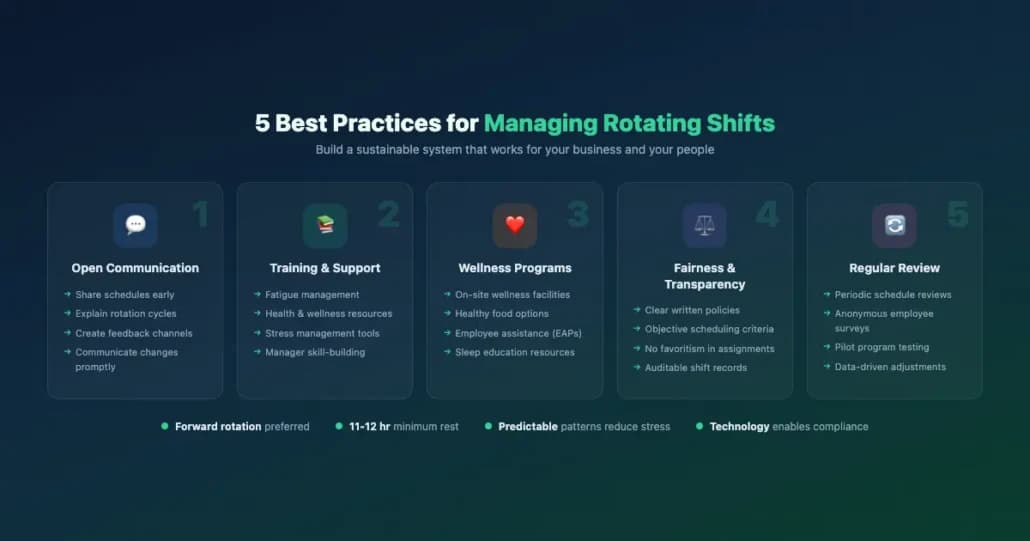
A well-designed schedule on paper is only as good as its implementation in practice. Effective management of rotating shifts requires a proactive, employee-centric approach.
Open Communication: Your Greatest Asset
The cornerstone of successful rotating shift management is transparent and consistent communication. Employees need to understand why these schedules are necessary, how they are designed, and what the expectations are.
Proactive Information Sharing: Don't just hand out schedules; explain the rotation cycle, highlight extended days off, and clarify any special rules regarding specific shifts.
Channels for Feedback: Establish clear avenues for employees to voice concerns, suggest improvements, or request changes. This could be through regular team meetings, anonymous surveys, or dedicated HR channels.
Timely Updates: If changes occur, communicate them immediately and clearly, explaining the rationale. Avoid last-minute surprises.
When employees feel heard and informed, they are more likely to adapt and accept the challenges of rotating work.
Training and Support: Don't Leave Them Hanging
Working rotating shifts presents unique challenges, and employees need support to navigate them effectively.
Fatigue Management Training: Educate employees on the signs of fatigue, its dangers, and strategies for managing it (e.g., sleep hygiene, power naps).
Health and Wellness Resources: Provide information and access to resources for dealing with sleep disturbances, stress, and other health issues linked to shift work.
Stress Management Techniques: Offer workshops or resources on mindfulness, relaxation techniques, and building resilience.
Manager Training: Equip managers with the skills to identify fatigued employees, promote healthy work-life balance, and handle shift-related conflicts or concerns.
Wellness Programs: Counteracting the Challenges
Given the inherent stressors of rotating shifts, proactive wellness programs are not just a nice-to-have, but a strategic necessity.
On-site Wellness Facilities: Access to gyms, quiet rooms, or healthy food options (especially during night shifts) can make a significant difference.
Healthy Food Options: Ensure cafeterias or vending machines offer nutritious meals and snacks, particularly for night shift workers who might otherwise rely on unhealthy convenience foods.
Employee Assistance Programs (EAPs): Promote EAPs that offer confidential counseling and support for mental health, stress, and family issues.
Sleep Education and Resources: Provide materials on improving sleep quality, managing sleep debt, and recognizing sleep disorders. Consider offering access to sleep specialists or coaching.
Fairness and Transparency: Building Trust
Perceived fairness is paramount. Employees need to believe that the system is equitable and that rules are applied consistently.
Clear Policies: Establish clear, written policies regarding shift swaps, overtime allocation, vacation requests, and call-out procedures.
Objective Scheduling Criteria: If employee preferences are taken into account, ensure the criteria are objective and applied equally to everyone (e.g., seniority, performance metrics).
Avoid Favoritism: Managers must be vigilant about avoiding any perception of favoritism in shift assignments or approvals.
Auditability: A good scheduling system should allow for easy auditing to demonstrate fairness and compliance.
Regular Review and Feedback: It's Not Set in Stone
No schedule is perfect forever. Operational needs change, and employee feedback is invaluable.
Scheduled Reviews: Conduct periodic reviews (e.g., annually, bi-annually) of the schedule's effectiveness, gathering data on productivity, absenteeism, incidents, and employee well-being.
Employee Surveys: Use anonymous surveys to gather honest feedback on satisfaction levels, perceived fairness, and suggestions for improvement.
Pilot Programs: When considering significant changes, pilot them with a small group first to iron out kinks before a full rollout.
Flexibility: Be prepared to make adjustments based on feedback and performance data. A schedule should be a living document, not an immutable law.
The Impact on Employee Health and Well-being
This is arguably the most critical aspect of rotating shift schedules. While essential for many industries, the human cost can be significant if not actively mitigated. Understanding these impacts is the first step toward responsible management.
Circadian Rhythm Disruption: The Silent Saboteur
Our bodies operate on an internal 24-hour clock called the circadian rhythm, which governs sleep-wake cycles, hormone release, digestion, and body temperature. This clock is primarily entrained by light. Rotating shifts constantly force the body to fight against this natural rhythm.
Imagine trying to reset your internal clock every few days or weeks. It's like perpetual jet lag. This chronic disruption leads to:
Sleep-Wake Disorders: Difficulty falling asleep when desired, inability to stay awake during shifts, and overall poor sleep quality.
Digestive Issues: The timing of meals becomes erratic, interfering with normal digestive processes, often leading to indigestion, ulcers, and other gastrointestinal problems.
Hormonal Imbalances: Hormones like melatonin (sleep regulation) and cortisol (stress) are affected, impacting mood, energy levels, and overall health.
This isn't just about feeling tired; it's a fundamental biological conflict that can have serious long-term health implications.
Sleep Quality and Quantity: A Constant Battle
For rotating shift workers, good sleep is a luxury, not a given. They often face:
Reduced Total Sleep Time: Even when attempting to sleep during off-hours, the body's natural inclination to be awake, combined with environmental noise (daylight, family activity), makes it difficult to get the recommended 7-9 hours.
Fragmented Sleep: Sleep is often interrupted, leading to less restorative deep sleep and REM sleep.
Poor Sleep Hygiene: The constant shifts often lead to inconsistent sleep schedules, napping at inappropriate times, and reliance on sleep aids or stimulants.
Chronic sleep deprivation and poor sleep quality impair cognitive function, reduce alertness, slow reaction times, and increase the risk of accidents and errors at work and home.
Mental Health Considerations: More Than Just Being Tired
The challenges of rotating shifts extend beyond physical fatigue to deeply impact mental and emotional well-being:
Increased Stress and Anxiety: The constant struggle to adapt, the disruption of social life, and the physical discomfort contribute to elevated stress levels.
Higher Risk of Depression: Studies have shown a correlation between shift work, especially rotating night shifts, and an increased incidence of depressive symptoms and mood disorders.
Social Isolation: Inability to participate in regular social activities can lead to feelings of loneliness and detachment.
Irritability and Mood Swings: Chronic fatigue and stress often manifest as increased irritability, reduced patience, and greater emotional volatility. Left unchecked, these compounding pressures can lead to burnout.
Social and Family Life: A Delicate Balancing Act
Perhaps one of the most keenly felt impacts on employees is the strain on their personal relationships and social engagement.
Difficulty Coordinating Activities: Simple things like attending a child's school play, a family dinner, or a friend's birthday become logistical nightmares.
Strain on Relationships: Partners may struggle to maintain a consistent routine, leading to reduced shared time and potential friction.
Impact on Childcare: Finding reliable, affordable childcare that accommodates constantly changing shifts is a monumental challenge for parents.
Reduced Social Participation: Community involvement, hobbies, and social gatherings often occur during "normal" working hours, making it difficult for shift workers to participate.
Recognizing these profound impacts is the first step toward implementing strategies that mitigate them, fostering a workplace that supports the whole person, not just the worker.
Leveraging Technology to Optimize Rotating Shifts
In today's complex operational environments, managing rotating shifts without the aid of technology is like navigating a labyrinth blindfolded. Technology isn't just a convenience; it's a critical enabler for efficiency, fairness, and employee well-being.
Scheduling Software: Your New Best Friend
Modern workforce management (WFM) and scheduling software are indispensable scheduling tools for any organization employing rotating shifts. These platforms offer a myriad of features that streamline the entire process:
Automated Schedule Generation: Input your rules (e.g., forward rotation, minimum rest between shifts, labor laws, employee availability) and the software generates optimized schedules, saving countless hours of manual effort.
Compliance Assurance: Automatically flags potential violations of labor laws (e.g., overtime limits, break requirements) or internal policies, minimizing legal risks.
Employee Self-Service Portals: Allow employees to view their schedules, request time off, indicate availability, and even swap shifts with colleagues (with manager approval), empowering them and reducing administrative burden.
Skill and Certification Tracking: Ensures that the right people with the necessary skills and certifications are assigned to the correct shifts, maintaining operational quality and safety.
Demand Forecasting: Integrates with operational data to predict staffing needs based on demand fluctuations, helping to avoid over- or under-staffing.
Imagine the peace of mind knowing that complex rotations are handled with precision, rules are followed, and employees have direct access to their information.
Communication Platforms: Bridging the Gaps
Effective communication is crucial in any workplace, but it's especially vital for geographically or temporally dispersed shift workers. Dedicated communication platforms can bridge these gaps:
Real-time Notifications: Instantly alert employees to schedule changes, urgent messages, or critical updates via SMS, email, or in-app notifications.
Team Messaging: Facilitate direct communication between team members and managers, allowing for quick questions, problem-solving, and coordination.
Shift Handover Tools: Digital logbooks or dedicated modules allow shift supervisors to record key information, progress updates, and pending tasks, ensuring seamless transitions between teams.
Centralized Information Hubs: Provide easy access to company policies, training materials, safety protocols, and important announcements, ensuring everyone is on the same page regardless of their shift.
These platforms foster a sense of connection and ensure that vital information flows smoothly across all shifts.
Performance Tracking: Understanding the Real Impact
Technology can also provide invaluable insights into the effectiveness of your rotating schedules and their impact on your workforce.
Absenteeism and Turnover Tracking: Monitor these metrics to identify if certain schedule patterns or shifts are contributing to higher rates, indicating potential issues with employee well-being or schedule design.
Incident and Error Reporting: Analyze data on workplace incidents, quality errors, or customer complaints in relation to shift patterns. A spike during particular shifts (e.g., late night, or after a quick rotation) could point to fatigue-related issues.
Productivity Metrics: Track output or service levels across different shifts. If there's a significant drop during certain periods, it might signal staffing shortages, fatigue, or process inefficiencies.
Employee Feedback Integration: Some advanced platforms can integrate feedback mechanisms or pulse surveys directly into the system, allowing for continuous monitoring of employee satisfaction with schedules.
By leveraging these data points, organizations can move beyond guesswork and make data-driven decisions to optimize their rotating shift schedules, ensuring they are not only efficient but also sustainable for their employees.
Is a Rotating Shift Schedule Right For Your Business?
Deciding whether a rotating shift schedule is the right fit for your organization is a significant strategic choice, not one to be made lightly. It's a complex balancing act between operational necessity and human well-being.
Firstly, consider your fundamental business needs. Does your business truly need 24/7 or extended-hour coverage? Industries like manufacturing, healthcare, utilities, or emergency services often have no alternative. For them, the question isn't if they'll use rotating shifts, but how to implement them effectively and humanely. If your need for continuous operation is sporadic or could be managed with fixed schedules, targeted overtime, or on-call systems, a full-scale rotation might be overkill.
Secondly, objectively weigh the potential benefits against the challenges. Are the gains in productivity, asset utilization, and fairness in shift distribution worth the increased administrative overhead, potential for higher turnover, and the significant impact on employee health and social lives? If you decide to go this route, are you prepared to invest in the resources—technology, wellness programs, robust communication, and dedicated management—necessary to mitigate the downsides?
Thirdly, engage your workforce. Before making any drastic changes, consult with your employees. Understand their current challenges, their preferences (if any), and their concerns. Their insights are invaluable, not just for schedule design, but also for fostering buy-in and reducing resistance. A schedule imposed from above without consultation is far more likely to fail than one developed with employee input.
Ultimately, a rotating shift schedule is a powerful tool for continuous operations, but it comes with a profound responsibility to those who work under it. It's not just about filling time slots; it's about managing human energy, health, and lives. If your business genuinely requires the constant presence of its workforce, then embracing rotating shifts with a strong commitment to best practices, employee support, and continuous improvement is not just good management—it's ethical leadership.
Start your outsourcing company’s transformation today!
Say hello to productivity, accuracy, and profitable growth. Streamline your operations and project management with HiveDesk.