

Georgia Labor Law Guide 2026: Minimum Wage, Overtime, Breaks, and Pay
Georgia labor laws for employers in 2026: the federal $7.25 minimum wage, overtime after 40 hours under the FLSA, no state break or paid sick leave mandate, semimonthly pay, E-Verify for employers with 11 or more staff, and child labor limits with a 30-minute break for minors under 16.
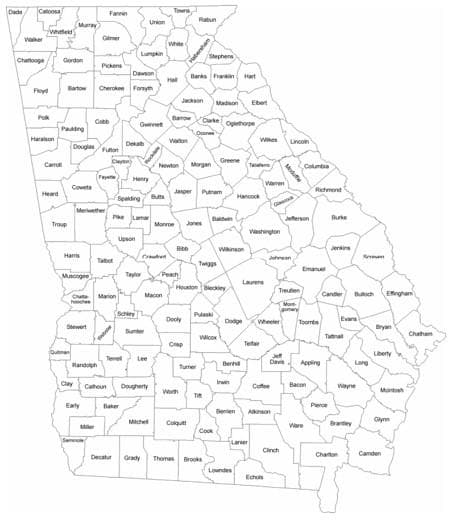
Georgia is one of the lightest-touch states for employers. Its statutory minimum wage of $5.15 sits below the federal rate, so the federal $7.25 governs almost everyone; there is no state overtime, break, or paid leave law; and Georgia has no general anti-discrimination statute for private employers, leaving federal law to fill the gap. What the state does regulate is the employment of minors, the timing of paychecks, and, since 2011, work-eligibility verification through E-Verify. The Georgia Department of Labor (GDOL) enforces the child labor law, and wage disputes generally go to the US Department of Labor or the courts.
- Georgia's own minimum wage is $5.15, but the federal $7.25 applies to any employer covered by the FLSA, which is nearly all of them
- Overtime is federal only: 1.5x after 40 hours in a workweek, with no daily rule
- Adults have no break entitlement; minors under 16 may not work more than 4 hours without a 30-minute break
- Georgia has no paid sick leave, paid family leave, or predictive scheduling law
- Private employers with 11 or more employees must use E-Verify, and most employers must pay at least semimonthly
Minimum Wage in Georgia
The Georgia Department of Labor states that "Georgia's minimum wage is $5.15 per hour, however, with some limited exceptions, the federal minimum wage rate applies." The state rate matters only for the small set of employers outside FLSA coverage, such as very small businesses with no interstate commerce and annual sales under $40,000 or fewer than 6 employees. Everyone else pays $7.25, with a $2.13 tipped cash wage and a $5.12 tip credit under federal rules. There is no scheduled increase, and state law preempts local minimum wages.
For the coverage exceptions, the tipped rules, and how Georgia compares with neighboring states, see the Georgia minimum wage guide.
Overtime Rules
Georgia has no overtime statute. The FLSA governs: non-exempt employees earn 1.5 times their regular rate for hours over 40 in a fixed workweek, with no daily overtime and no weekend or holiday premium. The exempt salary threshold is the federal $684 per week.
Worked example at the minimum wage: an employee paid $7.25 works 45 hours. That is 40 hours at $7.25 ($290.00) plus 5 hours at $10.875 ($54.38), for $344.38 gross. The overtime calculator handles the math, and the overtime pay laws in the US guide explains the federal rule and the states that go further.
Unpaid overtime claims are filed with the US Department of Labor's Wage and Hour Division or in court, because GDOL does not enforce wage and hour law for adults.
Meal and Rest Breaks
Georgia does not require meal or rest breaks for employees 16 and older. The federal rule applies to breaks an employer chooses to give: rest breaks of 20 minutes or less are paid working time, and meal periods of 30 minutes or more may be unpaid if the employee is fully relieved of duty. Georgia does require employers to provide reasonable paid break time for nursing mothers under Charlotte's Law, in addition to the federal PUMP Act.
| Break type | Requirement | Applies to |
|---|---|---|
| Meal period (adults) | Not required; unpaid only if 30 minutes or more and duty-free | 16 and older |
| Rest break (adults) | Not required; paid if 20 minutes or less | 16 and older |
| Minor break | 30 minutes uninterrupted after no more than 4 hours of continuous work | Under 16 |
| Nursing mothers | Reasonable paid break time and a private space under Charlotte's Law and the federal PUMP Act | All employers |
The break time calculator shows the minimum breaks for any shift where a mandate applies, and our rest and meal break laws by state guide covers every state.
Paid Sick Leave and Other Leave
Georgia has no statewide paid sick leave or paid family leave requirement, and state law preempts local governments from creating one. The one state statute on sick leave is narrow: employers with 25 or more employees that already offer paid sick leave must let employees use up to 5 days of it a year to care for immediate family members.
| Leave type | Georgia rule |
|---|---|
| Paid sick leave | Not required; employers with 25 or more employees that offer it must allow up to 5 days a year for family care |
| Family and medical leave | Federal FMLA (50 or more employees) |
| Jury duty | Job-protected; employers may not fire or penalize an employee for jury or witness service; unpaid unless policy provides |
| Voting | Up to 2 hours of leave to vote if the employee lacks 2 hours outside work while polls are open, with reasonable notice |
| Military | Federal USERRA plus state protection for Georgia National Guard members |
| Court appearance | Job-protected leave to attend court in response to a subpoena or as a crime victim |
See paid sick leave laws in the US for the states that mandate sick leave, and jury duty laws in the US for court leave.
PTO Payout and Final Paychecks
Georgia has no final paycheck statute. Final wages are due on the next regular payday under general contract law and the FLSA, and there is no state penalty for delay. Unused vacation or PTO is paid out only if a written policy or agreement provides for it; a clear forfeiture policy is enforceable. Our PTO payout laws by state guide covers the rule.
Pay frequency: Official Code of Georgia section 34-7-2 requires most employers to pay wages at least twice a month on regular paydays, with exceptions for farm, sawmill, and turpentine operations and for employees in executive or professional positions who may be paid monthly. Deductions that take pay below the minimum wage are barred by federal law.
Exempt vs Non-Exempt Employees
Georgia applies the federal tests. Exemption requires a salary of at least $684 per week ($35,568 a year) and primarily executive, administrative, professional, computer, or outside sales duties. A salaried supervisor who mostly performs the same work as the team is non-exempt and owed overtime. Our exempt vs non-exempt employees guide and the FLSA exemption flowchart cover the duties tests.
Child Labor Rules
Georgia's child labor law is enforced by GDOL and centers on minors under 16. GDOL states that no minor under 16 "shall be employed or permitted to work for more than four hours on any day in which the school attended by said minor is in session, more than eight hours on days other than school days, or more than 40 hours in any one week," may not work during school hours without an exemption, and may not work more than 4 hours continuously without a 30-minute break. An employment certificate (work permit) issued by the school board is required for every minor under 16.
| Age group | School in session | School not in session | Hours of day and other rules |
|---|---|---|---|
| 14 and 15 | 4 hours on a school day, 40 hours a week; no work during school hours | 8 hours a day, 40 hours a week | Not before 6 AM or after 9 PM; 30-minute break after 4 continuous hours; employment certificate required |
| 16 and 17 | No state hour limits | No state hour limits | Federal hazardous occupation rules apply |
| Under 14 | Generally prohibited except farm work, domestic service, and entertainment with a permit |
The federal 3-hour school-day and 18-hour school-week limits are stricter than Georgia's and apply to FLSA-covered employers. See child labor laws in the US.
Other Georgia Employment Rules
- E-Verify. The Illegal Immigration Reform and Enforcement Act requires private employers with 11 or more employees to use E-Verify for new hires and to certify compliance when renewing a business license.
- Non-competes. Enforceable under the 2011 Restrictive Covenants Act for employees who solicit customers, manage others, or hold key positions, with a 2-year presumption of reasonableness.
- Drug-free workplace. Employers certified under the state program receive a workers' compensation premium discount.
- Right to work. Union membership cannot be a condition of employment.
- Firearms in vehicles. Employers generally may not search or prohibit lawfully stored firearms in employee vehicles in the parking lot.
- Payroll taxes. Georgia's flat income tax rate fell to 5.09 percent on January 1, 2026 under the scheduled annual reduction, and the unemployment insurance wage base is $9,500; confirm the current figures with the Department of Revenue and GDOL.
Hiring, Termination, and Record-Keeping
Georgia is a strong at-will state. Beyond federal law, the state's own employment discrimination statutes are narrow: the Georgia Equal Pay Act, the Age Discrimination Act, and the Equal Employment for Persons with Disabilities Code, which covers employers with 15 or more employees. Federal Title VII, the ADA, and the ADEA apply through the EEOC. Georgia has no ban-the-box law for private employers and no salary history ban.
Keep payroll records showing hours worked and wages paid for at least 3 years under the FLSA, and keep employment certificates on file for minors. Post the federal notices and the GDOL child labor poster if you employ minors. Because wage claims are litigated rather than handled by a state agency, a time card calculator for regular audits and a written timekeeping policy that documents breaks and corrections are the employer's best evidence.
Frequently Asked Questions
Is Georgia an at-will state? Yes. Georgia is among the strongest at-will states, with exceptions mainly under federal anti-discrimination and retaliation law.
Does Georgia require lunch breaks? Not for adults. Minors under 16 must receive a 30-minute break after no more than 4 hours of continuous work.
When is overtime paid in Georgia? After 40 hours in a workweek at 1.5x under the federal FLSA. Georgia has no daily overtime.
When is the final paycheck due in Georgia? Georgia sets no deadline; final wages are due on the next regular payday.
Does Georgia have paid sick leave? No. The only state rule requires employers with 25 or more employees that already offer sick leave to allow 5 days a year for family care.
What is the minimum wage in Georgia? $7.25 an hour for almost every employer, because the federal rate applies; the state statute's $5.15 covers only employers outside the FLSA.
How many hours can a minor work in Georgia? Minors under 16 may work 4 hours on a school day, 8 on a non-school day, and 40 hours a week, between 6 AM and 9 PM, with a work permit. 16 and 17 year olds have no state limits.
Does Georgia require E-Verify? Yes, for private employers with 11 or more employees.
Sources
- Georgia Department of Labor: Minimum Wage
- Georgia Department of Labor: Child Labor Work Hour Restrictions
- Georgia Department of Labor: Employers FAQs on Child Labor
- Georgia Department of Labor: Child Labor Laws and Rules (PDF)
- US Department of Labor: State Minimum Wage Laws
Reviewed September 2026
The minimum wage statement quotes the Georgia Department of Labor, and the child labor hours follow GDOL's published work hour restrictions as reported. The GDOL child labor page could not be retrieved directly for this review, and the semimonthly pay statute, family sick leave rule, voting and jury leave, E-Verify threshold, non-compete, and tax figures are stated from general knowledge of Georgia law; confirm them with GDOL, the Department of Revenue, or counsel before you rely on them.
Evidence for Federal Wage Claims
With no state wage agency, Georgia wage disputes turn on the employer's own records. HiveDesk records hours to the minute and builds weekly timesheets that show exactly when the 40-hour line was crossed. $5/user/month, 14-day free trial.