

Kansas Labor Law Guide 2026: Minimum Wage, Overtime, Breaks, and Leave
Kansas labor laws for employers in 2026: the $7.25 minimum wage with a $2.13 tipped cash wage, the state 46-hour overtime rule that applies only outside the FLSA, no break mandate, no paid sick leave law, child labor limits for workers under 16, and final pay by the next regular payday under the Kansas Wage Payment Act.
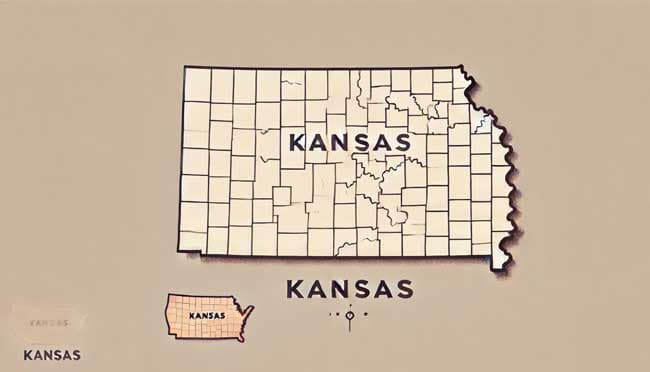
Kansas is one of the lightest-touch states for wage and hour regulation. The state minimum wage equals the federal $7.25, the state overtime statute starts at 46 hours and steps aside for any employer the federal FLSA already covers, and there is no break, sick leave, or scheduling mandate. The rules that do bite are the Kansas Wage Payment Act, which governs pay frequency, deductions, and final paychecks, and the child labor statute for workers under 16. The Kansas Department of Labor enforces both.
- Kansas's minimum wage is $7.25 an hour with a $2.13 cash wage for tipped employees, and cities and counties may not set a higher rate
- The Kansas Minimum Wage and Maximum Hours Law requires overtime only after 46 hours and exempts anyone covered by the federal FLSA, so the 40-hour federal rule governs almost every workplace
- Kansas has no meal or rest break requirement for adults
- Workers under 16 may not work more than 8 hours a day or 40 hours a week, or before 7 AM or after 10 PM on nights before a school day
- Final wages are due on the next regular payday for both discharged employees and those who quit
Minimum Wage in Kansas
Kansas's minimum wage is $7.25 an hour, identical to the federal rate, and the tipped cash wage is $2.13 with a $5.12 tip credit. State law preempts local minimum wages, so no Kansas city or county sets its own rate. The state statute has not moved since 2010, and bills to raise it have not advanced.
For the tipped rules, the rate history, and how Kansas compares with Missouri, Nebraska, and Colorado, see the Kansas minimum wage guide and the national minimum wage by state table.
Overtime Rules
Kansas has an unusual two-track overtime structure. K.S.A. 44-1204 provides that "no employer shall employ any employee for a workweek longer than 46 hours, unless such employee receives compensation for employment in excess of 46 hours in a workweek at a rate of not less than 1 1/2 times the hourly wage rate." The same statute says it does not apply to "any employee who is covered under the provisions of section 7 of the fair labor standards act of 1938." Because the FLSA covers any business with $500,000 or more in annual sales and most others through individual coverage, nearly every Kansas employee is owed overtime after 40 hours under federal law. The 46-hour state rule matters only for the small set of employers and employees outside the FLSA.
Worked example at the minimum wage: an FLSA-covered employee paid $7.25 works 45 hours. Regular pay is 40 hours at $7.25, or $290.00, and overtime is 5 hours at $10.88, or $54.38, for $344.38 gross. Under the state-only rule the same week would carry no overtime at all. The overtime calculator handles either threshold, and the overtime pay laws in the US guide explains FLSA coverage.
Kansas uses the federal $684 per week salary threshold and the federal duties tests for the white-collar exemptions.
Meal and Rest Breaks
Kansas has no break law for adult employees. The US Department of Labor's state tables list no Kansas meal or rest period requirement, so the federal rules on paying for breaks are the only ones that apply.
| Break type | Requirement | Applies to |
|---|---|---|
| Meal period | Not required | All employees |
| Rest breaks | Not required | All employees |
| Pay for breaks | Breaks under 20 minutes are paid work time under the FLSA; a meal period of 30 minutes or more is unpaid only if the employee is fully relieved of duty | All employees |
| Minors | No separate state break rule; federal child labor hour limits apply | Under 18 |
An employer that offers breaks should write the policy down and apply it consistently, because a break that is promised and then denied can become a wage claim. The break time calculator shows a reasonable break pattern for any shift, and the rest and meal break laws by state guide compares Kansas with neighboring states.
Paid Sick Leave and Other Leave
Kansas has no paid sick leave, paid family leave, or bereavement leave mandate.
| Leave type | Kansas rule |
|---|---|
| Paid sick leave | Not required by state law; employer policy governs |
| Federal FMLA | 12 weeks unpaid at employers with 50 or more employees |
| Jury duty | Job-protected; employers may not fire or penalize an employee for jury service; unpaid unless policy provides |
| Voting | Up to 2 hours off to vote if the employee lacks 2 consecutive free hours while polls are open; the employer chooses the time |
| Military | Federal USERRA plus state protections for Kansas National Guard service |
| Domestic violence | Up to 8 days of unpaid leave a year to seek protective orders or medical care |
See paid sick leave laws in the US for the states that mandate leave and jury duty laws in the US for court leave rules.
PTO Payout and Final Paychecks
The Kansas Wage Payment Act, K.S.A. 44-315, sets one deadline for everyone: "Whenever an employer discharges an employee or whenever an employee quits or resigns, the employer shall pay the employee's earned wages not later than the next regular payday upon which he or she would have been paid if still employed." Employers must pay at least monthly on regular paydays.
Vacation and PTO payout depends on the employer's written policy. Kansas treats accrued vacation as earned wages when a policy or practice provides for it, and a policy that clearly states unused time is forfeited at separation is generally enforceable. The PTO payout laws by state guide has the Kansas entry.
Deductions beyond taxes and court orders generally require the employee's written authorization for the employee's benefit, and deductions for cash shortages or damage are restricted. An employer that willfully fails to pay wages can owe a penalty of up to 1 percent of the unpaid wages per day, capped at 100 percent.
Exempt vs Non-Exempt Employees
For FLSA-covered employers, the federal $684 per week threshold and duties tests decide who is exempt. The state statute's own exemptions apply only to the few employers outside federal coverage. Our exempt vs non-exempt employees guide covers the tests and the FLSA exemption flowchart helps classify a role.
Child Labor Rules
Kansas child labor law, K.S.A. 38-602 and 38-603, regulates workers under 16 and bars all minors from hazardous occupations. The statute provides that a child under 16 may not work "more than eight (8) hours in any one calendar day, nor more than forty (40) hours in any one week," and may not be employed "before 7 a.m., or after 10 p.m., except on any evening that does not precede a school day."
| Age group | Hours and time limits | Other rules |
|---|---|---|
| Under 16 | State law: 8 hours a day, 40 hours a week, not before 7 AM or after 10 PM before a school day; FLSA-covered employers must follow the stricter federal limits of 3 hours on a school day, 18 in a school week, and 7 PM (9 PM in summer) | Student-learners in cooperative programs need a written agreement signed by the employer and the school |
| 16 and 17 | No state hour limits | Barred from hazardous occupations |
| Under 14 | Generally may not be employed outside limited exceptions |
Kansas does not require work permits, but employers should keep proof of age on file. See child labor laws in the US for the federal hazardous occupation list.
Other Kansas Employment Rules
- Local preemption. A 2013 state law bars cities and counties from setting minimum wage, leave, or benefit requirements above state law.
- Drug testing. Permitted under employer policy; unemployment benefits can be denied for a failed or refused test.
- Non-competes. Enforceable if reasonable in duration and scope, and a 2025 law sets safe-harbor rules for customer and employee non-solicitation clauses.
- Firearms. Employers may prohibit weapons in the workplace but generally cannot bar them from locked private vehicles in the parking lot.
- Wage claims. The Department of Labor takes claims for unpaid wages under the Wage Payment Act, including unpaid final wages and vacation pay promised by policy.
Hiring, Termination, and Record-Keeping
Kansas is an at-will state with exceptions for discrimination, retaliation, and public policy. The Kansas Act Against Discrimination covers employers with 4 or more employees and protects race, religion, color, sex, disability, national origin, ancestry, and age (40 and over, under the companion Age Discrimination in Employment Act), enforced by the Kansas Human Rights Commission.
Keep payroll records showing hours worked each day and week, wages, and deductions for at least 3 years under the FLSA, plus proof of age for minors. Post the federal minimum wage and FLSA notices, the Kansas child labor abstract where minors work, and the Kansas unemployment and workers' compensation notices. A time card calculator that totals hours per workweek and a written timekeeping policy are enough to document the 40-hour federal rule and the state's minor hour limits.
Frequently Asked Questions
Is Kansas an at-will state? Yes, with exceptions for discrimination, retaliation, and public policy.
Does Kansas require lunch breaks? No. Kansas has no meal or rest break law for adults; the federal rules on paying for short breaks apply.
When is overtime paid in Kansas? After 40 hours in a workweek for the FLSA-covered employers that make up nearly the whole state. The state's own rule starts at 46 hours and applies only outside federal coverage.
When is the final paycheck due in Kansas? On the next regular payday, whether the employee was discharged or quit.
Does Kansas have paid sick leave? No. There is no state mandate, and cities and counties are preempted from passing one.
How many hours can a minor work in Kansas? Under 16: 8 hours a day and 40 a week under state law, and no work before 7 AM or after 10 PM on a night before a school day. FLSA-covered employers must follow the stricter federal school-day limits. Ages 16 and 17 have no state hour cap.
Does Kansas require work permits for minors? No. Kansas does not issue work permits, but employers should keep proof of age and any student-learner agreement on file.
Does Kansas pay out unused PTO? Only as the written policy or established practice provides; a clear forfeiture policy is generally enforceable.
Sources
- K.S.A. 44-1204: Overtime compensation
- K.S.A. 44-315: Payment of wages on discharge or resignation
- K.S.A. 38-603: Employment of children under 16
- Kansas Department of Labor: Workplace laws
- US Department of Labor: State Minimum Wage Laws
Reviewed September 2026
The Kansas Department of Labor website blocked automated access while this guide was prepared, so the overtime, final pay, and child labor rules are quoted from the statutes rather than an agency FAQ. The voting and domestic violence leave rules, the deduction and penalty provisions of the Wage Payment Act, the 2013 preemption law, the non-compete and firearms rules, the Act Against Discrimination threshold, and the record retention period are stated from general knowledge and should be confirmed with the Department of Labor before you rely on them.
Forty Hours, Documented
HiveDesk tracks hours automatically and totals them by workweek, so the federal 40-hour overtime line is calculated from real punches rather than estimates. $5/user/month, 14-day free trial.