

Minnesota Labor Law Guide 2026: Wages, Overtime, Breaks, and Leave
Minnesota labor laws for employers in 2026: the $11.41 minimum wage with no tip credit, the new 15-minute rest and 30-minute meal break rules, Earned Sick and Safe Time, the Paid Leave program that launched January 1, 2026, the 48-hour state overtime rule, and 24-hour final pay on discharge.
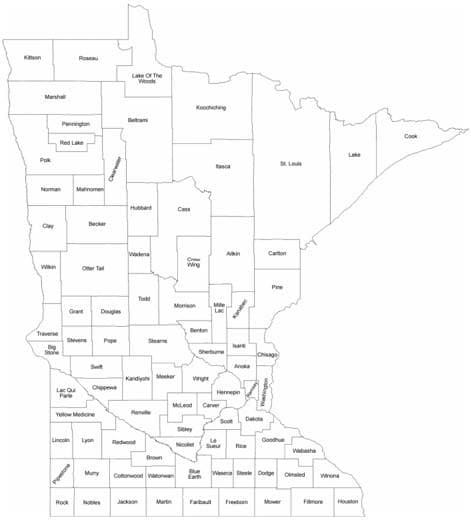
Minnesota rewrote a large part of its employment code between 2023 and 2026. Earned Sick and Safe Time arrived in 2024, a statewide non-compete ban in 2023, pay transparency in job postings in 2025, and on January 1, 2026 both the Paid Leave insurance program and a new set of meal and rest break rules took effect. The Department of Labor and Industry (DLI) enforces the Minnesota Fair Labor Standards Act and the Payment of Wages Act, and Minneapolis and St. Paul layer their own minimum wage and sick leave ordinances on top.
- Minnesota's minimum wage is $11.41 an hour for every employer size since the large and small employer tiers were eliminated, and it rises to $11.87 on January 1, 2027; Minneapolis and St. Paul are higher
- Since January 1, 2026, employees get a paid 15-minute rest break within each four consecutive hours worked and an unpaid 30-minute meal break when working six or more consecutive hours, with liquidated damages for missed breaks
- Earned Sick and Safe Time gives almost every employee one hour of paid leave per 30 hours worked, up to 48 hours a year
- Minnesota Paid Leave launched January 1, 2026 with a 0.88 percent premium split between employer and employee and up to 20 weeks of combined medical and family leave a year
- A discharged employee is owed final wages within 24 hours of demanding them; an employee who quits is paid on the next regular payday
Minimum Wage in Minnesota
Minnesota's minimum wage is $11.41 an hour in 2026. DLI's announcement states that "Minnesota's minimum-wage rate will be adjusted for inflation Jan. 1, 2026, to $11.41 an hour for all employers in the state," and the 90-day training wage for workers under 20 is $9.31. The rate is indexed to inflation every January 1 and DLI has already announced $11.87 for 2027. Minnesota does not allow a tip credit, so tipped employees receive the full minimum wage before tips.
Minneapolis and St. Paul set higher city rates, and DLI notes that employers must "follow whichever requirements most benefit employees." For the city rates, the tip rules, and the rate history, see the Minnesota minimum wage guide and the national minimum wage by state table.
Overtime Rules
Minnesota has two overtime thresholds. The Minnesota Fair Labor Standards Act requires time and a half only after 48 hours in a workweek. The federal FLSA requires it after 40 hours. Because nearly every Minnesota employer is covered by the FLSA (the federal law reaches any business with $500,000 or more in annual sales plus most others through individual coverage), the 40-hour rule is the one that applies in practice. The 48-hour state rule matters only for the small number of employers and employees outside FLSA coverage.
Worked example at the minimum wage: an employee paid $11.41 works 45 hours. Under the FLSA, 40 hours at $11.41 is $456.40, and 5 overtime hours at $17.12 is $85.58, for $541.98 gross. The overtime calculator handles the arithmetic, and the overtime pay laws in the US guide explains the FLSA and state overlap.
Minnesota uses the federal $684 per week salary threshold for the executive, administrative, and professional exemptions. Salaried status alone does not create an exemption, and the state's own exemption list differs slightly from the federal one, so classify against both.
Meal and Rest Breaks
The break rules changed on January 1, 2026. DLI's guidance states that employers must provide "a paid rest break that is at least 15 minutes for every four consecutive hours worked" and "an unpaid meal break that is at least 30 minutes when working six or more consecutive hours." The previous law required only "adequate time" to use the restroom every four hours and a meal break after eight hours.
| Break type | Requirement | Applies to |
|---|---|---|
| Rest break | At least 15 minutes, paid, within each four consecutive hours worked (or enough time to use the nearest restroom, whichever is longer) | All employees |
| Meal break | At least 30 minutes, unpaid, when working six or more consecutive hours | All employees |
| Combined breaks | Permitted, as long as the employee still gets the 15-minute rest within each four-hour block and the 30-minute meal when applicable | All employees |
| Missed breaks | Employer owes pay for the break time that should have been allowed plus an equal amount as liquidated damages | All employees |
Breaks under 20 minutes must be paid. DLI says employees may voluntarily decline a break, and recommends documenting that in writing. For a contact center, the practical schedule is a paid 15-minute break in each 4-hour block and a 30-minute unpaid meal on any shift of six hours or more. The break time calculator lays out the minimum breaks for a given shift, and the rest and meal break laws by state guide compares Minnesota with its neighbors.
Paid Sick Leave and Other Leave
Minnesota has both a paid sick leave mandate and a paid family and medical leave insurance program, which is unusual outside the coasts.
Earned Sick and Safe Time (ESST). DLI states that employees earn "one hour of sick and safe time for every 30 hours worked" with a maximum of 48 hours annually unless the employer agrees to more. It covers any employee anticipated to work at least 80 hours a year in Minnesota, excluding independent contractors, and it can be used for the employee's or a family member's illness or preventive care, domestic abuse, sexual assault or stalking, workplace or school closures due to weather or emergencies, communicable disease exposure, and funeral arrangements. ESST is paid at the employee's base rate. Employers must show the accrued balance on each pay statement, give notice at hire in English and the employee's primary language, and include ESST in the handbook. DLI published new FAQs for rules effective July 6, 2026, so check the current version before updating a policy.
Minnesota Paid Leave. The state insurance program launched January 1, 2026. The premium is 0.88 percent of wages for 2026 and 2027 (0.61 percent medical, 0.27 percent family), employers may deduct up to 0.44 percent from employees, and small employers pay a reduced 0.66 percent rate. Employees can take up to 12 weeks of medical leave and 12 weeks of family leave, capped at 20 weeks combined in a benefit year. The program is run by the Department of Employment and Economic Development, not DLI.
| Leave type | Minnesota rule |
|---|---|
| Paid sick and safe time | 1 hour per 30 hours worked, up to 48 hours a year, nearly all employees |
| Paid family and medical leave | State program from January 1, 2026; up to 12 weeks medical and 12 weeks family, 20 combined |
| Pregnancy and parenting leave | Up to 12 weeks of unpaid, job-protected leave under state law, now coordinated with Paid Leave |
| Federal FMLA | 12 weeks unpaid at employers with 50 or more employees |
| Jury duty | Job-protected; unpaid unless policy provides |
| Voting | Paid time off to vote on election day |
| School conferences | Up to 16 hours a year of unpaid leave for a child's school activities |
| Minneapolis and St. Paul | City sick and safe time ordinances; the more generous rule applies |
See paid sick leave laws in the US for how ESST compares with other states and jury duty laws in the US for court leave.
PTO Payout and Final Paychecks
Minnesota's final pay rules turn on how the employment ended. Under Minnesota Statutes 181.13, wages earned by a discharged employee are "immediately due and payable upon demand of the employee," and the employer has 24 hours after the demand to pay before it is in default. Under 181.14, an employee who quits must be paid by the next regularly scheduled payday; if that payday is fewer than five days after the last day, the employer may wait until the second payday, but never more than 20 days. An employer in default after a written demand owes a penalty of the employee's average daily earnings for each day of default, up to 15 days.
PTO payout follows the written policy. Minnesota courts treat promised vacation pay as wages, so a policy that says accrued vacation is paid out must be honored, while a policy that clearly says it is forfeited is generally enforceable. ESST does not have to be paid out at separation. Our PTO payout laws by state guide has the Minnesota entry.
Pay frequency is at least once every 31 days for wages and at least once every three months for commissions. Employers must give an earnings statement each pay period showing hours, rate, gross and net pay, deductions, and ESST balances.
Exempt vs Non-Exempt Employees
Minnesota applies the federal salary basis, salary level ($684 per week), and duties tests, and the state statute adds its own list of exempt occupations. Employers with staff in Minneapolis or St. Paul should also check the city ordinances, which follow state definitions. Our exempt vs non-exempt employees guide walks through the tests and the FLSA exemption flowchart helps classify a role.
Child Labor Rules
DLI states that "Fourteen is the minimum age of employment in Minnesota," with exceptions for newspaper carriers and youth referees (11), agriculture with parental consent (12), and actors and models. Employers must follow "the most protective provisions" where state and federal rules differ.
| Age group | Hours and time limits | Other rules |
|---|---|---|
| Under 16 | State law: not before 7 AM or after 9 PM, no more than 8 hours in a 24-hour period or 40 hours a week; during the school year federal law limits work to 3 hours on a school day, 18 hours in a school week, and no later than 7 PM | No work during school hours without an employment certificate from the school district superintendent |
| 16 and 17 (high school students) | Not after 11 PM before a school day or before 5 AM on a school day; with written parental permission, 11:30 PM and 4:30 AM | No daily or weekly hour cap under state law |
| 17 (high school graduate) | No hour restrictions |
Minors are entitled to the same 15-minute rest and 30-minute meal breaks as adults. See child labor laws in the US for the federal hazardous occupation list.
Other Minnesota Employment Rules
- Non-compete ban. Non-compete agreements entered into on or after July 1, 2023 are void, with narrow exceptions for the sale or dissolution of a business. Non-solicitation and confidentiality agreements remain allowed.
- Pay transparency. Since January 1, 2025, employers with 30 or more employees must include a good-faith salary range and a general description of benefits in every job posting.
- Captive audience meetings. Employers may not require attendance at meetings whose primary purpose is to communicate the employer's views on religious or political matters, including unionization.
- Wage theft. The 2019 wage theft law requires a written notice of pay terms at hire, in the employee's language on request, and makes willful wage theft a felony above $1,000.
- Salary history. Employers may not ask applicants about their pay history.
- Cannabis. Recreational cannabis is legal; pre-employment cannabis testing is barred for most roles, with exceptions for safety-sensitive positions.
Hiring, Termination, and Record-Keeping
Minnesota is an at-will state with the usual exceptions for discrimination, retaliation, and public policy. The Minnesota Human Rights Act covers employers of any size and protects race, color, creed, religion, national origin, sex, marital status, familial status, disability, sexual orientation, gender identity, age, and status with regard to public assistance. Ban-the-box rules bar criminal history questions until an interview or conditional offer.
Keep records of hours worked, wages, ESST accrual and use, and the wage notice for at least three years and make them available to DLI. Post the state minimum wage notice, the ESST notice, and the Paid Leave notice. The 15-minute rest rule makes break tracking a compliance record in its own right; a time card calculator that shows breaks per shift and a written timekeeping policy covering break scheduling and waivers keep the liquidated damages risk low.
Frequently Asked Questions
Is Minnesota an at-will state? Yes, with exceptions for discrimination, retaliation, public policy, and any written contract.
Does Minnesota require lunch breaks? Yes. Since January 1, 2026, employees working six or more consecutive hours get an unpaid meal break of at least 30 minutes, plus a paid 15-minute rest break within each four consecutive hours worked.
When is overtime paid in Minnesota? After 40 hours in a workweek for FLSA-covered employers, which is almost all of them. The state's own rule kicks in only after 48 hours and applies to the few employers outside the FLSA.
When is the final paycheck due in Minnesota? A discharged employee's wages are due within 24 hours of the employee's demand. An employee who quits is paid on the next regular payday, or the following one if the first falls within five days, but no later than 20 days.
Does Minnesota have paid sick leave? Yes. Earned Sick and Safe Time gives one hour of paid leave per 30 hours worked, up to 48 hours a year, and the Paid Leave program adds up to 20 weeks of partially paid family and medical leave.
What is the Minnesota Paid Leave premium? 0.88 percent of wages in 2026 and 2027, of which the employer may deduct up to 0.44 percent from the employee. Small employers pay 0.66 percent.
How many hours can a minor work in Minnesota? Under 16: no more than 8 hours a day or 40 a week under state law, and no more than 3 hours on a school day or 18 in a school week under federal law during the school year. Ages 16 and 17 have night-time limits on school nights but no daily cap.
Does Minnesota pay out unused PTO? Only as the written policy provides. ESST is not paid out at separation.
Sources
- Minnesota DLI: New minimum-wage rates, changes to meal and rest break laws take effect Jan. 1, 2026
- Minnesota DLI: Rest and meal breaks
- Minnesota DLI: Earned sick and safe time
- Minnesota DLI: Age and hours restrictions for minors
- Minnesota Statutes 181.13 and 181.14: Payment of wages on discharge and on quitting
- Minnesota Paid Leave: Premium rate and contributions
- US Department of Labor: State Minimum Wage Laws
Reviewed September 2026
Minnesota changed its break, leave, and wage rules several times between 2023 and 2026, and DLI issued new ESST FAQs in July 2026. The non-compete ban, pay transparency threshold, captive audience rule, wage theft notice, salary history ban, cannabis testing limits, pregnancy and parenting leave, school conference leave, and voting leave are stated from general knowledge of Minnesota statutes and should be confirmed with DLI before you rely on them.
Fifteen-Minute Breaks Need a Record
HiveDesk logs clock-ins, breaks, and clock-outs to the minute and shows break time per shift, so Minnesota's 2026 rest and meal rules are documented from real data. $5/user/month, 14-day free trial.