

New York Labor Law Guide 2026: Wage, Overtime, Breaks, and Leave
New York labor laws for employers in 2026: the $17.00 downstate and $16.00 upstate minimum wage, overtime after 40 hours with exempt thresholds of $1,275 and $1,199.10 a week, mandatory meal periods, paid sick leave up to 56 hours, Paid Family Leave, weekly pay for manual workers, and working papers for minors.
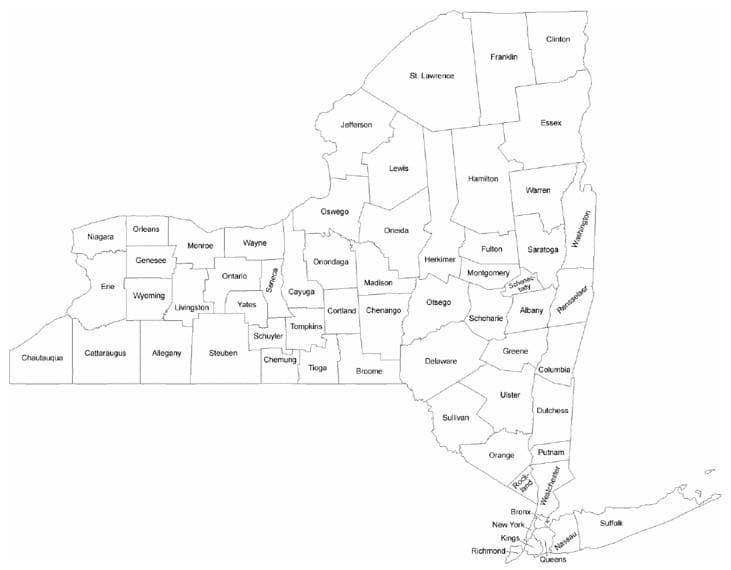
New York regulates employment through a dense set of statutes and industry wage orders enforced by the New York State Department of Labor (NYSDOL), and New York City layers its own rules on top. Regional minimum wages, state-specific exempt salary thresholds, mandatory meal periods, paid sick leave, Paid Family Leave, pay transparency, and weekly pay for manual workers all apply. Employers with staff in both the city and upstate need two rate tables and one calendar, because most figures change every January 1.
- The minimum wage is $17.00 in New York City, Long Island, and Westchester and $16.00 elsewhere, indexed to inflation from 2027
- Executive and administrative employees are exempt from state overtime only if paid at least $1,275.00 a week downstate or $1,199.10 upstate in 2026, far above the federal $684
- Every employee who works a shift of more than 6 hours spanning the noon-day meal period is entitled to at least a 30-minute meal period
- Employers with 100 or more employees must provide 56 hours of paid sick leave a year; those with 5 to 99 provide 40 hours
- Manual workers must be paid weekly, and the final paycheck is due on the next regular payday
Minimum Wage in New York
NYSDOL's 2026 minimum wage table lists $17.00 per hour for New York City, Long Island, and Westchester and $16.00 per hour for the remainder of the state, effective January 1, 2026. Tipped food service workers have a cash wage of $11.35 downstate and $10.70 upstate; tipped service employees earn $14.15 and $13.30 in cash. These are the last fixed steps of the 2023 budget schedule; from January 1, 2027 the rates are indexed to the Northeast consumer price index. Fast food workers, home care aides, and building service workers have their own wage orders and rates.
For the regional map, the tipped rules by occupation, and the uniform maintenance and call-in pay allowances that scale with the minimum wage, see the New York minimum wage guide.
Overtime Rules
New York's Minimum Wage Act requires 1.5 times the regular rate for hours over 40 in a workweek. There is no daily overtime. Employees who are exempt from federal overtime but not from the state rule (some residential and non-profit categories) must receive overtime at 1.5 times the minimum wage.
Worked example at the downstate minimum: an employee paid $17.00 works 45 hours. That is 40 hours at $17.00 ($680.00) plus 5 hours at $25.50 ($127.50), for $807.50 gross. Upstate at $16.00 the same week is $640.00 plus $120.00, or $760.00. The overtime calculator handles the math, and the overtime pay laws in the US guide compares New York with other states.
Two wage-order rules add pay beyond overtime. Spread of hours: when the interval between the start and end of a workday exceeds 10 hours, the employee is owed one extra hour at the minimum wage. Call-in pay: an employee who reports for a scheduled shift under the Miscellaneous Industries wage order must be paid for at least 4 hours (or the scheduled shift if shorter) at the minimum wage.
Meal and Rest Breaks
New York Labor Law section 162 requires meal periods but not rest breaks. The US Department of Labor's summary of the state rule lists a 60-minute noon-day meal in factories, a 30-minute meal for other employees whose shift is longer than 6 hours and spans 11 AM to 2 PM, an additional 20-minute meal between 5 PM and 7 PM for shifts that start before 11 AM and end after 7 PM, and a 45-minute meal (60 in factories) at the midpoint of shifts starting between 1 PM and 6 AM. NYSDOL permits shorter periods, down to 30 minutes in factories and 20 minutes elsewhere, where the circumstances justify it and no hardship results.
| Break type | Requirement | Applies to |
|---|---|---|
| Noon-day meal | 30 minutes (60 in factories) for shifts over 6 hours that extend across 11 AM to 2 PM | All employees |
| Evening meal | Additional 20 minutes between 5 PM and 7 PM for shifts starting before 11 AM and continuing past 7 PM | All employees |
| Night shift meal | 45 minutes (60 in factories) at the midpoint for shifts of more than 6 hours starting between 1 PM and 6 AM | All employees |
| Rest break | Not required; breaks of 20 minutes or less must be paid | All employees |
| Single-employee shifts | Employee may take an on-duty meal, but must be permitted to eat | Solo workers |
Meal periods are unpaid only if the employee is fully relieved of duty. For contact centers running noon-spanning shifts, the 30-minute period is mandatory, not a courtesy. The break time calculator shows the minimum breaks for any shift, and our rest and meal break laws by state guide covers every state.
Paid Sick Leave and Other Leave
New York State Paid Sick Leave covers every private employer. The state's program page states that "Leave must be accrued at rate not less than one hour for every thirty hours worked," and sets the annual entitlement by employer size: 56 hours of paid leave at employers with 100 or more employees, 40 hours of paid leave at employers with 5 to 99 employees, 40 hours of paid leave at employers with 4 or fewer and net income over $1 million, and 40 hours of unpaid leave at the smallest employers. Leave is available for sick and safe reasons for the employee or a family member. New York City's Earned Safe and Sick Time Act adds notice, documentation, and pay statement rules.
| Leave type | New York rule |
|---|---|
| Paid sick and safe leave | 1 hour per 30 worked; 40 or 56 hours a year by employer size; unused leave carries over subject to the annual use cap |
| Paid Family Leave | Up to 12 weeks at 67 percent of average weekly wage, capped, funded by employee payroll deductions |
| Disability benefits | Short-term disability through the state DBL program, employer-provided |
| Paid prenatal leave | 20 hours of paid leave for prenatal care in a 52-week period, separate from sick leave, since January 1, 2025 |
| Jury duty | Employers with more than 10 employees pay the first $40 a day for the first 3 days; job-protected |
| Voting | Up to 2 hours paid if the employee lacks 4 consecutive hours outside work while polls are open |
| Blood and bone marrow donation | 3 hours of leave per year for blood donation at employers with 20 or more employees |
| Military | Federal USERRA plus state Military Law protections |
See paid sick leave laws in the US for how New York compares, and jury duty laws in the US for the court leave rules.
PTO Payout and Final Paychecks
Final wages are due on the next regular payday after separation, whether the employee quit or was discharged, under Labor Law section 191. Payout of accrued vacation follows the employer's written policy: New York requires payout unless the employee was given written notice of a forfeiture policy in advance, so a handbook that is silent creates a payout obligation. Our PTO payout laws by state guide covers the rule.
Pay frequency: manual workers must be paid weekly and not later than 7 days after the end of the week in which wages were earned, unless NYSDOL has authorized semimonthly pay for a large employer; clerical and other workers must be paid at least semimonthly. Employers must give a written pay rate notice at hiring under the Wage Theft Prevention Act and itemized wage statements with every payment. Deductions are limited to those listed in Labor Law section 193.
Exempt vs Non-Exempt Employees
New York sets its own salary thresholds for the executive and administrative exemptions, and they rise with the minimum wage. For 2026 the threshold is $1,275.00 per week ($66,300 a year) in New York City, Nassau, Suffolk, and Westchester counties and $1,199.10 per week ($62,353.20 a year) in the rest of the state. The professional exemption follows the federal duties test with no state salary floor. An employee paid the federal $684 minimum who works in New York is non-exempt under state law and owed overtime. Our exempt vs non-exempt employees guide and the FLSA exemption flowchart cover the duties tests.
Child Labor Rules
Minors under 18 need an employment certificate (working papers) issued through their school, and employers must keep it on file. The limits below follow NYSDOL's published schedule and should be confirmed on the department's minors page for the current school year.
| Age group | School in session | School not in session | Hours of day |
|---|---|---|---|
| 14 and 15 | 3 hours on a school day, 8 on a non-school day, 18 hours a week, 6 days a week | 8 hours a day, 40 hours a week | 7 AM to 7 PM (9 PM June 21 to Labor Day) |
| 16 and 17 | 4 hours on a day before a school day, 8 on Friday, Saturday, Sunday, and holidays, 28 hours a week, 6 days a week | 8 hours a day, 48 hours a week | 6 AM to 10 PM (midnight with written parental and school consent) |
| Under 14 | Generally prohibited except newspaper delivery, farm work, and performing with a permit |
Minors are entitled to the same meal periods as adults. See child labor laws in the US for the federal rules.
Other New York Employment Rules
- Pay transparency. Since September 17, 2023, employers with 4 or more employees must include a good-faith pay range in job postings and promotions; New York City has its own ordinance.
- Salary history ban. Employers may not ask applicants or current employees about salary history.
- Freelance Isn't Free Act. Since August 2024, statewide written-contract and 30-day payment rules apply to freelance engagements of $800 or more.
- Electronic monitoring notice. Employers that monitor email, phone, or internet use must give written notice at hiring and post it.
- New York WARN. Employers with 50 or more employees must give 90 days notice of plant closings and mass layoffs, stricter than the federal 60.
- Sexual harassment prevention. Every employer must adopt a written policy and train employees annually.
Hiring, Termination, and Record-Keeping
New York is an at-will state with the usual exceptions, and the New York State Division of Human Rights enforces a Human Rights Law that covers all employers regardless of size. New York City adds the Fair Chance Act, which bars criminal history inquiries until after a conditional offer, and salary history and credit check restrictions.
Employers must keep payroll records, including hours worked each day and week, rates, deductions, and the wage notices and acknowledgments, for at least 6 years under the Wage Theft Prevention Act. Post the minimum wage poster for the applicable wage order, the paid sick leave notice, the electronic monitoring notice, and the federal posters. Weekly pay for manual workers and 6-year record retention make automated timekeeping a practical necessity: a time card calculator for audits and a written timekeeping policy keep the records NYSDOL will ask for.
Frequently Asked Questions
Is New York an at-will state? Yes, with exceptions for discrimination, retaliation, whistleblowing, and contractual limits, and the state Human Rights Law covers employers of every size.
Does New York require lunch breaks? Yes. Employees working more than 6 hours that span the noon-day meal period must get at least 30 minutes (60 in factories), with additional periods for evening and night shifts.
When is overtime paid in New York? After 40 hours in a workweek at 1.5x. There is no daily overtime, but a spread of hours over 10 adds one extra hour at the minimum wage.
What is the exempt salary threshold in New York in 2026? $1,275.00 a week in New York City, Long Island, and Westchester and $1,199.10 a week in the rest of the state for executive and administrative employees.
When is the final paycheck due in New York? On the next regular payday after separation.
Does New York have paid sick leave? Yes. Employers with 100 or more employees provide 56 hours a year; those with 5 to 99 provide 40 hours; the smallest employers provide 40 hours paid or unpaid depending on net income.
How many hours can a minor work in New York? 14 and 15 year olds are limited to 3 hours on a school day and 18 in a school week; 16 and 17 year olds to 4 hours on a day before a school day and 28 in a school week, with working papers required under 18.
Does New York pay out unused PTO? Yes, unless the employee received written notice of a forfeiture policy in advance.
Sources
- New York State Department of Labor: Minimum Wage
- New York State: Paid Sick Leave
- New York State Paid Family Leave
- New York State Department of Labor: Employment of Minors
- Proskauer: New York State Minimum Wage and Exempt Salary Updates for 2026
- US Department of Labor: State Meal Period Requirements
Reviewed September 2026
The minimum wage, tipped wage, and paid sick leave figures quote NYSDOL and the state's program page; the 2026 exempt thresholds are confirmed through law-firm summaries of the NYSDOL wage orders because the department's overtime page could not be retrieved. Spread of hours, call-in pay, Paid Family Leave, prenatal leave, jury duty pay, voting leave, child labor hours, pay transparency, WARN, and record-retention rules are stated from general knowledge of New York law and should be confirmed with NYSDOL or counsel before you rely on them.
Two Rate Tables, One Timesheet
HiveDesk records hours to the minute and builds weekly timesheets by employee and location, so downstate and upstate rates, meal periods, and manual-worker weekly pay are all handled from the same data. $5/user/month, 14-day free trial.